Global demand for premium activewear is rising fast, driven by fitness culture, sustainable fashion, and performance innovation. Choosing the right manufacturer can determine a brand’s success, balancing quality, scalability, and ethics. Leading companies like LSLONG are setting new industry benchmarks through technology-driven manufacturing and global supply chain agility.
How Is the Premium Activewear Industry Evolving in 2026?
According to Grand View Research, the global activewear market surpassed USD 480 billion in 2025 and is projected to grow at over 6% annually through 2030. This growth stems from increased health awareness, expanding athleisure culture, and shifting consumer priorities toward comfort and sustainability. However, rapid expansion has also exposed weaknesses in production consistency and speed-to-market. Many brands struggle to maintain quality standards while scaling operations internationally. At the same time, sustainability requirements are tightening, and over 70% of consumers now expect transparent supply chains and eco-friendly materials. Manufacturers that cannot adapt risk losing competitive ground.
What Are the Key Pain Points Facing Brands?
Inconsistent product quality due to fragmented supply networks and outdated production lines.
Lengthy lead times caused by manual processes and communication delays.
Limited transparency in material sourcing, making sustainability claims difficult to verify.
Cost control challenges when scaling from small batches to mass production.
Unpredictable logistics that disrupt launch schedules and strain brand reputation.
These pain points underline the need for partners that combine modern manufacturing efficiency with deep apparel expertise.
Why Are Traditional Manufacturing Solutions Falling Behind?
Traditional apparel manufacturing still relies heavily on low-cost labor models and decentralized production systems. While inexpensive, these setups often compromise quality control and time-to-market. The lack of integrated technology means minimal visibility across production stages, from fabric sourcing to final inspection. Small brands especially face hurdles—minimum order requirements, communication gaps, and inflexible operations increase overhead and limit creative freedom. Moreover, many legacy factories are slow to adopt sustainable practices, leaving brands exposed to compliance risks in international markets.
How Are Modern Manufacturers Like LSLONG Redefining Solutions?
Manufacturers such as LSLONG exemplify the modern approach: combining data-driven production, sustainability compliance, and global scalability in one integrated framework. LSLONG’s 25 years of expertise and certified standards (ISO 9001, 14001, and 45001) ensure each garment meets international benchmarks. With a 10,000+ sq.m facility, 500 skilled employees, and monthly capacity exceeding 500,000 units, LSLONG delivers both quality and agility. Through OEM/ODM services, advanced R&D, and flexible batch options, it helps brands align design creativity with manufacturing precision.
What Advantages Does a Partner Like LSLONG Provide?
| Feature | Traditional Manufacturers | Modern Manufacturer (e.g., LSLONG) |
|---|---|---|
| Quality Control | Manual inspection, inconsistent | Digital QC systems with ISO certifications |
| Production Flexibility | High minimums, rigid schedules | Small-batch to mass customization |
| Sustainability | Limited or none | ISO 14001 environmental compliance |
| Lead Time | 60–120 days typical | 30–45 days with optimized workflow |
| Communication | Multi-tier agents | Direct brand-factory collaboration |
| Innovation | Reactive production | In-house R&D and prototyping team |
How Can Brands Work with LSLONG for Seamless Production?
Consultation & Design Alignment – Brands share concepts, materials, and target markets.
Prototyping & Sampling – LSLONG’s R&D team creates precise samples for testing fit and function.
Material Sourcing – Sustainable and performance-tested fabrics are selected from verified suppliers.
Production Scheduling – Orders are planned using data-driven forecasting for efficiency.
Quality Assurance & Delivery – Digital tracking ensures every piece meets brand and compliance standards.
This streamlined process minimizes rework, reduces lead time, and enhances visibility at each stage.
Which Brand Scenarios Demonstrate the Impact of This Approach?
Case 1: Emerging Fitness Brand
Problem: Local suppliers couldn’t maintain consistent sizing or moisture-wicking quality.
Traditional approach: Manual oversight, frequent defects, delayed launches.
After LSLONG: Achieved 20% faster production and 98% quality consistency.
Key benefit: Built consumer trust early through premium-grade performance wear.
Case 2: Sustainable Athleisure Startup
Problem: Couldn’t verify eco-material origins.
Traditional approach: Fragmented sourcing with vague traceability.
After LSLONG: Adopted recycled polyester tracked through certified partners.
Key benefit: Earned “eco-conscious” labeling with verifiable documentation.
Case 3: Global Sports Retailer Expansion
Problem: Needed scalable production for multi-country distribution.
Traditional approach: Multiple vendors with varying standards.
After LSLONG: Unified manufacturing across SKUs with 35% reduction in lead time.
Key benefit: Simplified inventory planning and global brand consistency.
Case 4: Luxury Performance Line
Problem: Required high-end finishes and limited-run exclusivity.
Traditional approach: Overseas partners lacked precision.
After LSLONG: Produced flawless, small-batch technical apparel using advanced knitting machines.
Key benefit: Elevated product perception and expanded premium customer base.
Where Is the Premium Activewear Market Headed?
By 2030, smart textiles, biodegradable fabrics, and on-demand manufacturing will dominate the activewear space. Digitally integrated manufacturers like LSLONG are positioned to lead this shift—delivering agility, compliance, and sustainability simultaneously. For brands, partnering with data-driven factories is no longer optional; it’s essential for risk management and growth.
FAQ
Q1: What certifications should a reliable activewear manufacturer hold?
Manufacturers should have ISO 9001 (quality management), ISO 14001 (environmental management), and ISO 45001 (workplace safety), all of which LSLONG maintains.
Q2: Can small brands place low-MOQ orders with LSLONG?
Yes, LSLONG supports flexible order volumes, enabling emerging labels to test new designs without large upfront costs.
Q3: How does LSLONG ensure product sustainability?
Through responsible sourcing, recyclable materials, and certified green operations verified by third-party audits.
Q4: Is it possible to customize designs for different markets?
Absolutely. LSLONG’s OEM/ODM services include region-specific fits, color palettes, and material adaptations for diverse audiences.
Q5: How fast can new product lines be developed?
With its in-house R&D and digital workflow, LSLONG typically turns from sample to bulk production within 45–60 days.
Sources
Grand View Research – Activewear Market Report 2025
McKinsey State of Fashion 2025
Statista – Global Sportswear Revenue Forecast 2026
ISO.org – Certification Guidelines
LSLONG Official Website
Author Profile

-
LISLON is a leading China OEM clothing manufacturer based in Shenzhen, Guangdong, the core of China’s garment industry. Founded in 1999, we specialize in custom polo shirts, T-shirts, sportswear, corporate uniforms, and hoodies with flexible OEM/ODM services.
Trusted by global brands like Mercedes-Benz, BYD, China Mobile, and PetroChina, LISLON delivers reliable, high-quality bulk apparel manufacturing. Contact us for expert support on your custom clothing production.
Latest entries
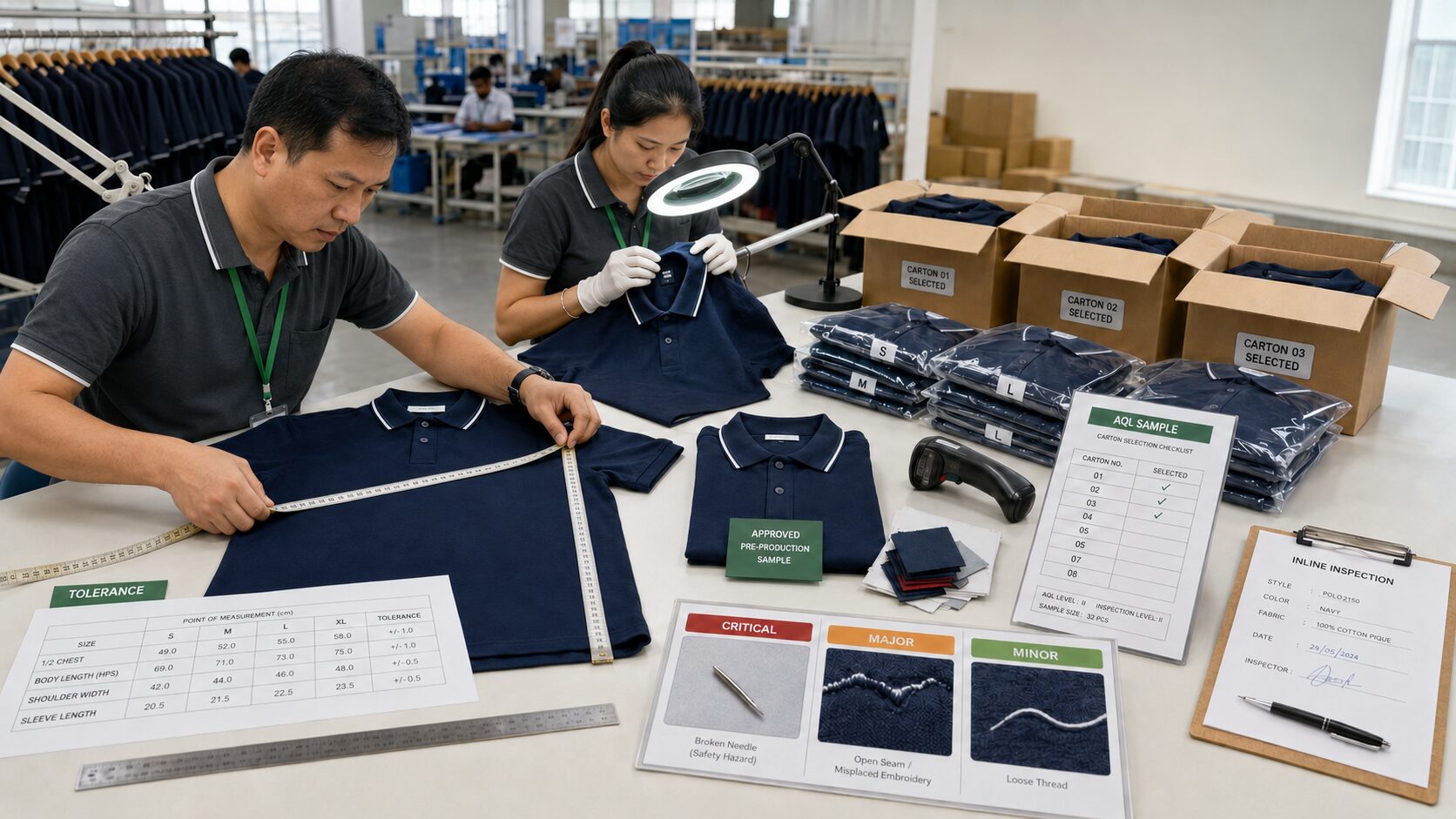
 Apparel Brand Business2026-07-21Custom Clothing Quality Inspection: AQL Levels, Measurement Tolerances and Defect Classification Explained
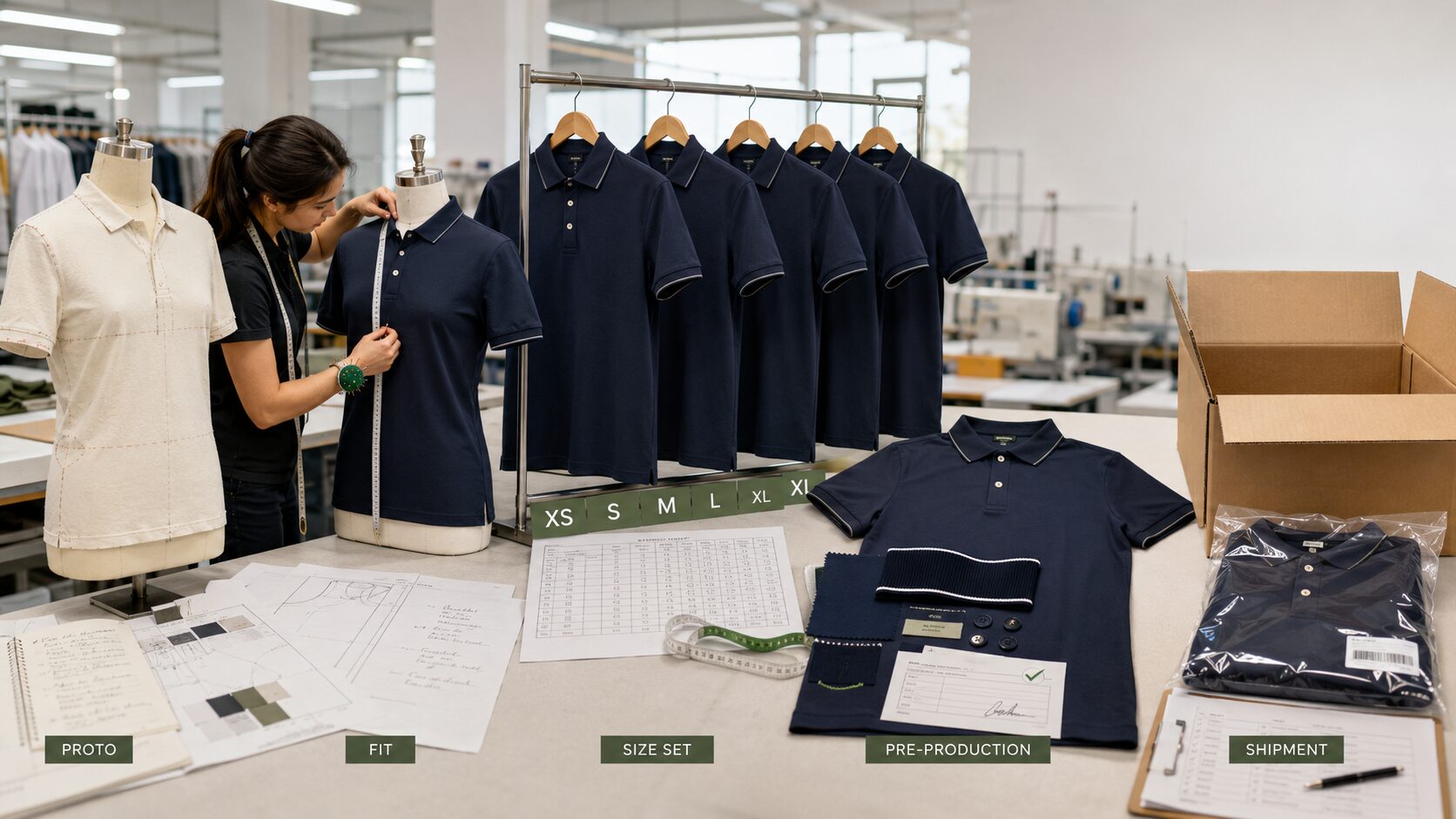
- Apparel Brand Business2026-07-20Garment Sampling Explained: Proto, Fit, Size-Set, Pre-Production and Shipment Samples
- Apparel OEM2026-07-18How to Prepare an Accurate Custom Apparel RFQ: 20 Specifications Every Clothing Factory Needs
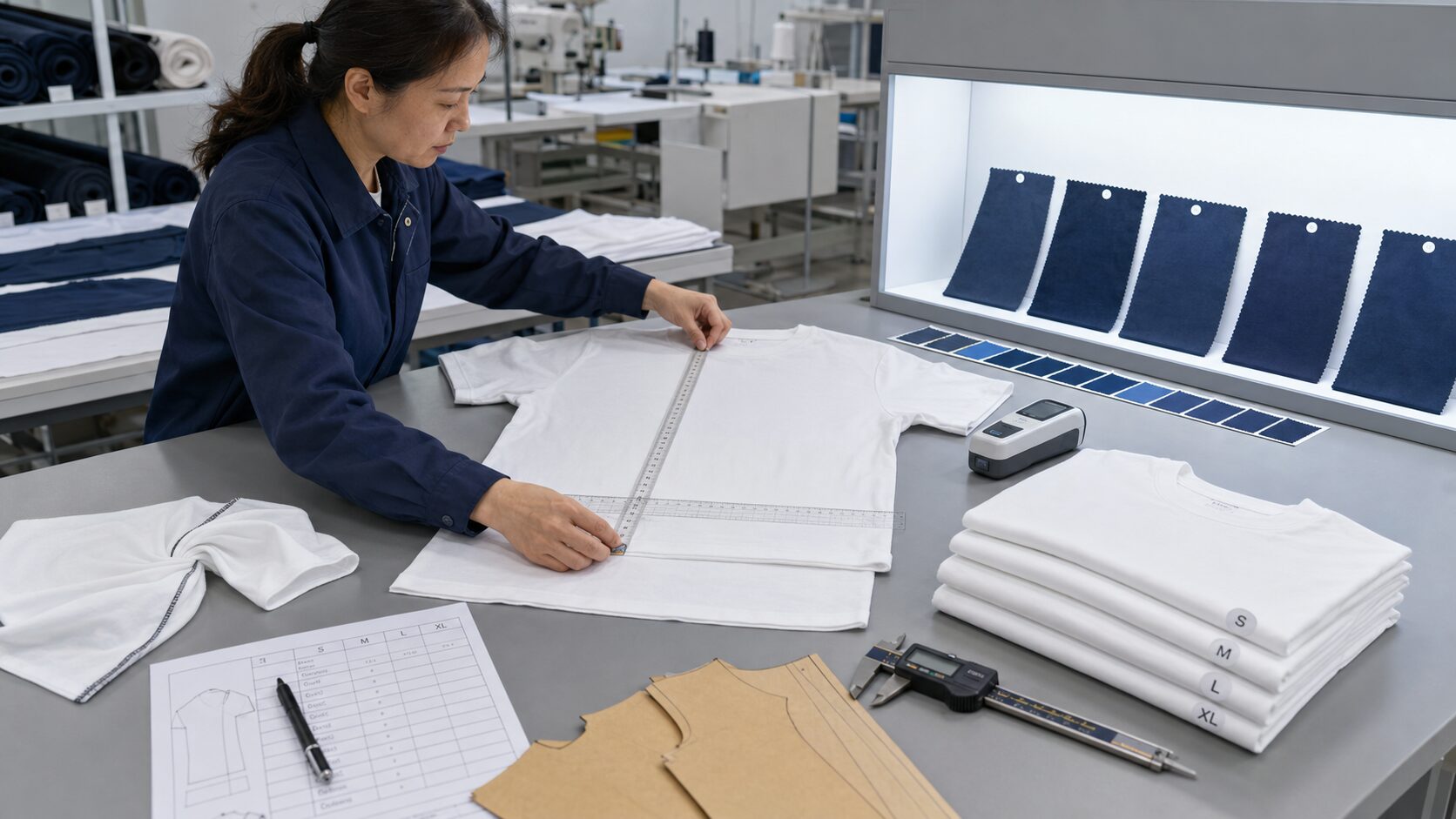
- Knowledge2026-07-17How Clothing Factories Control Shrinkage, Color Variation and Size Inconsistency