


The fastest way to receive an unreliable clothing quotation is to ask a factory:
“How much would 2,000 premium polo shirts with our logo cost?”
A factory can provide a number—but that number will be based largely on assumptions.
One supplier may assume stock fabric, standard sizing and basic embroidery. Another may calculate custom-dyed fabric, reinforced construction, individual packaging and third-party inspection. The resulting prices may look comparable, but they are not quotations for the same product.
An accurate custom apparel RFQ should allow a clothing factory to answer five questions:
- What exactly must be manufactured?
- What quality level must the finished garment meet?
- How many units are required in each color and size?
- When and where must the order be delivered?
- Which services and costs must be included in the quotation?
When this information is missing, the factory must turn the uncertainty into an assumption, an exclusion, a follow-up question or a risk allowance.
That is why a detailed RFQ does more than improve pricing accuracy. It reduces sampling revisions, prevents specification disputes and creates a common basis for comparing potential apparel manufacturers.
What Is a Custom Apparel RFQ?
A custom apparel RFQ, or Request for Quotation, is a structured document sent to clothing manufacturers to request pricing and production terms for a defined apparel project.
It normally combines three types of information:
- Technical requirements: Fabric, measurements, construction, decoration and quality standards.
- Commercial requirements: Quantity, quotation basis, payment expectations and price validity.
- Delivery requirements: Sampling schedule, production milestones, destination and shipping terms.
An RFQ is not the same as a clothing tech pack.
The tech pack describes how a garment should be made. The RFQ places that garment within a commercial order: how many are required, how they should be packed, when they are needed and which costs the factory must quote.
A tech pack without quantities and delivery requirements is not a complete RFQ. An RFQ without adequate technical specifications is usually only a preliminary price estimate.
Why Incomplete Apparel RFQs Produce Misleading Prices
Five factors account for most differences in custom clothing manufacturing costs:
- Material consumption
- Production labor and operation time
- Printing, embroidery and tooling setup
- Quality-control and rejection risk
- Packaging and logistics
If the garment length is not defined, the factory cannot accurately calculate fabric consumption. If artwork dimensions are missing, it cannot calculate embroidery stitches or printing setup. If size ratios are unknown, it cannot estimate marker efficiency. If packaging is unspecified, the quoted price may include only a basic polybag—or no retail packaging at all.
The lowest preliminary quotation is therefore not necessarily the lowest final price. It may simply contain the fewest included requirements.
A professional RFQ makes those assumptions visible before a supplier is selected.
The 20 Specifications Every Clothing Factory Needs
1. Buyer, Brand and Project Information
Start with a short description of the purchasing organization and the project.
Include:
- Company or brand name
- Buyer’s country
- Primary sales market
- Retail, wholesale, corporate, event or institutional use
- New development or repeat order
- Expected purchasing frequency
- Main contact person and decision maker
This information affects the factory’s recommendations. A promotional T-shirt used at a one-day event has different durability requirements from a corporate uniform expected to withstand weekly washing for two years.
Keep this section factual. A manufacturer does not need a long brand story to prepare a quotation, but it does need to understand how the garment will be used.
2. Unique Style Number and Product Description
Assign a unique reference number to every style in the RFQ.
For example:
- LS-POLO-01: Men’s short-sleeve corporate polo
- LS-TEE-02: Unisex heavyweight crew-neck T-shirt
- LS-HOOD-03: Pullover hoodie with kangaroo pocket
Avoid using filenames such as “New Design Final” or “Polo Updated 2.” These names become confusing after revisions begin.
Each different fabric, construction, silhouette or decoration combination should generally be treated as a separate style. If two garments only differ in color, they can usually remain under the same style with separate colorways.
3. Technical Drawings and File Version
Provide clear front, back and detail views of the garment. Ideally, these should be included in a dated and version-controlled tech pack.
The file should identify:
- Garment silhouette
- Panel construction
- Collar and cuff design
- Pocket positions
- Seam locations
- Artwork placement
- Special construction details
- Revision number and issue date
Reference photographs are useful for communicating a general appearance, but photographs alone are not production specifications. A factory cannot reliably determine fabric weight, seam construction, internal finishing or exact measurements from an image.
Use a consistent filename such as:
LS-POLO-01_Tech-Pack_V3_2026-07-18.pdf
When a revision is issued, identify what changed. Do not send individual corrections across several email, WhatsApp or WeChat messages without updating the master document.
4. Order Quantity, Color Breakdown and Size Ratio
“2,000 pieces” is insufficient for production planning.
The factory needs a complete quantity matrix:
| Color | XS | S | M | L | XL | 2XL | Total |
|---|---|---|---|---|---|---|---|
| Black | 20 | 80 | 180 | 180 | 100 | 40 | 600 |
| Navy | 20 | 80 | 180 | 180 | 100 | 40 | 600 |
| White | 30 | 110 | 220 | 220 | 150 | 70 | 800 |
| Total | 70 | 270 | 580 | 580 | 350 | 150 | 2,000 |
Color and size distribution affects:
- Fabric-dyeing minimums
- Cutting efficiency
- Production-line changes
- Label quantities
- Packing configuration
- Unit cost
Separate the confirmed order from future forecasts. A forecast helps the factory plan capacity, but it should not be presented as a firm quantity unless the buyer is prepared to place that order.
5. Target Customer and Size System
Terms such as “European sizing,” “Asian sizing” or “regular fit” are too broad for accurate production.
Specify:
- Men’s, women’s, children’s or unisex
- Target customer market
- Intended fit: slim, regular, relaxed or oversized
- Age group where applicable
- Size range
- Reference garment or approved size chart
- Special body-shape considerations
A unisex medium is not simply a men’s medium with a different label. The shoulder, chest, sleeve, waist and garment-length relationships may all require adjustment.
If the garment is intended for multiple markets, clarify whether one global fit will be used or whether separate regional size specifications are required.
6. Finished Garment Measurements and Tolerances
Provide a measurement table with clearly defined points of measurement.
Typical measurements include:
- Half-chest width
- Body length
- Shoulder width
- Sleeve length
- Sleeve opening
- Bottom opening
- Collar width
- Armhole depth
Each point must show:
- Base measurement
- Size grading rule
- Measurement method
- Permitted tolerance
For example, “chest width: 54 cm” is incomplete unless the factory knows whether it is measured flat, one centimeter below the armhole, and whether the acceptable tolerance is ±0.5 cm or ±1.5 cm.
Tighter tolerances can increase inspection requirements and rejection risk. They should be applied where fit or function genuinely requires them, not copied automatically across every measurement.
7. Fabric Fiber Composition
State the required fiber composition using percentages.
Examples include:
- 100% combed cotton
- 60% cotton / 40% polyester
- 92% recycled polyester / 8% elastane
- 65% polyester / 35% cotton
Avoid descriptions such as “cotton-like,” “premium blend” or “sports fabric.” These are marketing descriptions rather than manufacturing specifications.
If the composition is flexible, say so explicitly and request separately priced alternatives. For example:
- Option A: 100% combed cotton
- Option B: 60/40 cotton-polyester blend
- Option C: Recycled polyester blend
The factory should not silently substitute a different composition to achieve the target price.
8. Fabric Construction and Finished Weight
Fiber composition does not define the fabric by itself.
A 100% cotton garment could use single jersey, interlock, rib, piqué or French terry. These fabrics have different appearances, stretch characteristics, manufacturing costs and end uses.
Specify:
- Knit or woven construction
- Fabric structure
- Yarn type where important
- Finished fabric weight in GSM
- Permitted GSM tolerance
- Width or usable fabric width, if controlled by the buyer
- Brushed, unbrushed, compacted or other finishing state
The GSM should normally refer to the finished fabric, because dyeing, washing, brushing and compaction can change its final weight and dimensions.
For example:
220 GSM ±5%, 100% combed cotton single jersey, reactive dyed, pre-shrunk and compacted.
This is considerably more quoteable than “heavy cotton fabric.”
9. Fabric Performance and Finishing Requirements
If the garment must perform a specific function, define the required result rather than relying only on a fabric trade name.
Possible requirements include:
- Moisture management
- Quick drying
- UV protection
- Antimicrobial treatment
- Water repellency
- Anti-pilling performance
- Colorfastness
- Dimensional stability
- Stretch and recovery
- Odor control
- Industrial-laundry resistance
Clarify whether performance must be supported by laboratory testing, a material certificate or only an approved sample.
Do not request every available feature “just in case.” Each finish may affect cost, fabric hand feel, lead time and minimum order quantity.
10. Color Standard and Approval Method
Words such as navy, royal blue, bright red or charcoal are subjective.
Use a recognized color reference and identify the exact color library. A Pantone code without the library designation can still create ambiguity.
For textile colors, provide one or more of the following:
- Pantone textile reference
- Physical color swatch
- Approved fabric cutting
- Lab-dip reference
- Previous production sample
The RFQ should also explain:
- Whether custom dyeing is required
- Number of lab-dip submissions expected
- Acceptable shade variation
- Lighting conditions used for approval
- Whether different fabric components must match
- Whether future repeat orders must match an archived standard
Color consistency becomes especially important when a polo shirt contains body fabric, rib collars, embroidery thread, buttons and printed artwork in the same corporate color.
11. Garment Construction and Stitching
Define the construction details that affect appearance, comfort and durability.
Depending on the garment, this may include:
- Seam type
- Stitch type
- Stitches per inch
- Seam allowance
- Shoulder taping
- Neck binding
- Side-seamed or tubular construction
- Reinforcement at stress points
- Double-needle hems
- Flatlock seams
- Coverstitch width
- Collar and placket construction
- Pattern matching
“High-quality sewing” is not an inspectable standard.
A more useful instruction would be:
Double-needle coverstitched sleeve and bottom hems, reinforced shoulder seams, clean back-tack termination and no exposed raw edges.
Factories can also propose construction alternatives, but any cost-reduction option should be quoted separately from the original specification.
12. Trims and Accessories
List every component other than the main fabric.
Examples include:
- Buttons
- Zippers
- Drawcords
- Eyelets
- Elastic
- Sewing thread
- Rib collars and cuffs
- Hook-and-loop fasteners
- Snaps
- Shoulder tape
- Interlining
- Reflective tape
- Silicone badges
For each component, define the material, color, dimensions, finish and required supplier or brand where applicable.
Small components can create large delays. A custom zipper pull, molded button or color-matched drawcord may require separate tooling or a higher minimum quantity than the garment itself.
13. Printing, Embroidery and Other Decoration
Decoration should be specified as precisely as the garment.
Include:
- Decoration method
- Artwork file
- Finished dimensions
- Exact placement
- Number of colors
- Color references
- Required hand feel
- Special effects
- Wash-performance expectations
- Whether a strike-off or embroidery sample is required
For embroidery, provide or request:
- Embroidery size
- Thread colors
- Backing requirements
- Placement tolerance
- Estimated stitch count after digitization
For printing, clarify whether the design uses spot colors, gradients, photographs, specialty inks or large coverage areas.
The final decoration cost depends on more than the existence of a logo. A small one-color chest print and a full-back multicolor print require very different setup, labor and material consumption.
14. Labels and Brand Identification
List all labels and branded components required for the finished garment.
These may include:
- Main neck label
- Printed or heat-transfer neck mark
- Size label
- Care and composition label
- Country-of-origin label
- Side-seam flag label
- Hangtag
- Price ticket
- Barcode label
- Security or RFID tag
Supply:
- Final artwork
- Label dimensions
- Material
- Folding method
- Sewing position
- Language requirements
- Barcode data
- Variable information by size or market
Confirm whether the buyer will supply the labels or the factory must manufacture them. Buyer-supplied components should have a documented delivery deadline and an agreed excess quantity to cover production loss.
15. Folding, Packaging and Carton Requirements
Packaging is part of the product specification, not an afterthought.
Define:
- Folding method
- Individual polybag or paper packaging
- Bag dimensions and thickness
- Printed warnings
- Tissue paper or inserts
- Hangers
- Size stickers
- Barcode placement
- Retail-ready packaging
- Carton assortment
- Units per carton
- Carton dimensions or weight limits
- Shipping marks
If the order will be sent directly to a retailer, fulfillment center or distributor, include its current packaging and carton-label requirements in the RFQ.
A factory quotation based on bulk packing should not be compared directly with another quotation that includes individual bags, barcode labels, hangtags and assortment packing.
16. Workmanship and Quality Acceptance Criteria
Replace general statements such as “must be perfect” with measurable acceptance criteria.
The RFQ should identify:
- Critical, major and minor defects
- Measurement tolerances
- Acceptable color and shade variation
- Print and embroidery placement tolerances
- Stitching and workmanship expectations
- Inspection stage
- Sampling plan or AQL requirement, when applicable
- Buyer, factory or third-party inspection responsibility
Examples of possible defect categories include:
- Broken needles or sharp objects
- Incorrect fiber or care information
- Open seams
- Holes or fabric damage
- Incorrect measurements
- Visible stains
- Print misregistration
- Uneven embroidery
- Incorrect packing assortment
The buyer and manufacturer should agree on defect definitions before production—not after finished goods are inspected.
17. Testing, Certification and Market Compliance
Tell the factory where the garment will be sold and who will wear it.
Compliance requirements vary according to:
- Destination market
- Adult or children’s product
- Fiber composition
- Product function
- Printing and chemical treatments
- Retailer requirements
- Institutional or workplace use
The RFQ may need to address:
- Fiber-content labeling
- Care labeling
- Country-of-origin marking
- Restricted substances
- Colorfastness
- Flammability
- Dimensional stability
- Physical safety
- Performance claims
- Social or environmental documentation
Specify which reports must be supplied, who selects the laboratory and who pays for testing.
Avoid asking for unrelated certificates simply because they appear on another brand’s supplier checklist. Unnecessary testing increases cost without improving the fitness of the final product.
18. Sample Types and Approval Process
Specify which samples are required before bulk production.
Depending on the project, these may include:
- Development prototype
- Fit sample
- Fabric or color submission
- Print strike-off
- Embroidery sample
- Size-set sample
- Pre-production sample
- Photo sample
- Shipment sample
For every sample stage, state:
- Number of samples required
- Sizes and colors
- Sample deadline
- Approval responsibility
- Courier destination
- Sample and freight cost expectations
- Number of revision rounds included
The approved pre-production sample should be clearly identified, signed or digitally approved, dated and retained as the control reference.
A photograph of an approved sample is useful for documentation, but it does not replace the physical standard when hand feel, fabric structure, color or construction must be compared.
19. Production and Delivery Timeline
Do not provide only a product launch date.
Work backward from the required warehouse arrival date and define the major milestones:
- RFQ response deadline
- Sample submission
- Sample feedback
- Final sample approval
- Fabric booking
- Bulk material approval
- Production start
- Inline inspection
- Final inspection
- Ex-factory date
- Port departure
- Required warehouse arrival
Clarify when the quoted production lead time begins. It may start only after the factory receives the deposit, approved sample, final artwork and all buyer-supplied materials.
A four-week production time does not mean the goods will arrive four weeks after the initial inquiry. Sampling, approvals, material sourcing, inspection and international transport must also be included in the total project schedule.
20. Quotation Format and Commercial Basis
Tell every shortlisted factory how the quotation should be presented.
Request the following:
- Currency
- Unit price
- Quantity tier
- Minimum order quantity
- Color minimum
- Size surcharge
- Printing or embroidery setup fee
- Label and packaging cost
- Sample fee
- Testing cost
- Tooling charge
- Production lead time
- Price-validity period
- Payment terms
- Incoterm
- Named port or delivery destination
- Included and excluded services
If you have a genuine target cost, you may share it. However, the factory should not be asked to meet a target by quietly changing materials or construction.
A better instruction is:
Quote the original specification first. If the target cost cannot be achieved, provide separately identified value-engineering options and explain their effect on fabric, construction, appearance, durability or packaging.
This preserves transparency while giving the manufacturer room to propose practical alternatives.
Weak RFQ vs Factory-Ready RFQ
Weak inquiry
Please quote 2,000 premium black T-shirts. They should be 100% cotton with our logo and high-quality packaging. Please provide your best FOB price.
This request leaves nearly every cost driver open to interpretation.
Factory-ready inquiry
Style: TS-01 unisex heavyweight crew-neck T-shirt
Quantity: 2,000 units with attached size breakdown
Fabric: 100% combed cotton single jersey, 220 GSM ±5%, pre-shrunk and compacted
Color: Black, matched to the supplied textile color reference; lab-dip approval required
Fit: Relaxed unisex fit based on the attached measurement chart
Construction: Side seams, shoulder taping and double-needle sleeve and bottom hems
Decoration: Two-color screen print, 280 × 320 mm, center front; artwork attached
Labels: Woven main label, separate size label and printed care label
Packaging: Individually folded, recycled polybag, size sticker and barcode label
Quality: Measurement tolerances and workmanship criteria attached
Delivery: Required at the buyer’s warehouse by the specified date
Quotation: Unit price, setup charges, sample cost, production time and FOB Shenzhen basis shown separately
The second RFQ does not guarantee that every factory will offer the same price. It ensures that price differences are more likely to represent genuine differences in capability, efficiency or commercial terms.
A Practical RFQ Folder Structure
A well-organized RFQ package can reduce questions and version-control errors.
Use a folder structure such as:
00_RFQ_Summary01_Tech_Pack02_Size_Specification03_Fabric_and_Color04_Artwork_and_Decoration05_Labels_and_Packaging06_Testing_and_Compliance07_Quantity_Breakdown08_Quotation_Form
Include a short read-me file identifying the current version of every document.
If a specification remains undecided, mark it as TBD and ask the factory to quote clearly stated options. An acknowledged unknown is safer than an invisible assumption.
How to Compare Quotations from Different Clothing Factories
After quotations arrive, do not compare only the headline unit price.
First, reconcile the assumptions behind each offer.
Check whether every supplier quoted the same:
- Fabric composition, construction and GSM
- Garment measurements and size range
- Color-development method
- Printing or embroidery specification
- Labels and packaging
- Testing requirements
- Inspection standard
- Quantity breakdown
- Delivery term
- Destination
- Sample and setup charges
Ask every factory to provide an assumptions-and-exclusions section.
A useful quotation should explain:
- What is included
- What is excluded
- Which specifications were assumed
- Which materials are subject to minimum quantities
- What can change the final price
- When the production lead time begins
- How long the price remains valid
Only after these items are aligned does a unit-price comparison become meaningful.
Seven Common RFQ Mistakes Apparel Buyers Should Avoid
1. Using a Reference Photograph as the Entire Specification
A photograph communicates style but rarely defines fabric, measurements, internal construction or quality.
2. Requesting “The Best Quality at the Lowest Price”
Quality must be translated into materials, construction and acceptance criteria. Otherwise, each factory defines “best” differently.
3. Hiding the Color and Size Breakdown
Factories cannot calculate dyeing minimums, label quantities or cutting efficiency accurately without the order matrix.
4. Requesting a Final Price Before Artwork Is Ready
Decoration size, color count, stitch count and coverage can materially change cost.
5. Changing Specifications Without Updating the RFQ
Verbal or message-based changes create version conflicts. Issue a revised document and request a revised quotation.
6. Confusing Ex-Factory Date with Warehouse Arrival
Production completion is only one milestone. Inspection, export handling, transport, customs clearance and domestic delivery require additional time.
7. Selecting the Lowest Quote Before Checking Exclusions
A low unit price may exclude labels, packaging, testing, setup, samples or freight. Compare scope before price.
Copy-and-Use Custom Apparel RFQ Summary
Buyers can use the following structure as the first page of an RFQ:
Buyer/company:
Project name:
Style number:
Product description:
Target market:
Intended use:
Confirmed quantity:
Forecast quantity:
Color and size breakdown:
Fabric specification:
Fit and measurement reference:
Decoration method:
Labels and packaging:
Testing requirements:
Samples required:
Quotation deadline:
Target sample approval date:
Required ex-factory date:
Required warehouse arrival date:
Quotation currency:
Incoterm and named destination:
Target cost, if applicable:
Attached documents:
Specifications still to be confirmed:
Frequently Asked Questions
Can I request a clothing quotation without a complete tech pack?
Yes. A factory can often prepare a budgetary estimate from drawings, reference samples and preliminary specifications. However, it should be identified as an estimate rather than a final production quotation. The price should be updated after fabric, measurements, construction and decoration are confirmed.
Should I tell the factory my target price?
A realistic target price can help the factory recommend suitable fabrics and construction. It should not replace the technical specification. Ask the manufacturer to quote the requested product first and present cost-saving alternatives separately.
Why do quotations for the same garment vary so much?
The suppliers may be assuming different fabric qualities, GSM values, production methods, defect allowances, packaging or delivery terms. Factory efficiency and order capacity also affect pricing, but the specifications must be aligned before those differences can be evaluated.
Is the sample price the same as the bulk unit price?
Usually not. Sample production includes individual pattern work, setup, material sourcing and manual handling that cannot be distributed across a large order. Ask whether any sample fee can be credited after a bulk order is confirmed.
How many factories should receive the RFQ?
A small, qualified shortlist is usually more effective than sending an incomplete inquiry to dozens of suppliers. The objective is to compare relevant manufacturing partners under the same requirements, not collect the largest possible number of unrelated prices.
When does a factory quotation become final?
The quotation becomes reliable after the main cost drivers are confirmed, including quantity, size ratio, fabric, color, measurements, construction, decoration, labels, packaging, testing and delivery terms. Any later change to these items may require repricing.
Final Thoughts: Better RFQs Create Better Apparel Production Outcomes
An accurate custom apparel RFQ is not administrative paperwork. It is the first quality-control document in the manufacturing process.
The strongest RFQs do three things:
- Convert creative expectations into measurable specifications
- Separate confirmed requirements from unresolved decisions
- Make supplier quotations commercially comparable
Before sending your next clothing manufacturing RFQ, ask whether an independent factory could calculate material, labor, setup, inspection, packaging and delivery costs without inventing missing information.
If the answer is yes, the project is ready for meaningful quotation.
Founded in Shenzhen in 1999, LSLONG Garments supports brands, corporate buyers and apparel businesses with custom T-shirts, polo shirts, hoodies, sportswear and other OEM/ODM clothing programs. Buyers can submit their RFQ, tech pack, artwork or reference samples to receive a specification review and project-based manufacturing proposal.
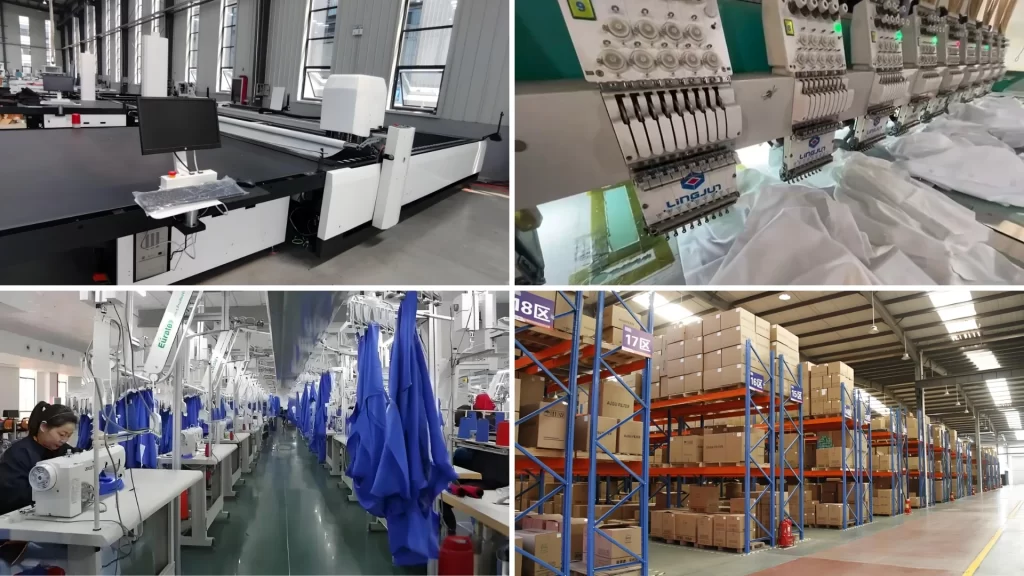
Prepare the details first. Compare equivalent quotations. Approve the standard before bulk production begins.