The most expensive sentence in apparel manufacturing may be:
“But we already approved the sample.”
The problem is that “the sample” could mean a rough prototype made from substitute fabric, a fit sample in one size, a pre-production sample using final materials or a garment pulled from the finished shipment.
These samples do not answer the same questions.
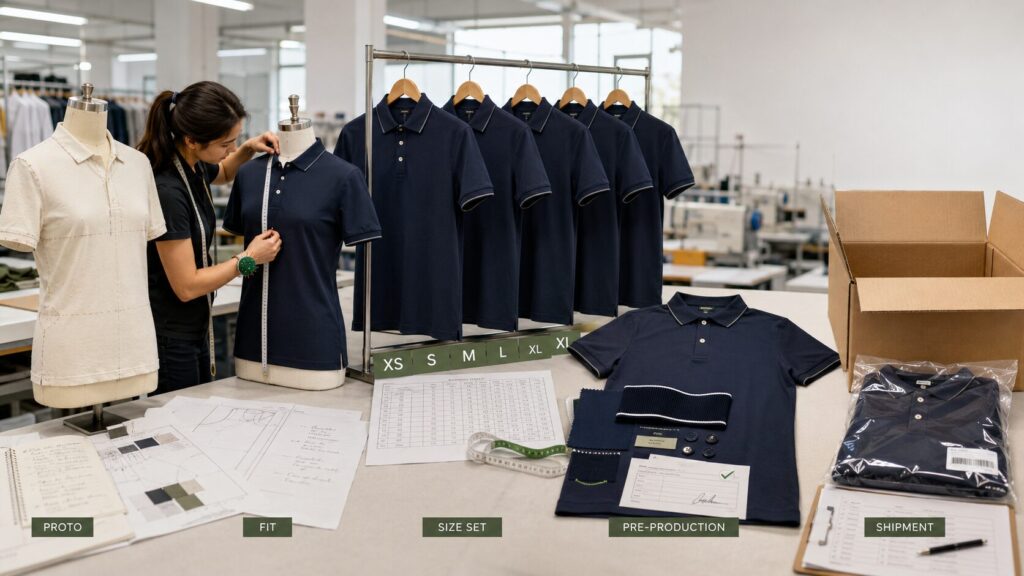
A professional garment sampling process separates product development into controlled approval stages:
Prototype sample: Does the design concept work as a garment?
Fit sample: Does the base size fit the intended customer?
Size-set sample: Does the fit remain correct across the size range?
Pre-production sample: Can the final specification be released for bulk manufacturing?
Shipment sample: Does a garment taken from the finished order represent what was approved?
The objective is not to produce more samples than necessary. It is to make sure that each major uncertainty is resolved before the factory moves to a more expensive stage.
A single garment sample cannot reliably approve design, fit, grading, bulk materials, decoration, packaging and final production quality at the same time.
Each sample should have a defined purpose.
Sample type
Primary question
What it should approve
What it should not automatically approve
Prototype
Does the design work?
Silhouette, construction concept and design feasibility
Final fit, final fabric or bulk quality
Fit sample
Does the base size fit?
Balance, proportions, movement and measurements
Full size grading or final materials
Size-set sample
Does grading work?
Measurement progression and fit across sizes
Bulk color consistency or packaging
Pre-production sample
Is the product ready for bulk production?
Final materials, construction, branding and workmanship
Performance of the entire production line
Shipment sample
What was actually produced?
Reference garment taken from finished bulk goods
Approval of the complete shipment by itself
This distinction prevents a common failure: approving one aspect of a sample and unintentionally treating every other aspect as approved.
For example, a buyer may approve the fit of a polo shirt made from available white piqué fabric. That approval does not automatically confirm the hand feel, shrinkage, shade, collar behavior or embroidery appearance of the final navy bulk fabric.
1. Prototype Sample: Turning a Design into a Garment
A prototype sample—often called a proto sample—is the first physical interpretation of a new design.
Its purpose is to determine whether the concept can be translated into a practical garment.
The prototype stage may reveal that:
A pocket is too close to a seam
A collar cannot hold the intended shape
The neckline is too narrow
A panel creates unnecessary bulk
A print crosses a seam incorrectly
The proposed fabric does not support the silhouette
A decorative feature creates excessive labor or waste
The prototype is primarily a design-development tool. It is not usually a production standard.
What a Prototype Sample Should Evaluate
The buyer and factory should review:
Overall silhouette
Panel structure
Garment proportions
Collar, hood, sleeve or pocket concept
Basic sewing construction
Design feasibility
Placement of major components
Accessibility and comfort
Compatibility between fabric and design
Potential production difficulties
For a custom hoodie, the prototype may be used to evaluate hood depth, pocket position, body length and overall shape. For a polo shirt, the main questions may involve collar dimensions, placket length, sleeve proportion and side-vent construction.
Can Substitute Materials Be Used?
Yes—if everyone understands what is being approved.
Factories sometimes use available fabric or temporary trims to accelerate the first prototype. This can be reasonable when the objective is to evaluate construction or silhouette.
The sample should then be clearly marked:
Substitute fabric used for prototype development. Fabric weight, color, shrinkage and hand feel are not approved at this stage.
If a substitute zipper, button, rib collar or elastic is used, record that exception as well.
Unrecorded substitutions are dangerous because they can later be mistaken for approved components.
Prototype Approval Outcomes
A prototype should receive one of three decisions:
Approved to proceed to fit development
Approved with documented corrections
Rejected and requires a new prototype
“Looks fine” is not a useful approval record.
The buyer should identify which features are approved, which must be revised and which remain undecided.
2. Fit Sample: Approving the Base Size
A fit sample is used to evaluate how the garment sits, moves and feels on the intended wearer.
It is normally produced in one base size, such as women’s medium, men’s large or a designated sample size.
The fit sample answers a more specific question than the prototype:
Does the base pattern produce the intended fit and appearance on the target customer?
What Should Be Checked During a Fit Review?
A professional fit review should consider both measurements and three-dimensional appearance.
Evaluate:
Chest, waist and hip ease
Shoulder position
Neck opening
Armhole depth
Sleeve pitch and length
Body length
Side-seam balance
Front and back balance
Collar or hood position
Garment drape
Range of movement
Fabric tension or distortion
Comfort when sitting, walking or lifting the arms
A garment can measure within tolerance and still fit poorly.
For example, the chest measurement may be correct while the armhole is too low, the sleeve pitch is wrong or the front body pulls upward. Measurement tables and physical fit evaluation must therefore be used together.
Use a Defined Fit Model
Whenever possible, use a fit model whose body measurements represent the intended base size.
Record:
Height
Chest or bust
Waist
Hip
Shoulder width
Relevant posture or body-shape observations
Using a different person for every fit session introduces uncontrolled variation. Comments may reflect changes in the model rather than changes in the garment.
If the buyer cannot conduct an in-person fitting, request:
Garment measurements
Front, side and back photographs
Short movement videos
Close-up images of problem areas
Factory fit comments
Comparison with an approved reference garment
Remote approval can work, but the evidence must be structured.
Fit Sample Comments Must Be Measurable
Avoid comments such as:
Make it slightly more comfortable
The sleeve looks strange
The body should be more fashionable
Make it fit like the reference
Replace them with actionable instructions:
Increase half-chest width by 1 cm
Raise armhole depth by 0.8 cm
Reduce sleeve opening by 1.2 cm
Move shoulder seam forward by 0.5 cm
Shorten center-back length by 1.5 cm
Maintain current collar width and placket length
When a comment is visual rather than numerical, mark the relevant area directly on a photograph or technical drawing.
What a Fit Sample Does Not Approve
Unless final production materials are used, fit approval does not necessarily approve:
Fabric hand feel
Bulk fabric shrinkage
Final shade
Print quality
Embroidery quality
Labels
Packaging
Full size grading
A fabric with different stretch, recovery, weight or shrinkage can change the fit. If the bulk material behaves differently from the fit-sample fabric, another confirmation may be required.
3. Size-Set Sample: Testing the Grading System
Once the base-size fit is approved, the pattern is graded into the full size range.
A size-set sample is used to verify that the approved fit has been translated correctly across those sizes.
This stage answers:
Does the grading maintain the intended proportions and fit from the smallest size to the largest?
A perfect medium does not guarantee a perfect XS or 3XL.
Why Size Grading Can Fail
Size grading is not simply adding the same amount to every measurement.
Different areas may require different grade rules:
Chest width
Shoulder width
Body length
Armhole depth
Sleeve length
Neck opening
Collar length
Pocket dimensions
Print placement
Some components should increase with size. Others should remain unchanged or increase at a slower rate.
For example, a chest logo may remain the same size across all garments, while its placement must shift slightly to remain visually balanced. A polo placket may stay the same length from S to XL but require adjustment in extended sizes.
Does a Size Set Need Every Size?
The answer depends on the project, size range and risk level.
For a narrow size range using a proven block, buyers may review selected sizes. For a new silhouette, children’s range, compression garment or extended size program, reviewing every size may be justified.
At minimum, priority should be given to:
Base size
Smallest size
Largest size
Sizes where grading rules change
Commercially important sizes
Sizes with special construction differences
The quotation and sampling plan should state which sizes will be produced.
What to Check on Size-Set Samples
Review:
Every specified point of measurement
Grade progression between sizes
Garment balance
Shoulder and armhole proportions
Neck opening
Sleeve proportion
Pocket and decoration placement
Collar or hood scaling
Elastic tension
Comfort and movement
Visual consistency across the range
Do not rely only on a measurement report. Selected sizes should be tried on appropriate models or evaluated using approved forms where practical.
Size-Set Approval Does Not Eliminate Bulk Variation
The size set proves that the pattern and grading logic are workable. It does not guarantee that every bulk garment will remain within tolerance.
Bulk consistency still depends on:
Fabric relaxation
Spreading and cutting
Bundle control
Sewing operations
Pressing
Washing or finishing
Measurement inspection
The approved size-set measurements must therefore remain part of the bulk quality-control standard.
4. Pre-Production Sample: The Physical Production Standard
The pre-production sample, commonly called the PP sample, is the most important approval before bulk manufacturing begins.
It should represent the product the factory intends to manufacture at scale.
A PP sample is not another design experiment. By this stage, the major design, fit and grading decisions should already be resolved.
What Should a Pre-Production Sample Include?
Wherever possible, the PP sample should use production-intent components:
Approved bulk or production-standard fabric
Approved color
Final pattern
Approved measurements
Final construction
Correct sewing thread
Final rib, elastic, buttons, zippers and trims
Final print or embroidery
Main label
Size label
Care and composition label
Hangtags
Packaging method
Size stickers and barcodes, where required
If any component is still temporary, identify it clearly in the PP approval record.
The buyer should not assume that “everything else will be correct in bulk.”
PP Sample Approval Checklist
Review the PP sample in the following categories.
Design and fit
Approved silhouette retained
Correct proportions
Measurement conformity
Correct size and fit
Proper garment balance
Acceptable movement and comfort
Materials
Correct fiber composition
Correct fabric structure and weight
Approved hand feel
Correct color
Matching ribs and trims
Correct buttons, zipper, elastic and thread
Construction
Approved seam types
Correct stitching
Reinforcement at stress points
Clean internal finishing
Correct collar, hood, cuff and placket construction
No seam twisting, puckering or distortion
Branding
Correct artwork
Correct print or embroidery dimensions
Correct placement
Approved colors
Acceptable hand feel
Correct labels and hangtags
Packaging
Correct folding
Approved bag or retail packaging
Correct stickers and barcodes
Correct assortment
Correct carton markings
“Approved with Comments” Can Be Risky
Minor corrections may sometimes be completed without producing another full PP sample. However, the boundary between minor and major must be controlled.
A comment such as “remove loose threads” may not require resubmission.
Changes involving the following usually deserve stronger verification:
Fabric
Color
Pattern
Measurements
Fit
Construction
Print dimensions
Embroidery design
Label content
Packaging configuration
Product compliance
If several “small” changes accumulate, the approved sample may no longer represent what will be produced.
Is the PP Sample the Golden Sample?
The approved PP sample often becomes part of the golden-sample package, but the physical garment alone is not enough.
A reliable production standard should include:
Signed or sealed PP sample
Final tech pack
Approved measurement chart
Approved fabric and color reference
Approved artwork
Approved trim card
Approved label and packaging files
Dated comment and approval record
One control set may remain with the factory, while another is retained by the buyer or inspection team.
Physical samples can fade, stretch, become dirty or be damaged. Digital specifications remain necessary even when a golden sample exists.
PP Samples Do Not Prove Production-Line Consistency
A PP sample may be made carefully by an experienced sample technician. Bulk garments will be manufactured by a production line using repeated operations.
The PP sample proves that the specification can be made correctly. It does not prove that hundreds or thousands of garments will be reproduced consistently.
That is why first-output, inline and final inspections remain necessary.
An Important Additional Stage: Top-of-Production Sample
Although it is not one of the five samples in the title, buyers should understand the top-of-production sample, often called a TOP sample.
A TOP sample is taken from the first completed pieces produced on the actual bulk-production line.
It helps answer:
Can the production line reproduce the approved PP standard?
The TOP sample may identify:
Incorrect operator interpretation
Sewing-line tension problems
Print-position drift
Collar or placket inconsistency
Measurement deviation
Packing mistakes
Differences between sample-room and production-line workmanship
For complex, high-value or long-running orders, TOP approval can prevent the same defect from being repeated across the entire batch.
However, the TOP sample should not create a long production stoppage. The approval method and response time should be agreed upon before manufacturing starts.
5. Shipment Sample: Recording What Was Actually Produced
A shipment sample—sometimes called a shipping sample—is selected from the completed bulk order before dispatch.
Unlike the prototype, fit and PP samples, it is not produced specifically by the sample room. It should come from finished production.
Its purposes may include:
Providing a record of the delivered product
Supporting buyer review before arrival
Confirming final appearance and packaging
Serving as a reference for future repeat orders
Supporting sales, photography or customer-service preparation
Preserving evidence if a later dispute occurs
How Should a Shipment Sample Be Selected?
Ideally, it should be randomly selected from completed and inspected goods rather than specially prepared.
The record should identify:
Purchase order
Style number
Color
Size
Production batch
Selection date
Carton or batch reference
Person who selected it
For multi-color or multi-style orders, more than one shipment sample may be required.
What Should Be Checked?
Compare the shipment sample with the approved production standard:
Fabric and color
Measurements
Construction
Print or embroidery
Labels
Folding
Individual packaging
Barcode and size sticker
General workmanship
If the sample is couriered separately, protect it from moisture, crushing and contamination.
A Shipment Sample Is Not a Final Inspection
One garment cannot represent the statistical quality of an entire order.
A carefully selected shipment sample may look correct even when other units contain defects. Conversely, one defective sample may not represent the full production batch.
The shipment sample should complement—not replace—an agreed final inspection process.
Supporting Approvals Used During Garment Sampling
The five main garment samples are often supported by material and decoration submissions.
These may include:
Fabric swatches
Lab dips
Handloom samples
Print strike-offs
Embroidery sew-outs
Trim cards
Button and zipper submissions
Wash-test samples
Packaging mockups
Barcode proofs
These submissions allow specific decisions to be approved without remaking a complete garment every time.
For example, a buyer can approve three lab-dip options before the final fabric is dyed, or approve an embroidery sew-out before it is applied to the PP sample.
Every approval should have a reference number, date and decision status.
Recommended Garment Sampling Workflow
A controlled apparel-development sequence may follow this structure:
Confirm RFQ, design brief and preliminary tech pack.
Produce prototype sample.
Review design feasibility and construction.
Develop and approve base-size fit sample.
Grade the approved pattern.
Produce and approve size-set samples.
Approve fabric, color, trims and decoration submissions.
Produce pre-production sample using production-intent materials.
Freeze specifications and release bulk production.
Review TOP sample or first-line output where required.
Conduct inline quality control.
Complete final inspection.
Select and retain shipment samples.
Dispatch approved goods.
Some activities may overlap to shorten lead time, but overlapping creates risk if one decision depends on another.
For example, ordering all bulk labels before the final size range is approved may save time, but it can also leave the buyer with unusable labels if the sizing structure changes.
How to Create a Reliable Sample Approval Record
Every sample should be accompanied by a tracking sheet.
Field
Required information
Project
Buyer and project name
Purchase order
PO number, if available
Style
Unique style code
Sample type
Proto, fit, size set, PP, TOP or shipment
Version
Revision number
Size and color
Exact sample configuration
Materials
Final or substitute components
Date received
Buyer receipt date
Decision
Approved, approved with corrections or rejected
Comments
Consolidated revision instructions
Approved by
Named decision maker
Next action
Resample, proceed or hold
Photograph the sample from consistent front, back and detail angles. Mark any defects or revisions directly on the images.
Keep all comments in one consolidated document. Multiple departments sending independent comments can create contradictions.
Good Sample Comments vs Unclear Comments
Unclear comment
Actionable comment
Make the body less loose
Reduce half-chest by 1 cm and bottom opening by 1.5 cm
The sleeve looks wrong
Rotate sleeve pitch forward and remove the front drag line
Use a better collar
Maintain approved yarn but increase collar structure and improve edge recovery
Move the logo slightly
Move embroidery center 8 mm upward; retain current size
The color is too dark
Revise toward the approved color standard; reject current lab dip
Packaging looks cheap
Use the approved bag specification and add the defined barcode sticker
Comments should describe the required correction—not only the buyer’s dissatisfaction.
What Causes Sample Drift?
Sample drift occurs when small undocumented changes accumulate between development and production.
Common examples include:
A fit change is made but not added to the measurement chart
The factory changes fabric but retains the old shrinkage allowance
Embroidery placement is approved through a photograph but not updated in the tech pack
Labels are revised after PP approval
The production team receives an older pattern version
Buyer comments from different departments conflict
A substitute component becomes permanent without formal approval
To prevent sample drift, every approved change should update the master specification.
The final product standard must be internally consistent. The physical sample, tech pack, measurement chart, artwork and bill of materials should all describe the same garment.
Real Example: Sampling a Custom Corporate Polo Shirt
Consider a custom corporate polo shirt with embroidered branding.
Prototype stage
The factory develops the basic silhouette and evaluates:
Collar style
Placket length
Sleeve shape
Side vents
Logo position
Overall design feasibility
Available fabric may be used if the final fabric is not ready.
Fit stage
The approved design is tested in the base size.
The buyer reviews:
Shoulder position
Chest ease
Garment length
Sleeve opening
Armhole comfort
Front and back balance
Fit corrections are added to the pattern and measurement chart.
Size-set stage
Selected or all sizes are produced to evaluate:
Chest and length progression
Collar scaling
Sleeve proportion
Placket consistency
Logo position
Extended-size balance
Pre-production stage
The PP polo should include:
Final piqué fabric
Approved bulk color
Final rib collar and cuffs
Production buttons
Correct embroidery
Final labels
Approved folding and packaging
After PP approval, the complete specification is released for production.
Production and shipment stage
Initial production pieces may be reviewed as TOP samples. Inline and final inspections assess bulk consistency. A random finished polo is then retained or couriered as the shipment sample.
At every stage, the sample answers a different question. Treating the prototype as the bulk standard would leave fabric, grading, embroidery, labels and packaging largely uncontrolled.
Common Garment Sampling Mistakes
Approving a Sample Without Identifying Its Type
Always state whether the sample is a proto, fit, size-set, PP, TOP or shipment sample.
Approving Fit from Photographs Alone
Photographs can show appearance but rarely reveal comfort, movement, balance or fabric behavior completely.
Approving Substitute Fabric as Final Fabric
Record exactly which material characteristics remain unapproved.
Skipping the Size Set
Base-size approval does not prove that grading works at the smallest and largest sizes.
Requesting PP Samples Before Development Is Complete
The PP stage should confirm the final specification—not continue unresolved design development.
Making Changes After PP Approval
Any post-approval change should be documented, assessed for cost and timing, and reapproved at an appropriate level.
Treating a Perfect Sample as Proof of Bulk Quality
Bulk quality depends on cutting, sewing, finishing and inspection controls, not only on sample-room performance.
Using a Shipment Sample Instead of Final Inspection
A single shipment sample cannot represent an entire production lot.
Frequently Asked Questions
How many garment samples are needed before bulk production?
It depends on the design complexity, existing patterns, fabric risk, size range and buyer requirements. A simple repeat order may require fewer development stages, while a new performance garment may require prototypes, multiple fit rounds, size sets, material tests and a final PP sample.
Can one sample serve as both a fit sample and PP sample?
It may be possible for a proven style using final materials and an established pattern. For a new design, combining stages can hide unresolved risks. The approval document must clearly identify everything the sample is intended to approve.
Who should pay for garment samples?
Sample charges, material costs and courier fees should be agreed upon in the quotation. Development samples are more expensive per unit than bulk garments because pattern work, individual setup and material sourcing cannot be distributed across a large production quantity.
How many fit-sample revisions are normal?
There is no universal number. The revision count depends on the quality of the original tech pack, pattern complexity, fit expectations and speed of buyer feedback. Clear, consolidated and measurable comments usually reduce unnecessary rounds.
Can buyers approve samples remotely?
Yes. Remote approval can use measurement reports, detailed photographs, videos, couriered samples and digital comment sheets. Physical review remains important when fit, hand feel, color or construction cannot be judged reliably on screen.
What happens if the bulk fabric changes after PP approval?
The effect of the change should be assessed before production. A different fabric may alter color, drape, stretch, shrinkage, printing performance and fit. A revised sample or targeted testing may be required.
Should the factory and buyer both keep an approved sample?
For important custom orders, retaining corresponding control samples can reduce disputes. The sample should be dated, identified and supported by the same final technical documents on both sides.
Conclusion: Garment Sampling Is an Approval System
Garment sampling is not a sequence of increasingly polished prototypes. It is a risk-control system.
Each stage should close a different gap:
The prototype sample confirms the design concept.
The fit sample confirms the base-size fit.
The size-set sample confirms the grading.
The pre-production sample freezes the production specification.
The shipment sample records what was taken from finished production.
The process works only when approvals are specific, documented and connected to the correct sample version.
Before approving any garment sample, buyers should ask:
What exactly does this sample prove—and what remains unapproved?
Clothing Manufacturer in China
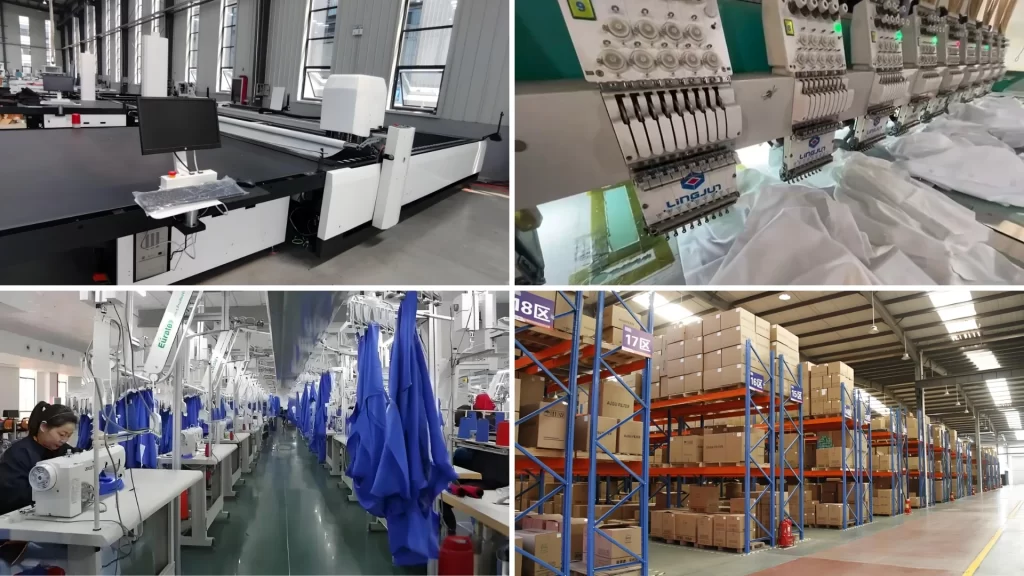
Founded in Shenzhen in 1999, LSLONG Garments provides custom apparel development and OEM/ODM manufacturing for T-shirts, polo shirts, hoodies, sportswear, corporate uniforms and specialized clothing. Buyers can submit a design, technical package or reference garment for sample planning, specification review and production evaluation.
Approve the right question at the right stage. Freeze the standard before bulk production. Inspect the order against what was actually approved.