1. Event Overview: Why Lei Jun’s T-Shirts Went Viral
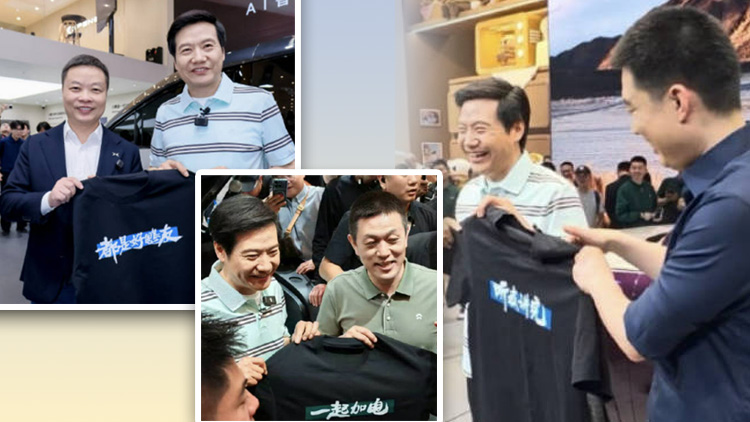
At the 2026 Beijing International Automotive Exhibition, Lei Jun once again became the center of attention—not through product launches alone, but through a simple yet powerful gesture: gifting customized T-shirts to industry leaders.
According to multiple reports, Lei Jun visited booths of leading EV brands such as BYD, XPeng, Li Auto, and NIO, presenting each founder with a uniquely designed T-shirt featuring tailored slogans. (BJ News)
Examples include:
- “Are all good friends” for He Xiaopeng
- “Listen to me” referencing a viral moment of Li Xiang
- “Together is China’s auto industry” for Wang Chuanfu (BJ News)
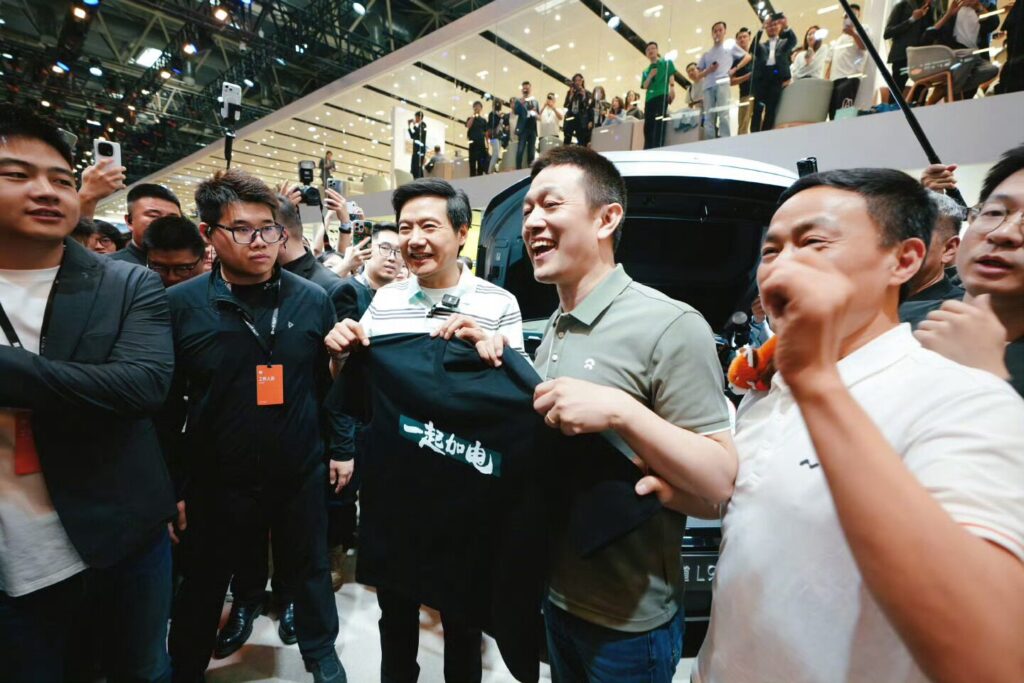
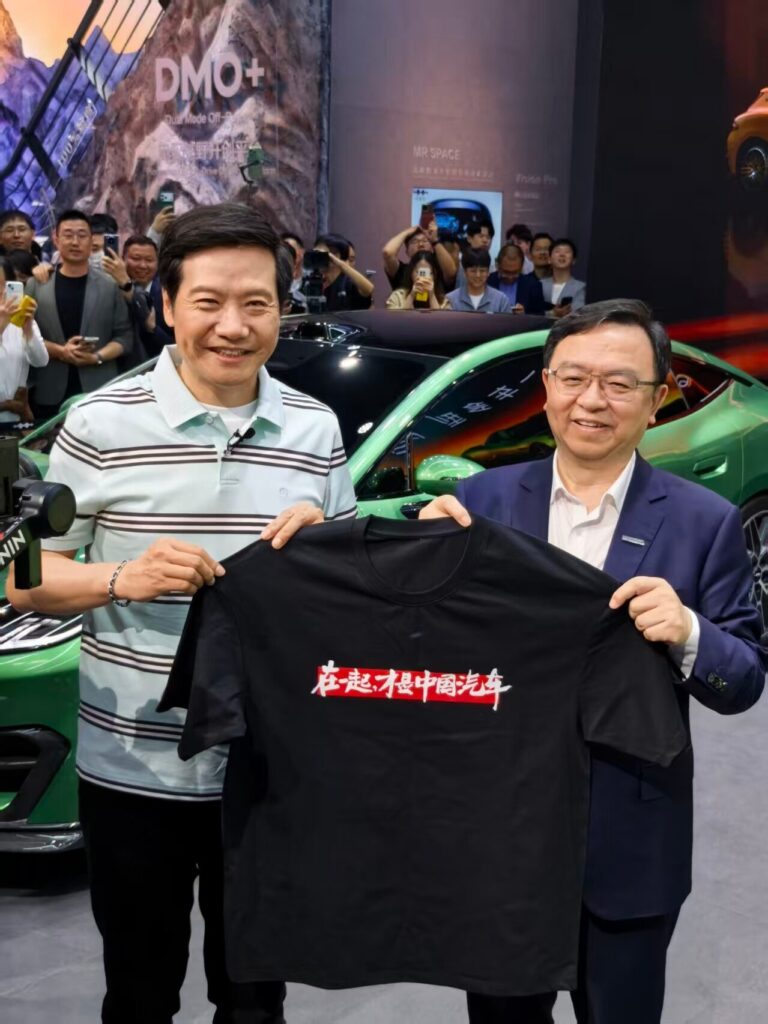
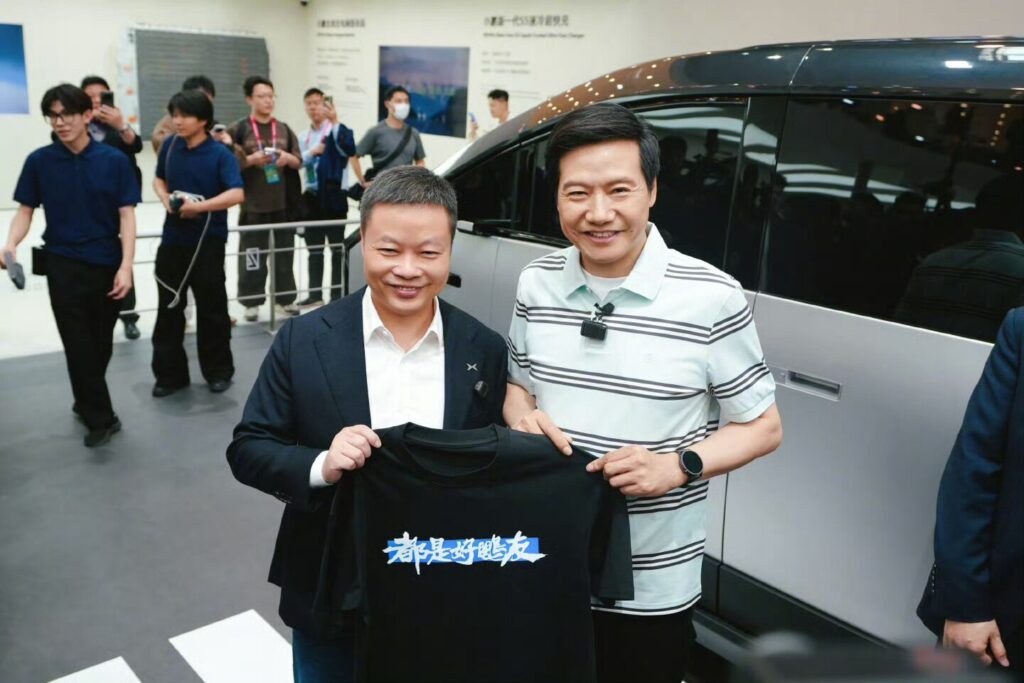
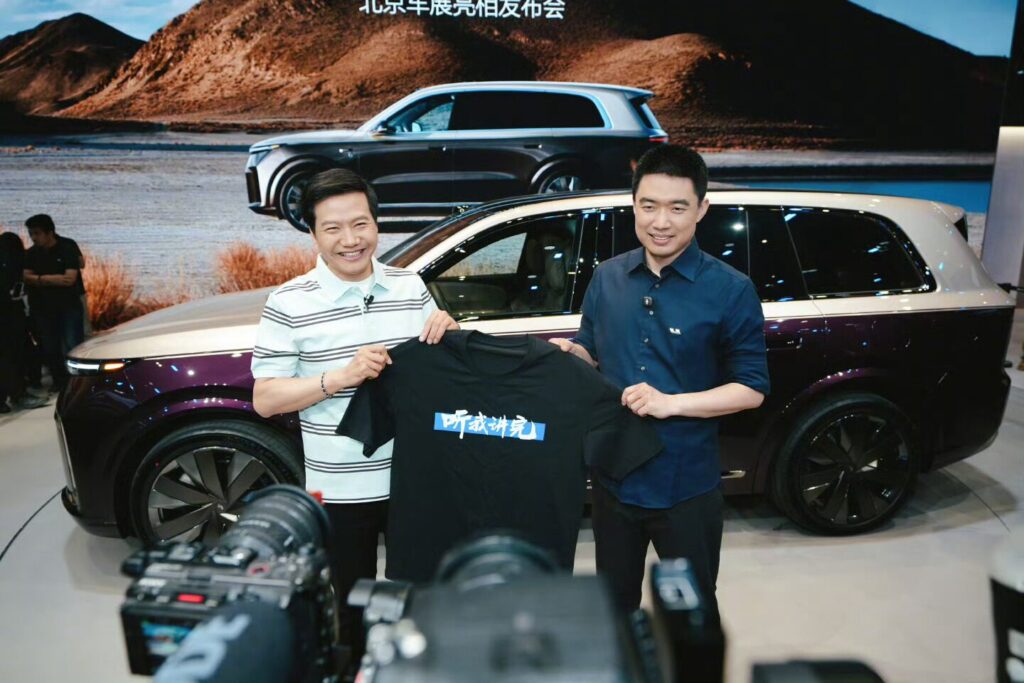
These T-shirts were not random gifts—they were cultural symbols, inside jokes, and brand narratives compressed into wearable media. Within 48 hours, the topic spread widely across Chinese social platforms, generating massive engagement and discussion. (Zaker)
2. Scene Visualization: Custom T-Shirt Moments at the Auto Show
Below are representative visual scenes reflecting this viral moment:
Industry Leaders Interaction + T-Shirt Gifting
Close-up: Printed Slogans as Cultural Symbols
These visuals highlight a key insight:
the T-shirt is not just merchandise—it is a communication medium.
3. Why Custom T-Shirts Are Powerful Marketing Media (Communication Theory Perspective)
From a professional marketing and communication standpoint, custom T-shirts function as high-efficiency, low-cost viral carriers. Their effectiveness can be explained through several core theories:
3.1 Medium as Message (McLuhan Theory)
The T-shirt itself is the medium. Unlike ads, it is:
- worn in public
- naturally integrated into social environments
- repeatedly exposed without media buying costs
This transforms users into walking billboards.
3.2 Memetic Transmission (Viral Spread Logic)
Lei Jun’s slogans are short, emotional, and contextual:
- easy to remember
- easy to replicate
- easy to share
This aligns with memetics:
Information that can be copied easily spreads exponentially.
A phrase like “Listen to me” carries pre-existing narrative context, dramatically lowering cognitive load and boosting shareability.
3.3 Social Identity & Tribal Signaling
Custom T-shirts act as:
- identity markers
- group affiliation signals
- cultural alignment indicators
In the auto industry context, they symbolize:
- mutual respect among competitors
- a shared vision of China’s EV future
This transforms a simple product into a social signaling device.
3.4 Offline-to-Online Amplification
Offline event (auto show interaction)
- Visual capture (photos/videos)
- Social media amplification
- Secondary content creation (memes, commentary, media reports)
This creates a self-propagating communication loop, with T-shirts as the core trigger.
4. Strategic Insight: Why Automotive Brands Love Cultural Apparel
For automotive brands, custom T-shirts offer unique advantages:
- Low production cost vs high brand exposure
- Emotional storytelling vs technical messaging
- Strong lifestyle positioning vs pure product positioning
- High compatibility with events, exhibitions, and communities
In an era dominated by AI content and algorithmic feeds,
physical, wearable media becomes even more valuable because it is:
- authentic
- tangible
- socially visible
5. LSLONG Case Study: OEM Custom Apparel for Global Automotive Brands
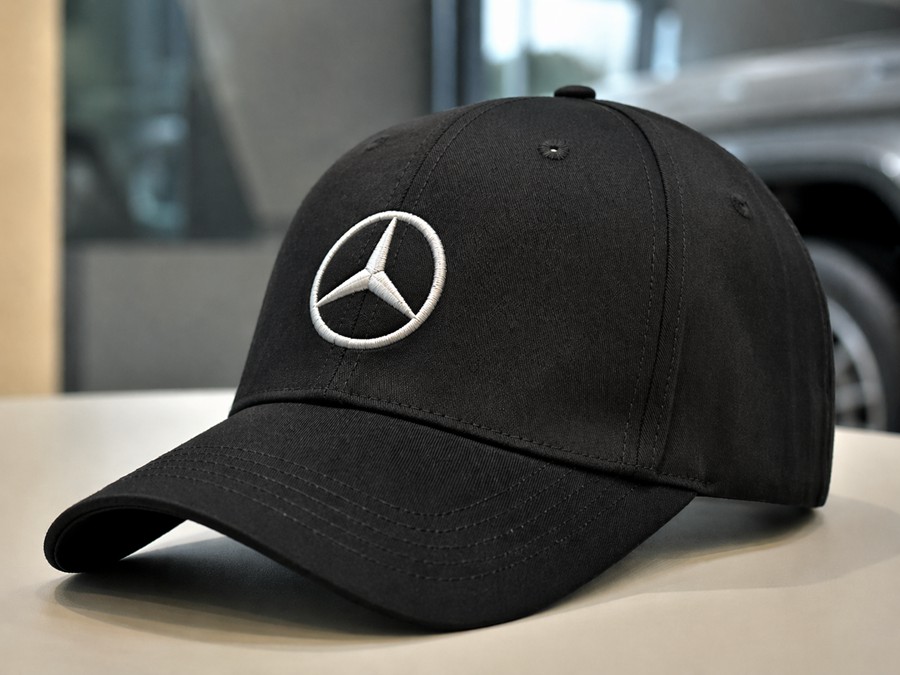
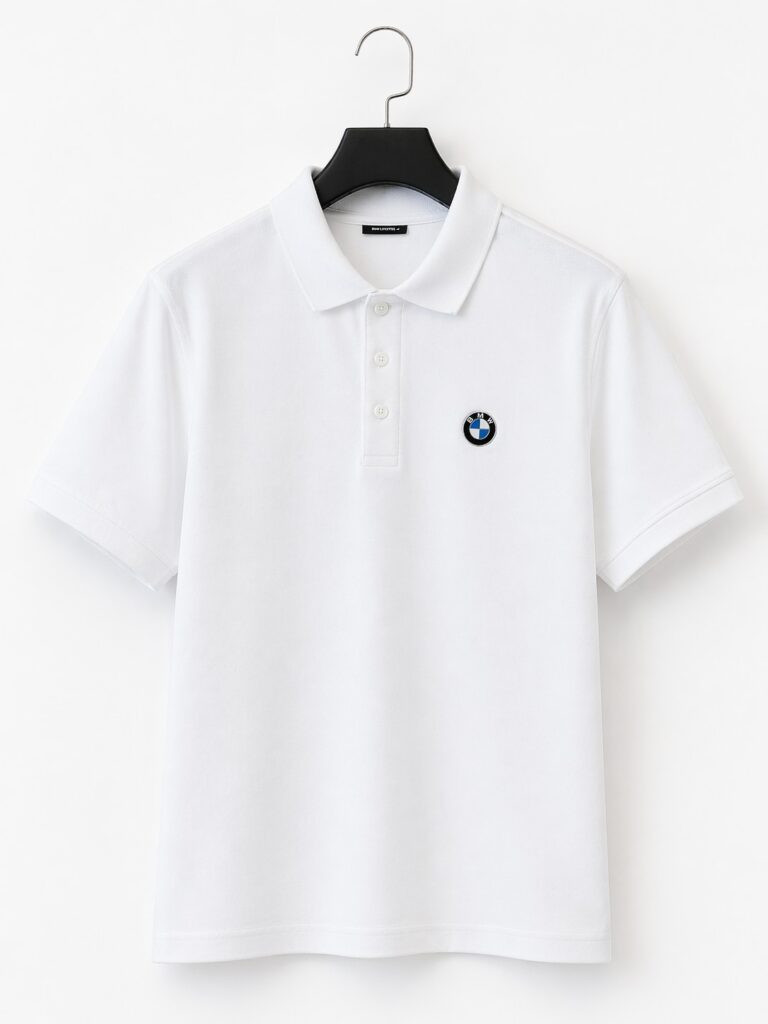
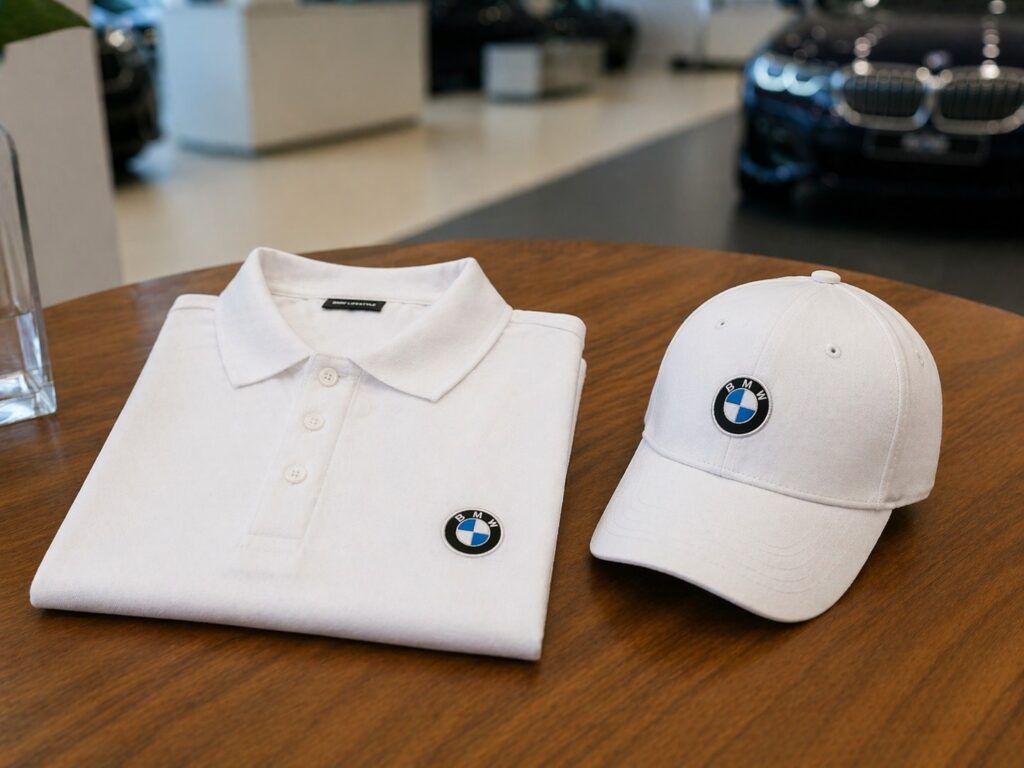
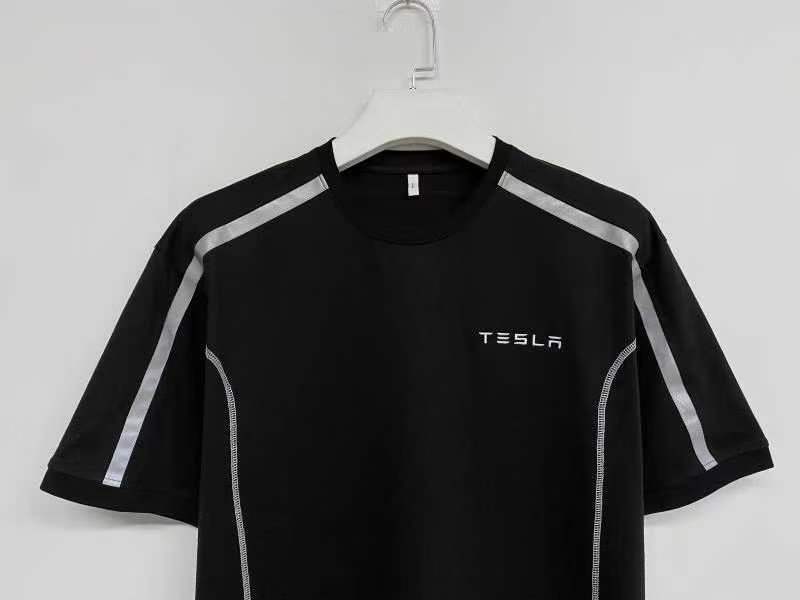
As a professional OEM manufacturer, LSLONG has been deeply involved in this category—providing custom cultural apparel solutions for global automotive brands including:
- Mercedes-Benz
- BMW
- Bentley
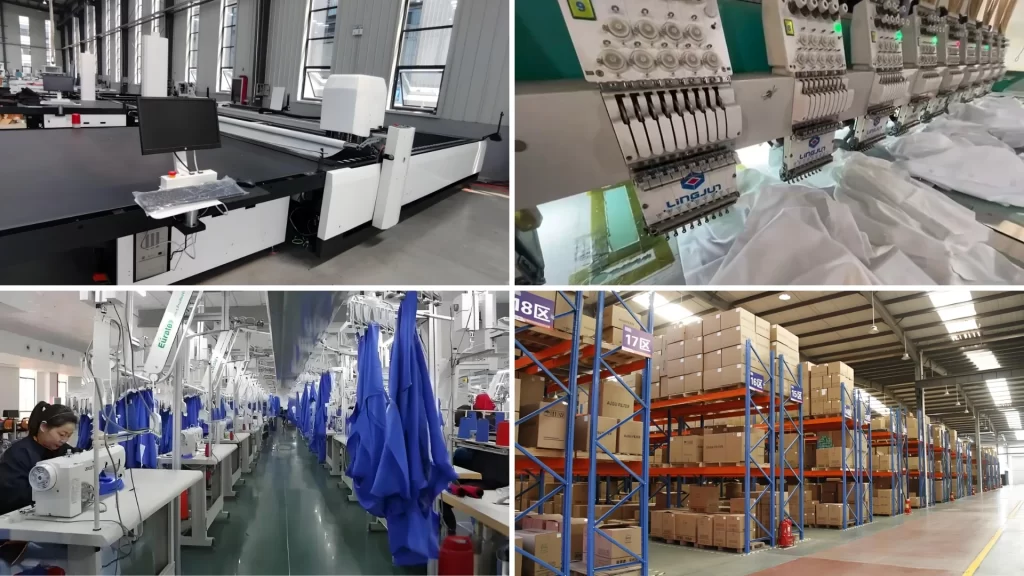
LSLONG Capabilities:
- Premium embroidery & printing (high-density stitching, logo precision)
- Fabric engineering (breathability, durability, performance fabrics)
- Full OEM/ODM customization (design → sampling → mass production)
- Event-specific apparel solutions (auto shows, brand campaigns, motorsports)
Application Scenarios:
- Auto show staff uniforms
- Brand merchandise collections
- VIP customer gifts
- Motorsport team apparel
- Dealer network uniforms
6. Conclusion: From T-Shirt to Cultural Infrastructure
The success of Lei Jun’s T-shirt campaign is not accidental. It reflects a deeper shift:
Marketing is no longer about broadcasting messages—it is about embedding meaning into objects people choose to wear, share, and talk about.
Custom T-shirts sit at the intersection of:
- product
- media
- culture
- identity
For brands aiming to win in the AI + social era, the takeaway is clear:
The most powerful marketing assets are no longer ads—
they are artifacts that people willingly carry into the world.
Author Profile

-
LISLON is a leading China OEM clothing manufacturer based in Shenzhen, Guangdong, the core of China’s garment industry. Founded in 1999, we specialize in custom polo shirts, T-shirts, sportswear, corporate uniforms, and hoodies with flexible OEM/ODM services.
Trusted by global brands like Mercedes-Benz, BYD, China Mobile, and PetroChina, LISLON delivers reliable, high-quality bulk apparel manufacturing. Contact us for expert support on your custom clothing production.
Latest entries
 Apparel Brand Business2026-07-21Custom Clothing Quality Inspection: AQL Levels, Measurement Tolerances and Defect Classification Explained
- Apparel Brand Business2026-07-20Garment Sampling Explained: Proto, Fit, Size-Set, Pre-Production and Shipment Samples
- Apparel OEM2026-07-18How to Prepare an Accurate Custom Apparel RFQ: 20 Specifications Every Clothing Factory Needs
- Knowledge2026-07-17How Clothing Factories Control Shrinkage, Color Variation and Size Inconsistency