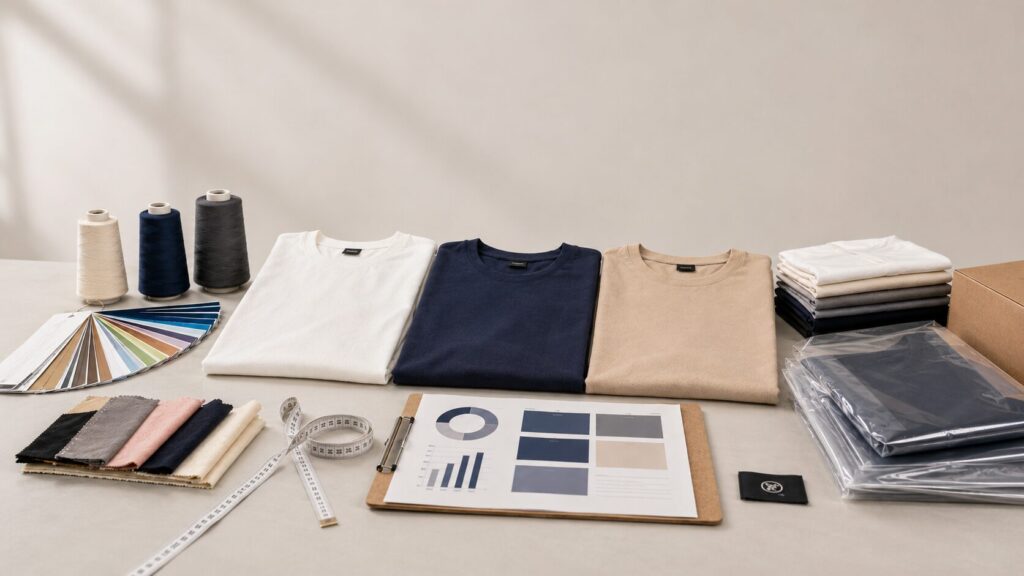
Custom T-shirt manufacturing costs depend on much more than fabric and sewing. Material specifications, order quantity, artwork, printing method, labels, packaging, quality requirements and delivery terms can all change the final factory price.
Two T-shirts may look almost identical in a photograph yet have significantly different production costs. One may use open-end cotton, standard sizing and a simple one-color print. The other may use compact-spun combed cotton, a custom-developed fit, reactive dyeing, reinforced seams and retail-ready private label packaging.
When buyers ask, “How much does a custom T-shirt cost?” an experienced manufacturer cannot provide a reliable answer without first understanding the product.
This guide explains how a professional T-shirt factory calculates a quotation—and how buyers can control costs without quietly reducing product quality.
The Short Answer: What Determines a Custom T-Shirt Factory Price?
The main cost variables are:
- Fabric composition and quality
- Fabric weight, measured in GSM
- Pattern and garment construction
- Order quantity and color distribution
- Printing or embroidery method
- Custom labels, trims and packaging
- Sampling and product development
- Quality control and testing requirements
- Production schedule
- Shipping terms and destination
For most standard T-shirts, fabric is the largest individual cost. However, decoration can become equally important when a design uses large print areas, multiple colors, specialty inks or complex embroidery.
The factory price should therefore be treated as the result of a complete product specification—not as a fixed price for the word “T-shirt.”
A Practical T-Shirt Manufacturing Cost Structure
The following percentages illustrate how the cost of a typical custom T-shirt order may be distributed. They are not fixed quotations; every product specification creates a different balance.
| Cost Component | Indicative Share | Main Variables |
|---|---|---|
| Fabric and dyeing | 40–55% | Fiber, yarn, GSM, color, finishing and fabric loss |
| Cutting and sewing | 15–25% | Pattern complexity, seams, workmanship and labor time |
| Printing or embroidery | 5–25% | Method, size, colors, artwork and order volume |
| Labels, trims and packaging | 3–10% | Woven labels, hang tags, polybags, barcodes and cartons |
| Development and sampling | 2–8% | Pattern creation, sample rounds and fit corrections |
| Quality control and overhead | 8–15% | Inspection level, testing, order management and factory operations |
These percentages are most useful for understanding the logic behind a quotation. They should not be used to reverse-engineer a final price because fabric, labor and decoration costs interact with each other.
For example, a higher-GSM fabric costs more per garment and may also require different needles, sewing settings, print curing conditions and packaging dimensions.
1. Fabric Is Usually the Largest Cost Driver
A request for “100% cotton” is not specific enough for accurate pricing.
Cotton T-shirts can be manufactured from different yarn types, fiber grades, knitting structures and finishing processes. These choices influence softness, durability, shrinkage, print performance and cost.
Fiber composition
Common options include:
- 100% cotton
- Combed cotton
- Ring-spun cotton
- Organic cotton
- Cotton-polyester blends
- Cotton-spandex blends
- Recycled polyester
- Performance polyester
- Cotton-polyester-rayon tri-blends
A conventional cotton T-shirt and an organic cotton T-shirt may share the same weight and pattern but have different raw-material, certification and sourcing costs.
Blended fabrics are not automatically cheaper. A technically engineered polyester fabric with moisture management, UV protection or antimicrobial treatment can cost more than standard cotton jersey.
Yarn quality
Short, irregular fibers generally produce a rougher surface and greater pilling risk. Combed and compact-spun yarns remove or control more of these fibers, creating a smoother and more consistent fabric.
Better yarn can improve:
- Surface smoothness
- Print clarity
- Resistance to pilling
- Garment appearance
- Comfort against the skin
- Durability after repeated washing
Buyers comparing quotations should confirm whether factories are pricing the same yarn and fabric construction.
Fabric weight
Fabric weight is normally expressed in grams per square metre, or GSM.
| Fabric Weight | Typical Positioning | Common Applications |
|---|---|---|
| 130–150 GSM | Lightweight | Promotional shirts, hot climates and event apparel |
| 160–180 GSM | Standard | Everyday retail and corporate T-shirts |
| 190–220 GSM | Premium | Structured retail products and heavyweight basics |
| 230 GSM and above | Heavyweight | Streetwear, oversized fits and premium collections |
A heavier T-shirt consumes more yarn, but GSM alone does not determine quality. A well-engineered 170 GSM combed cotton fabric may outperform a poorly finished 220 GSM fabric.
The quotation should therefore identify both the GSM and the material specification.
Dyeing and finishing
Fabric color and finishing also affect the price. Possible processes include:
- Stock-color selection
- Custom Pantone color matching
- Reactive dyeing
- Garment dyeing
- Enzyme washing
- Silicone softening
- Pre-shrinking
- Brushing
- Moisture-wicking treatment
- Anti-pilling finishing
Using an available stock color is usually more economical for a small order. A custom Pantone color may require a separate dye lot, laboratory dips and a higher minimum fabric quantity.
2. Pattern and Construction Affect Labor Cost
A basic crew-neck T-shirt is relatively efficient to produce. Once the design introduces custom panels, curved seams or unconventional proportions, the factory must spend more time on pattern development, cutting, sewing and inspection.
Construction details that may increase cost include:
- Oversized or drop-shoulder patterns
- Custom sleeve shapes
- Curved or split hems
- Side panels
- Contrast fabric panels
- Double-layer construction
- Ribbed cuffs
- Chest pockets
- Zippers or buttons
- Shoulder-to-shoulder neck tape
- Reinforced seams
- Coverstitching
- Raw-edge details
- Reflective components
The number of sewing operations matters. Every additional operation adds handling time and creates another point that must be controlled during production.
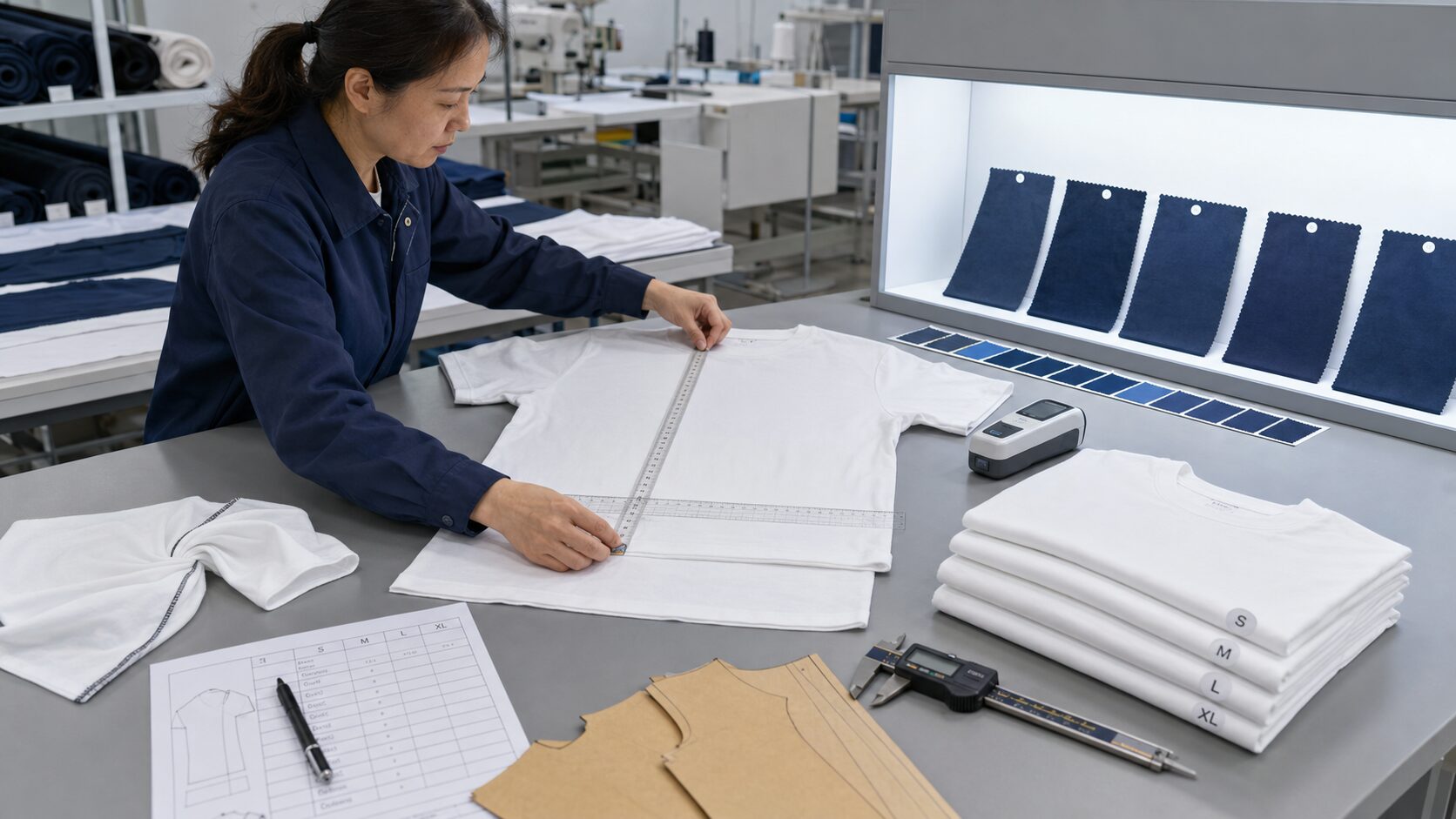
This is why a quotation based only on a reference photograph can be misleading. A proper tech pack should define the garment’s measurements, stitching, seam construction and finishing requirements.
3. Order Quantity Changes the Unit Price
Custom manufacturing includes both variable costs and setup costs.
Fabric consumption and sewing labor increase with every garment. Pattern development, printing screens, embroidery digitization, sample preparation and production scheduling are largely setup expenses. These costs must be distributed across the order.
When the order quantity increases, setup costs are shared across more units.
Quantity per style is not the only number that matters
Factories also evaluate:
- Quantity per color
- Quantity per print design
- Quantity per size
- Number of fabric types
- Number of packaging configurations
- Number of shipment destinations
An order for 1,000 identical black T-shirts is usually more efficient than an order for 1,000 units divided across ten colors, five prints and several packaging formats.
Both orders contain 1,000 pieces, but the second requires more material changes, production setups, sorting and inspection.
How size distribution affects cost
Extended sizes consume more fabric. If an order contains a high proportion of 3XL–5XL garments, the average fabric consumption will be higher than for an order concentrated around S–L.
A factory may:
- Use one blended unit price for all sizes
- Add a surcharge for extended sizes
- Calculate separate prices by size group
Buyers should confirm the pricing method before approving the purchase order.
LSLONG supports flexible custom manufacturing, with many standard OEM programs starting from approximately 50 pieces per style, subject to fabric, color and customization requirements. Smaller orders are useful for market testing, while larger orders provide better production efficiency.
4. Printing Method Can Change the Price Dramatically
The lowest-cost decoration method depends on the artwork, fabric and quantity. There is no single printing process that is cheapest for every order.
Screen printing
Screen printing is efficient for medium and large orders with repeatable artwork.
Cost is influenced by:
- Number of print colors
- Number of print positions
- Print dimensions
- Ink type
- Fabric color
- Required underbase
- Number of screens
- Print complexity
A small one-color chest logo costs less than a large front-and-back design using eight colors. On dark fabric, an additional white underbase may be necessary to maintain color accuracy.
Direct-to-garment printing
DTG is suitable for detailed artwork, gradients, photographic images and smaller production runs. It avoids the need to prepare a separate screen for every color.
However, the cost depends on:
- Printable area
- Ink consumption
- Fabric composition
- Fabric pretreatment
- Whether the garment is light or dark
- Required print resolution
DTG may be economical for a small collection with many designs but less competitive for a large order using a simple one-color logo.
Heat transfer and DTF
Heat-transfer and direct-to-film methods work well for detailed, multicolor graphics and flexible order quantities.
The price is affected by:
- Transfer dimensions
- Film and adhesive requirements
- Number of placements
- Pressing time
- Fabric compatibility
- Required stretch and wash resistance
Buyers should evaluate breathability and hand feel, especially when the graphic covers a large area.
Sublimation printing
Sublimation is normally used on polyester or polyester-rich fabrics. It can produce vivid, durable graphics without a heavy surface layer.
For all-over sublimation, the printing cost is only one part of the calculation. The factory may also need to print individual garment panels before cutting and sewing them together.
Embroidery
Embroidery is priced mainly according to stitch count, design size and number of placements—not simply the number of logo colors.
Dense artwork can increase:
- Machine running time
- Thread consumption
- Backing material
- Risk of fabric distortion
- Finishing labor
Embroidery works particularly well for premium corporate apparel, but a very dense design may not be appropriate for lightweight T-shirt fabric. Simplifying the artwork can improve both cost and appearance.
5. Labels and Packaging Are Small Details With a Real Cost
Private label manufacturing transforms a garment into a retail-ready branded product. Each element has its own material, setup and application cost.
Common options include:
- Woven neck labels
- Printed satin labels
- Heat-transfer neck labels
- Size labels
- Care and composition labels
- Flag labels
- Hang tags
- Branded polybags
- Tissue paper
- Stickers
- Barcode labels
- UPC or EAN labels
- Carton marks
- Custom boxes
The individual cost may seem small, but it becomes significant across a large order.
Packaging can also affect freight. A premium rigid box may improve product presentation but increase shipping weight and carton volume. For e-commerce products, the better question is not simply “What looks premium?” but “What protects the product and supports the intended sales channel?”
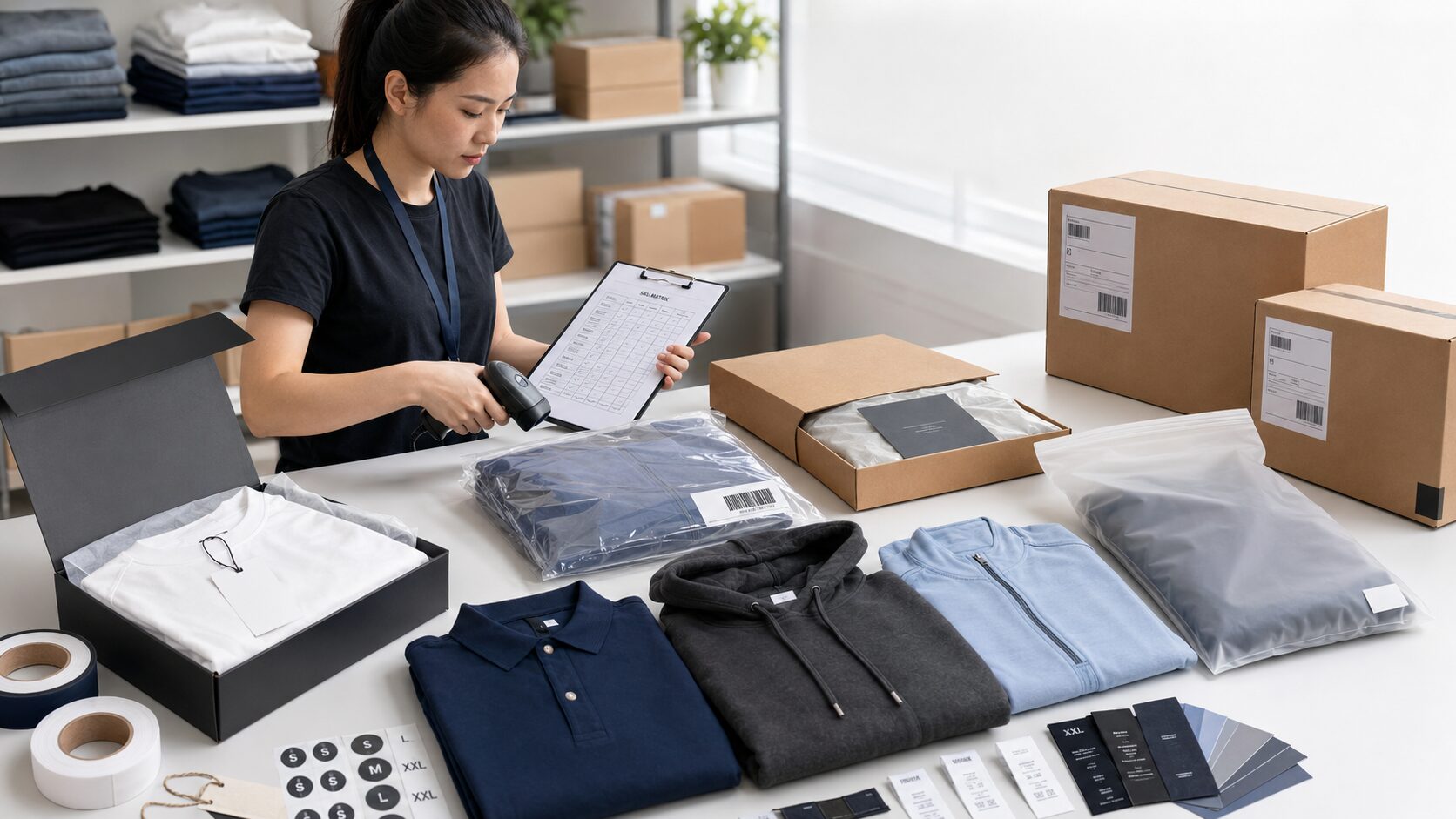
LSLONG can integrate labels, hang tags, barcodes and branded packaging into the production process, helping buyers receive garments prepared for retail, distribution or e-commerce fulfillment.
6. Sampling Is Product Development, Not Just a Single T-Shirt
A sample is not simply one expensive garment. It may involve:
- Tech pack review
- Pattern creation
- Fabric sourcing
- Prototype cutting
- Sample sewing
- Artwork preparation
- Printing or embroidery setup
- Measurement inspection
- Fit evaluation
- Revision and resampling
If the buyer supplies a complete and accurate tech pack, development is usually faster. If the factory must interpret incomplete sketches or photographs, more communication and revision may be necessary.
Common sample types
Development sample: Tests the overall design and construction.
Fit sample: Confirms measurements, shape and wearing performance.
Print or embroidery strike-off: Confirms artwork, color and decoration quality.
Pre-production sample: Represents the approved specification before bulk manufacturing.
Shipping sample: Selected from production to show the final bulk result.
Reducing unnecessary sample rounds is one of the safest ways to control development cost and shorten lead time. The solution is better information—not skipping approval.
7. Quality Standards Influence the Quotation
“Good quality” is subjective unless the buyer defines what must be inspected.
An effective quality specification may cover:
- Fabric composition
- Finished garment GSM
- Color tolerance
- Shrinkage tolerance
- Measurement tolerance
- Seam strength
- Stitch density
- Print placement tolerance
- Colorfastness
- Pilling performance
- Needle and metal control
- Packaging accuracy
- Acceptable quality limit requirements
More demanding specifications may require additional fabric testing, pre-production verification and inspection time. These controls increase the initial manufacturing cost but can reduce returns, complaints and replacement shipments.
The cheapest quotation can become the most expensive option if it creates inconsistent sizing, cracked prints or unacceptable shrinkage.
8. Production Schedule Can Create Hidden Costs
Standard production planning allows a factory to arrange fabric, decoration, sewing and inspection efficiently. Urgent orders can require:
- Priority fabric sourcing
- Overtime labor
- Expedited sample approval
- Reserved production capacity
- Express delivery of trims
- Air freight instead of sea freight
Buyers should work backwards from the required delivery date and include time for:
- Specification confirmation
- Material sourcing
- Sample development
- Sample approval
- Bulk production
- Quality inspection
- Packaging
- International transportation
- Customs clearance
A low factory price loses its advantage if a delayed order must be shipped by air.
9. Factory Price and Landed Cost Are Not the Same
A quotation must clearly state its Incoterm.
EXW
The buyer collects the products from the factory and manages export handling, freight, customs and delivery.
FOB
The supplier delivers the goods to the agreed port and completes export procedures. The buyer controls the main international freight and destination costs.
CIF
The supplier arranges freight and insurance to the named destination port, while destination charges and import procedures generally remain with the buyer.
DDP
The supplier or logistics provider arranges transportation to the specified destination with duties and delivery responsibilities defined in the quotation.
A lower EXW price should not be compared directly with a higher DDP price. Buyers must compare quotations using the same product specification and commercial terms.
A useful landed-cost formula is:
Landed Cost per T-Shirt = Product Cost + Packaging + Inspection + Export Handling + International Freight + Insurance + Duties + Customs Charges + Local Delivery
For e-commerce brands, the calculation may also include warehousing, fulfillment, returns and inventory financing.
Three T-Shirts, Three Very Different Cost Structures
Assume three buyers order the same quantity. Their products can still have very different prices.
| Specification | Promotional T-Shirt | Premium Retail T-Shirt | Performance T-Shirt |
|---|---|---|---|
| Fabric | Lightweight standard cotton | Combed ring-spun cotton | Moisture-wicking technical blend |
| Fit | Standard unisex | Custom retail fit | Athletic ergonomic fit |
| Decoration | One-color chest print | Large DTG artwork | Heat transfer or sublimation |
| Labels | Standard care label | Full private label set | Heat-transfer label |
| Packaging | Standard polybag | Branded retail packaging | Individual performance packaging |
| Development | Existing pattern | Custom pattern and fitting | Fabric and functional verification |
| Relative Cost | Lowest | Medium to high | Medium to high |
The comparison shows why asking for a “T-shirt price” without specifications produces unreliable quotations.
How to Reduce Manufacturing Cost Without Damaging Quality
Cost engineering should remove unnecessary complexity rather than weaken the product.
Use stock fabric for the first production run
Stock fabric can reduce fabric MOQ, dyeing setup and lead time. Once sales are validated, the brand can move to a custom-developed color or fabric.
Limit the number of colors
Launching with two or three commercially strong colors is usually more efficient than dividing a small order across a broad palette.
Consolidate size and packaging requirements
Use one packaging format where possible. Avoid unnecessary differences between regions unless they are required by regulations or retail channels.
Match the printing method to the order
Use screen printing for scalable repeat designs, DTG or DTF for smaller multicolor runs, and sublimation for appropriate polyester products.
Simplify artwork intelligently
Reducing embroidery stitch density or print positions can lower cost without changing the overall design identity.
Approve one complete specification
Frequent changes after sampling can create wasted materials, new setup costs and production delays. Finalize measurements, colors, labels and artwork before bulk production.
Plan early
Adequate planning allows the use of normal production schedules and economical freight. Last-minute air shipping can erase savings achieved during factory negotiation.
How to Compare Quotations From Different T-Shirt Manufacturers
Never compare only the bottom-line price. Ask every supplier to confirm the same details.
Product specification
- Fabric composition
- Yarn type
- Finished GSM
- Fabric finish
- Garment measurements
- Size range
- Color requirements
- Stitching and construction
Decoration
- Printing method
- Number of colors
- Print dimensions
- Print positions
- Ink or transfer type
- Embroidery stitch count
Branding and packaging
- Label types
- Hang tags
- Polybag specification
- Barcode requirements
- Pieces per carton
- Carton dimensions
Commercial terms
- MOQ per style and color
- Sample cost
- Bulk unit price
- Incoterm
- Production lead time
- Payment terms
- Quote validity
- Freight inclusion
- Testing inclusion
If a quotation is significantly cheaper, identify what has been excluded. The difference may come from fabric quality, GSM, packaging, testing, delivery terms or an incomplete interpretation of the design.
Information LSLONG Needs to Prepare an Accurate Quotation
To receive an efficient quotation from a custom T-shirt manufacturer, prepare:
- Product reference or technical drawing
- Fabric composition and GSM
- Order quantity
- Quantity per color
- Size range and size ratio
- Measurement chart
- Artwork files
- Printing or embroidery dimensions
- Label requirements
- Packaging requirements
- Destination country
- Preferred shipping term
- Target delivery date
- Testing or certification requirements
If some details have not yet been decided, explain the product’s target customer, retail positioning and target price level. An experienced OEM team can then recommend suitable alternatives.
Why Work With LSLONG for Custom T-Shirt Manufacturing?
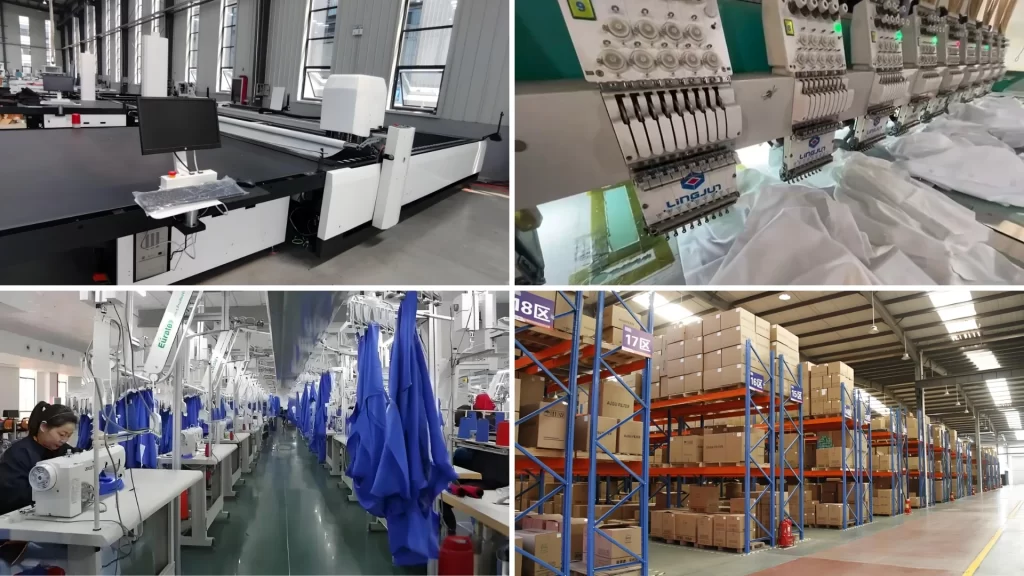
Shenzhen LSLONG Garments supports custom T-shirt projects from product development and sampling through bulk production, branding, packaging and international delivery.
Our manufacturing options include:
- Crew-neck, V-neck, oversized, fitted and long-sleeve T-shirts
- Combed cotton, ring-spun cotton and blended fabrics
- Performance and moisture-wicking materials
- Screen printing, DTG, heat transfer and embroidery
- Custom measurements and regional sizing
- Woven, printed and tagless labels
- Hang tags, barcodes and retail-ready packaging
- Flexible production for startups, established brands and corporate buyers
Instead of quoting an undefined “standard T-shirt,” the LSLONG team reviews the complete product specification. This helps buyers understand what they are paying for and prevents unexpected changes after sampling.
Final Thoughts: The Best Factory Price Is the Most Predictable One
Custom T-shirt manufacturing cost is determined by a connected system of materials, construction, quantity, decoration, packaging, quality control and logistics.
A low unit price is valuable only when the garment meets the approved specification, arrives on time and performs as expected in the target market. The real objective is not to obtain the cheapest T-shirt—it is to achieve the right balance of quality, market positioning and total landed cost.
If you are developing a private label collection, corporate uniform program, promotional campaign or performance apparel line, send LSLONG your design, quantity and target market.
Our Shenzhen OEM team will evaluate the specification and provide a practical manufacturing proposal based on your product—not a misleading one-size-fits-all price.
Request a Custom T-Shirt Manufacturing Quote from LSLONG.
Frequently Asked Questions
How much does it cost to manufacture a custom T-shirt in China?
The cost depends on fabric, GSM, order quantity, garment construction, printing, labels, packaging, quality requirements and shipping terms. A factory needs a complete specification before it can provide an accurate price.
What is the largest cost in T-shirt manufacturing?
Fabric is usually the largest individual cost. Fiber composition, yarn quality, fabric weight, dyeing and finishing all influence the material price.
Does a higher MOQ reduce the unit price?
Usually, yes. Higher quantities distribute setup and development costs across more garments and improve cutting, sewing and printing efficiency. The quantity per color and design is also important.
Is screen printing cheaper than DTG?
Screen printing is often more economical for medium or large orders with a limited number of colors. DTG can be more suitable for small orders, photographic graphics and designs containing many colors.
Why do custom-colored T-shirts cost more?
Custom colors may require laboratory dips, separate dye lots and minimum fabric quantities. Using an available stock color can reduce both cost and lead time.
Are custom labels included in the factory price?
Not always. Buyers should confirm whether woven labels, care labels, hang tags, polybags, barcodes and cartons are included in the quotation.
How can I get an accurate T-shirt quotation?
Provide the factory with your fabric specification, GSM, quantity, colors, size chart, artwork, print dimensions, labels, packaging, destination and delivery deadline.
Can LSLONG support low-MOQ custom T-shirt orders?
Many LSLONG custom programs can start from approximately 50 pieces per style, depending on fabric availability, color requirements and customization complexity. Buyers should request confirmation for the specific design.
What is the difference between factory price and landed cost?
Factory price covers the product under the stated Incoterm. Landed cost also considers inspection, freight, insurance, duties, customs charges and local delivery.
How long does custom T-shirt production take?
Lead time depends on material availability, sampling, order quantity, printing method and production schedule. Buyers should also allow time for sample approval, inspection and international shipping.
Author Profile

-
LISLON is a leading China OEM clothing manufacturer based in Shenzhen, Guangdong, the core of China’s garment industry. Founded in 1999, we specialize in custom polo shirts, T-shirts, sportswear, corporate uniforms, and hoodies with flexible OEM/ODM services.
Trusted by global brands like Mercedes-Benz, BYD, China Mobile, and PetroChina, LISLON delivers reliable, high-quality bulk apparel manufacturing. Contact us for expert support on your custom clothing production.
Latest entries
 Knowledge2026-07-17How Clothing Factories Control Shrinkage, Color Variation and Size Inconsistency
- Apparel Brand Business2026-07-16Private Label Clothing Packaging Guide for Retail, E-Commerce and Amazon FBA
- School Uniforms2026-07-152027 School Uniform Sourcing Timeline: When Should Schools and Distributors Place OEM Orders?
- Apparel OEM2026-07-14Custom T-Shirt Manufacturing Cost Breakdown: What Determines Your Factory Price?