

A polo collar is judged within seconds of the garment being seen, and it is the component most likely to be the reason a programme is reordered or rejected. Polo collar construction determines whether the collar stands, rolls evenly or curls at the points, whether it holds its shape through repeated laundering, and how the placket and the neckline behave when the collar is worn open. None of those outcomes is settled by the design of the collar alone: they come from the interlining, the number of pieces, the stitch route and the way the band is attached.
What Does Collar Construction Change Downstream?
It decides appearance, comfort and wash performance.
The collar build affects how the garment reads at the neck, how the placket sits when open, how the collar behaves in industrial laundering and how much the finished garment costs.
Appearance is the first consequence. A two-piece collar with a stand holds its roll because the geometry is cut in, while a single-piece collar relies on the material and the interlining to create the roll. A collar that is cut as one piece with insufficient support curls at the points, which is the defect most consumers describe as cheap-looking even when they cannot say why. Comfort follows: a stiff interlining at the neckband edge irritates the skin, while an interlining that is too soft loses the shape the buyer approved.
Wash performance is the third. Collars fail in laundering because the interlining and the cloth shrink at different rates, because the fusing bond releases, or because the collar edge has been pressed flat during finishing. That is why the wash test for a polo has to inspect the collar specifically, and why the interlining specification belongs in the tech pack rather than being left to the sample room.
How Do Collar Builds Differ in Manufacture?
By piece count, interlining and edge finishing.
A single-piece collar uses one layer of cloth with an interlining, a two-piece collar separates the collar from the stand, and a woven collar uses a different cloth from the body.
Single-piece collars are the standard construction on most polos. Two layers of body cloth are joined with an interlining between them, then turned and edge-stitched, and the collar is attached to the neckline either as a band or as a turned edge. The result is economical and reads correctly when the interlining suits the cloth. Two-piece collars, where the collar and the stand are cut separately, give more control over the roll and the height, which is why they appear on premium and uniform programmes where the collar has to look consistent after many washes.
Woven collars take a different route: the collar is cut from a woven fabric rather than the knit body, which produces a crisp, formal appearance and a very stable shape. The trade-off is cost, a different hand at the neck, and a second material to match and test. Whichever build is chosen, the same principle applies: the collar’s behaviour comes from the combination of cloth, interlining and stitching, and each of those three should be specified.
Polo Collar Construction: Interlining and Fusing Choices
The interlining is the component that decides whether the collar holds its shape, and it is usually the least examined item in the bill of materials. It is specified by construction, weight and application method: knitted or woven, light or medium, fusible or sew-in. Knitted interlinings stretch with the collar and suit softer, retail-oriented polos, while woven interlinings give a firmer stand for uniform and formal garments. Fusible interlinings are bonded by heat and pressure, which requires the bonding conditions to be controlled; sew-in interlinings avoid the bonding risk but add an operation.
Two variables decide whether the result survives washing. The first is shrinkage: the interlining and the collar cloth have to move together, or the collar edge will pucker or wave after the first launder. The second is the bond, where a fusible is used, because under-bonding releases and over-bonding stiffens and can strike through to the face. Suppliers such as Freudenberg Performance Materials publish interlining grades with their application parameters, and those parameters are what a factory needs in order to reproduce the approved sample on every order. Thread selection completes the assembly, and thread suppliers such as Coats and Gütermann document thread ranges suited to knit construction and fine topstitching.
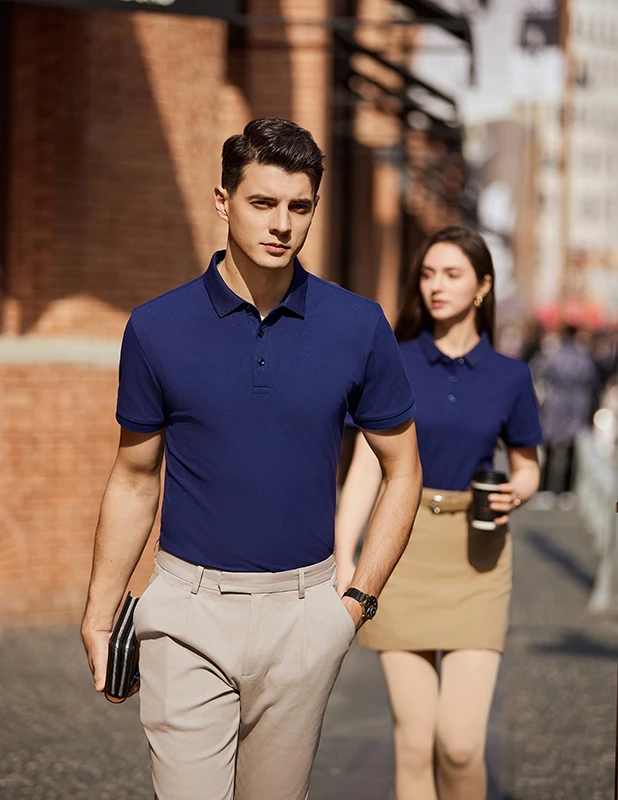
Curl, Roll and Shape Retention
Curl is a geometry and support problem rather than a pressing problem, and it has three common sources. The first is the collar’s own knit structure, because a ribbed or single-knit edge will roll toward the face of the cloth unless the edge is restrained. The second is the interlining, which has to be stiff enough to hold the roll without being visible through the face. The third is the cut, because a collar whose outer edge is longer than its neck edge will buckle rather than roll evenly.
Control it by specifying the collar in three dimensions: the finished point length, the stand height and the edge width, all measured on the flat collar with the interlining already applied. Then test it. A useful check is to wear or place the collar in the position it will be worn, assess whether the points sit flat and level, and repeat the assessment after the stated wash cycle. Where a programme has a history of collar issues after laundering, the collar shape after washing guide sets out the root causes in more detail, and the general collar and placket specification structure is covered in the collar and placket specification guide.
Collar Band, Neckline Junction and Stitching
The junction between the collar and the neckline is where a polo shows its construction quality. The collar band has to sit flat against the neck without stretching the neckline, and the stitch route has to hold the knit without puckering it. On a striped or tipped collar, the band adds a further alignment requirement, because the stripe has to meet cleanly at the placket rather than drifting across the front.
Three details deserve a line each in the specification. The band height and the stitch used to attach it, because the band is what keeps the neckline shape when the collar is worn open. The neckline stretch, because a band applied under tension will ripple along its length. And the finish at the placket junction, where the collar meets the front opening and the edges have to align. On premium programmes, a contrast tape or a taped neckline is often specified here, which adds a trim line and a colour match but also improves the appearance inside the garment.
Cost, MOQ and Lead-Time Consequences
Collar cost is driven by piece count, interlining grade and stitching time rather than by the cloth alone. A single-piece knit collar with a light fusible is the economical standard. A two-piece collar adds cutting, joining and shaping operations, and a woven collar adds a separate fabric with its own minimum, dyeing and matching requirement. Contrast tipping, tape and woven labels inside the neck add trim lines and matching work, which is why a heavily detailed collar can cost more than the body panel it sits on.
Lead time follows the materials. Knitted collar interlinings and standard fusibles are usually available from stock, while a custom woven collar fabric or a dyed-to-match interlining has to be produced against the order and approved. Two decisions keep both the cost and the schedule predictable: keep the collar construction identical across the colourways in a range, and approve the interlining and the collar cloth together so that shade and shrinkage are assessed as a pair. Polo programmes can start from about 50 pieces per style, and in-stock polos are available from 1 piece for a trial.
Quality Checks That Catch Collar Failures
Inspect the collar before and after washing, and inspect it on the garment rather than flat. Some faults, such as a wave at the band, only show when the collar is joined to the neckline; others, such as bond release or differential shrinkage, only appear after laundering. Check the collar in the position it will be worn, then repeat the same checks on a washed sample and compare it with the approved reference.
The inspection list should include:
- Finished point length, stand height and edge width measured against the approved specification.
- Roll and curl assessed with the collar closed and open, on the garment.
- Edge stitching quality, including stitch density, neatness and any puckering along the collar edge.
- Band height and neckline junction checked for rippling, stretched knit and stitch skipping.
- Interlining condition after the stated wash cycle, checked for bond release and for shrinkage against the collar cloth.
- Shade and appearance of the collar against the body after washing, assessed through AATCC test methods.
Material compliance for the collar cloth, interlining and trims can be documented through the OEKO-TEX Standard 100 framework where the market requires it, and care symbols should follow a recognised system such as GINETEX so the labelled instruction reflects the tested wash behaviour.
What to Put in the Tech Pack
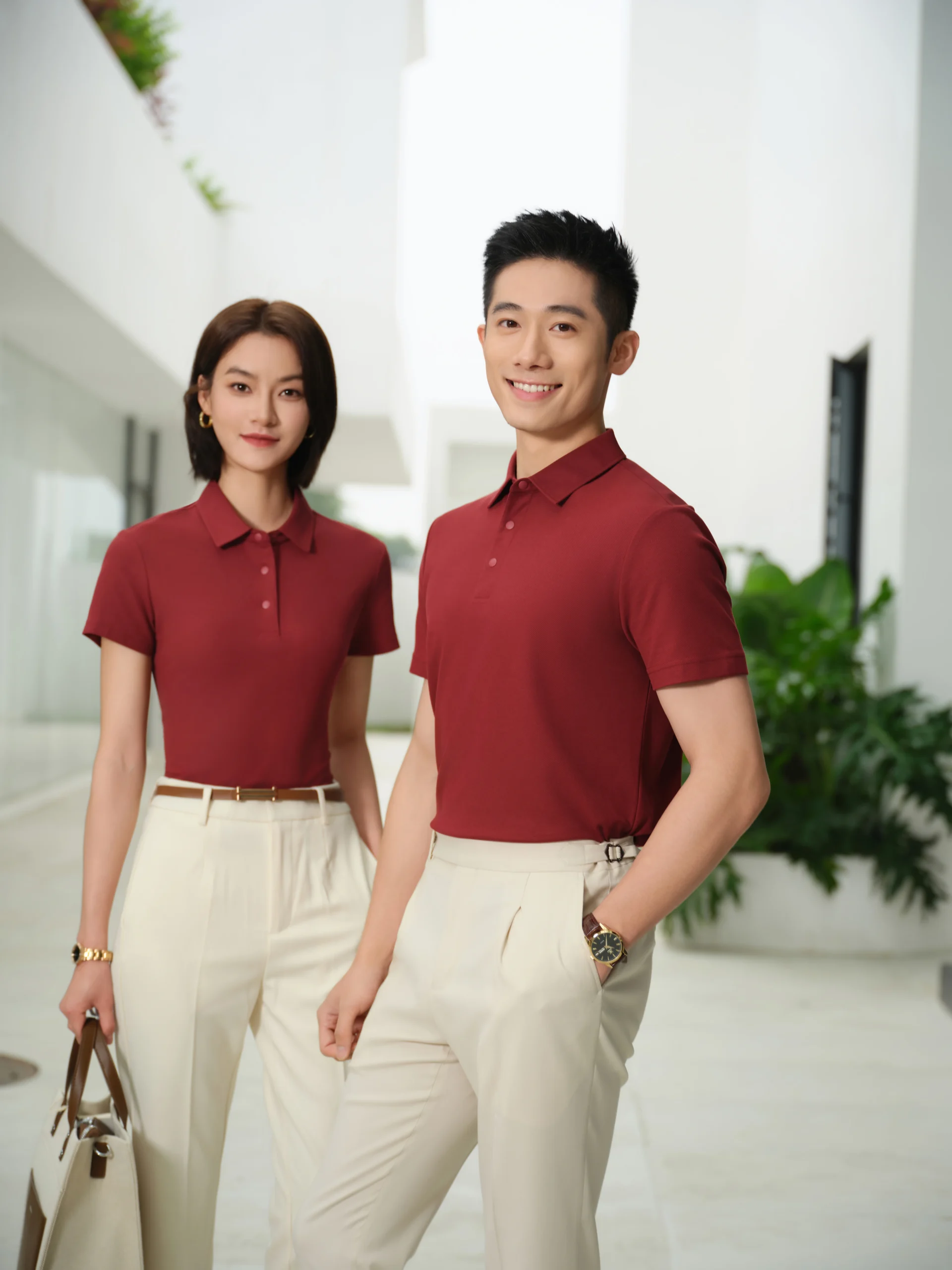
The collar block should describe the build and the components separately. The build needs the piece count, the collar and stand geometry, the edge finish and the attachment method at the neckline. The components need the collar cloth reference, the interlining specification with its grade and application method, the thread reference and the trim references for any tipping or tape.
Add the service requirements in the same block: the wash cycle the collar must survive, the appearance standard it is compared against, and the reference garment that bulk will be measured against. Two further lines close the loop. Record the bonding parameters where a fusible is used, because the same interlining applied at a different temperature behaves differently, and keep the approved collar sample with its washed counterpart so that both the fresh and the laundered appearance are defined. LSLONG builds polo programmes across pique, jersey and interlock bodies with collar and placket construction handled in-house, and the knowledge hub carries the supporting guides on fabric, construction and decoration.
FAQ
Why do polo collar points curl up after a few washes?
Curl usually comes from a mismatch between the collar cloth and its support. If the interlining shrinks differently from the cloth, or the bond releases in laundering, the edge loses the restraint that held it flat and the knit rolls toward the face. A collar cut with an outer edge longer than its neck edge will also buckle rather than roll evenly. Specify the interlining with its application parameters, test the assembled collar through the stated wash cycle, and compare the washed collar against the reference.
Is a woven collar better than a knitted one?
It depends on the look the programme needs. A woven collar holds a crisp shape and suits formal and uniform garments, but it changes the hand at the neck, costs more and adds a second material with its own minimum and dye requirement. A knitted collar keeps the garment consistent and softer, and it performs well when the interlining is matched to the cloth. Judge the two on a finished garment rather than on a swatch, because the collar behaves as part of the neckline assembly.
Does the collar need its own wash test?
The collar should be inspected on the washed garment even when the garment as a whole is tested. Collar faults such as bond release, edge pucker and differential shrinkage are local to the assembly, and they can appear while the body panel passes its dimensional check. Review the collar, the band and the neckline junction on the washed sample, then record the result alongside the reference so that a repeat order is compared against the same standard.
What is the smallest order for testing a new collar construction?
A polo programme can start from about 50 pieces per style for production, and in-stock garments are available from 1 piece when the aim is to check the collar as a finished assembly. A small trial run is the practical way to test a two-piece or woven collar, because its behaviour depends on the neckline, the interlining and the wash cycle together rather than on the collar alone. Keep the trial garment, plus a washed version of it, as the reference for bulk.
Specifying a polo collar?
Send the collar build you have in mind, the body cloth, the wash regime and the volume, and LSLONG will confirm the interlining grade, the geometry and the attachment method, then sample the collar with the neckline it will be joined to. Construction, decoration and quality control are handled in-house in Shenzhen.