

The knit structure behind a polo decides how the garment behaves long before the collar or the placket is discussed. Pique, jersey and interlock are all knitted cotton or cotton-blend fabrics, and they produce garments that look similar on a hanger while behaving differently in wear, in decoration and in the wash. Buyers who specify a pique polo fabric by name alone, without stating the structure, the weight and the yarn, often receive a garment that matches the description and misses the intention.
What Does the Knit Choice Change Downstream?
It changes texture, drape, opacity and decoration behaviour.
The knit structure decides how the surface reads, how the garment falls, how much light passes through a pale colour and how print or embroidery sits on the cloth.
Each of those effects shows up commercially. Texture is the visible signature of a pique and the reason the structure has stayed standard on corporate and uniform polos for decades. Drape decides whether the garment reads as formal or relaxed, which is why the same design in a different knit can look like a different product. Opacity controls whether a pale colour is viable at all, and it is the variable most often discovered late, when a white sample is held against the light.
Decoration behaviour is the fourth effect and the one that costs the most to fix late. A textured face picks up embroidery differently from a smooth one, and a print sits on a smooth jersey with more definition than on a raised pique. All four effects follow from the knit, so the knit decision belongs in the same block of the specification as the weight and the fibre.
How Do Pique, Jersey and Interlock Differ in Manufacture?
One is textured, one smooth, one interlocked.
Pique is knitted with a textured surface on a pique wheel, jersey is a single knit with a smooth face, and interlock is two interlocked single-knit layers that are smooth on both sides.
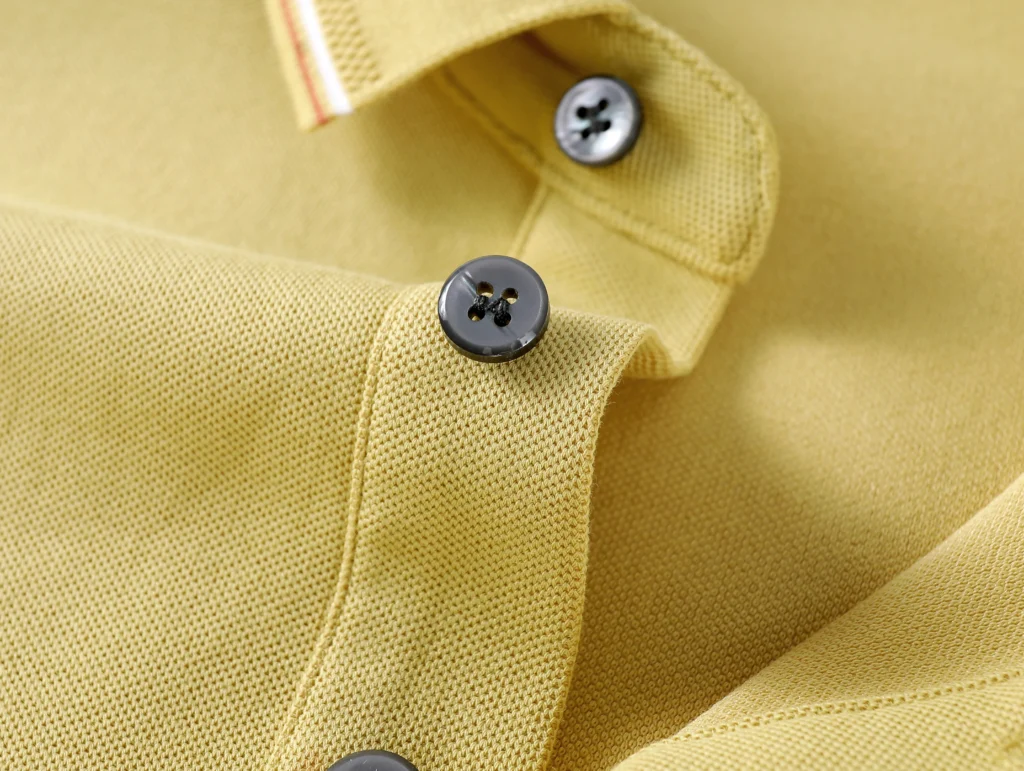
Pique uses a knit structure that creates small raised cells or a honeycomb surface, which gives the cloth its breathability, its dimensional stability and its ability to hide creases and light soiling. It is usually knitted heavier than a comparable jersey, and that extra structure is what allows a polo to keep a clean shoulder line and a collar that sits up rather than collapsing.
Jersey is a single knit with a smooth face and a softer hand. It drapes closer to the body and works well in lighter, more fashion-oriented polos, but it has less body than pique, so it supports a collar differently and shows more of what is underneath. Interlock knits two single-jersey structures together so that both faces are smooth, producing a denser cloth with better opacity and a more even stretch than jersey at a similar weight. The comparison between pique and jersey, including the yarn and weight implications, is covered in the pique versus jersey fabric guide, and the wider fabric and weight context for polos sits in the polo fabric and GSM guide.
| Knit | Structure | Hand and drape | Where it fits | Decoration note |
|---|---|---|---|---|
| Pique | Textured knit with raised cells | Structured, breathable, hides creases | Corporate and uniform polos, teamwear, retail basics | Texture breaks up fine print detail; embroidery sits well with a suitable backing |
| Jersey | Single knit, smooth face | Softer, closer drape, lighter feel | Fashion-led polos, lighter weight garments, layering pieces | Smooth surface holds print detail better; less structure supporting the collar |
| Interlock | Two interlocked single knits | Dense, smooth both sides, even stretch | Premium polos, pale colours needing opacity | Smooth and stable for embroidery; print coverage is even |
Pique Polo Fabric: Which Programme Suits Which Knit
Match the knit to the job the garment has to do rather than to a price point alone. A uniform polo that has to survive industrial laundering, keep its collar and carry an embroidered logo is best served by pique, because the structure holds shape and hides the marks of a working day. A retail polo sold on comfort and colour is often better in interlock, where the smooth face carries a saturated shade evenly and the denser cloth avoids show-through on light colours. A fashion polo with a softer, closer silhouette usually suits jersey, accepting that the collar needs more construction support to sit as intended.
Blends and yarns complete the picture. Combed cotton yarns in the 40s to 60s range give a smoother, stronger cloth than carded yarns of the same weight, and a proportion of polyester changes drying behaviour and colourfastness. LSLONG works from a fabric library that includes pique, combed cotton and performance options, and matches colours to Pantone references with a colour difference of ΔE ≤ 1.0, so the knit and the shade can be approved in the same round rather than in sequence.
Weight, Transparency and Drape
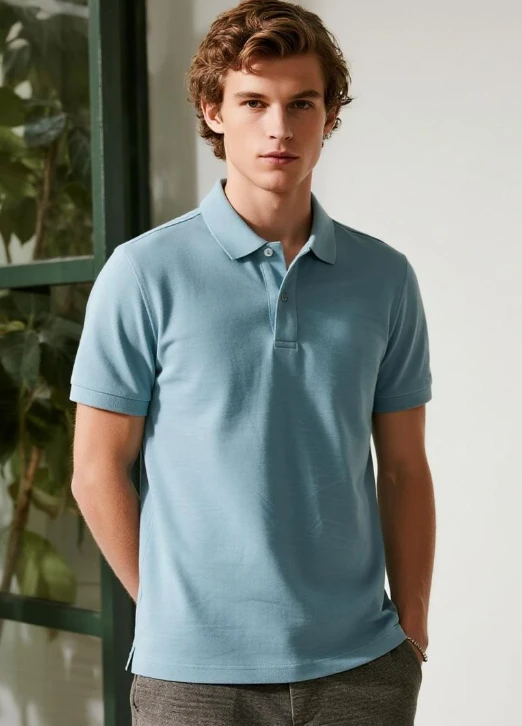
Weight and structure interact, and neither can be judged alone. A light pique holds its shape better than a light jersey of the same weight because the structure carries it, while an interlock at a similar weight is denser and less translucent. That is why a pale colour that works in one knit can fail in another, particularly on a white polo where the pocket bag and the placket facing become visible through the front panel.
Test opacity on the finished garment, in the light the customer will see it in, and on the colourways that carry risk. A white or pale polo should be checked over a dark undergarment rather than over a light one, because the contrast is what reveals show-through. Drape should be judged on a body as well, since the same cloth can read as crisp on a stand and as soft on a person. Where a programme needs a specific hand, state the weight in g/m² with the measurement method and the knit structure, rather than describing the cloth as premium or heavy.
Decoration Behaviour by Knit
Decoration is where the knit choice becomes visible in the branded product. On pique, the raised surface interrupts fine print detail, so screen-printed logos are usually simplified and embroidery becomes the natural route for chest marks. On jersey, the smooth face holds print detail well, which suits detailed artwork and fine lettering, but the lighter structure can allow the print to affect the hand of the garment. Interlock sits between the two, with enough surface stability for a clean print and enough body for embroidery without distortion.
Backing and placement follow the same logic. A textured cloth benefits from a cut-away backing that holds the mark, while a smooth, dense cloth needs less support. Placement has to clear the placket, the pocket and the collar join on every knit, and it should be measured on the garment rather than referenced from the file. Where a programme carries a mix of print and embroidery, the knit is one of the inputs that decides which route suits each mark.
Cost, MOQ and Lead-Time Consequences
Knit structure affects cost through yarn consumption, machine time and finishing. A textured pique generally consumes more yarn and takes longer to knit than a plain jersey at the same width, which is why a comparable polo in pique usually prices above one in jersey. Interlock sits between the two, and adds a premium when the yarn quality is raised to keep the smooth face even.
Lead time follows availability rather than capacity. Popular pique qualities are often held in stock in standard colours, while an unusual knit, a specific yarn count or a pale shade produced to order extends the schedule because the cloth has to be knitted and dyed against the order. Two decisions shorten it: keep the knit and the weight consistent across the colourways in a range, and approve the cloth and the colour in the same round. Polo programmes can start from about 50 pieces per style, and in-stock polos are available from 1 piece, which makes a small trial run a practical way to compare two knits side by side before the season order.
Quality Checks That Catch Knit Defects
Knit faults appear as surface and dimensional problems rather than as tears. Inspect the cloth for barriness and needle lines, check that the surface texture is even across panels, and confirm that the shade matches the approved reference under consistent light. Then measure the garment after the stated wash cycle, because knit structure governs how much the cloth moves and how the collar and placket behave afterwards.
The list for a polo programme should include:
- Structure and surface consistency across body, sleeve, collar and placket panels.
- Mass per unit area verified to ASTM D3776/D3776M on the finished garment rather than taken from the mill ticket.
- Opacity checked on pale colourways over a contrasting undergarment.
- Skew and twist assessed after the stated wash cycle, since knit structure affects how a polo rotates in laundering.
- Shade and appearance after washing, assessed through AATCC test methods.
- Decoration condition after washing, with the print or embroidery re-inspected on the washed sample.
Material compliance for the fabric and trims can be documented through the OEKO-TEX Standard 100 framework where the market requires it, and an organic fibre claim needs chain-of-custody support through a scheme such as GOTS. Care symbols should follow a recognised system such as GINETEX so the labelled instruction matches the tested behaviour.
What to Put in the Tech Pack
The knit block of a polo tech pack should be specific enough that two suppliers would quote the same cloth. Name the structure, the fibre and blend proportions, the yarn count range, the weight in g/m² with its measurement method, the finish applied to the face, and the colour reference with its approved Pantone number. Add the tolerance for weight and shade, and state the wash cycle used in testing.
Two further lines prevent most disputes. Record the opacity requirement for pale colourways as a test rather than an adjective, and keep the approved cloth swatch with its yarn and weight recorded. With those in place, a knit substitution can be identified against a physical reference instead of being discovered on the finished garment. LSLONG knits and finishes polo programmes across pique, jersey, interlock and performance options, with decoration handled in-house, so the cloth, the collar and the mark can be approved together. The knowledge hub carries the supporting guides on fabric, construction and decoration.
FAQ
Is pique always the better choice for a corporate polo?
It is the default choice because the structure holds shape, hides creases and supports a collar, which matters on a garment worn repeatedly and laundered often. It is not automatically better. A brand selling pale colours may prefer interlock for opacity, and one competing on softness may prefer jersey. Decide by the job the garment has to do, then check the decoration route, because textured cloths reproduce fine print detail less faithfully than smooth ones.
Why does a white polo show what is underneath?
Because opacity is a property of the knit and the weight together, not of the colour alone. The same white in a light jersey can be translucent while a denser interlock at a similar weight covers properly. Test the finished garment over a dark undergarment rather than over a light one, check the pocket bag and placket facing at the same time, and if coverage is marginal, adjust the knit or the weight rather than relying on the customer to layer differently.
Which knit holds embroidery better?
Both pique and interlock hold embroidery well, for different reasons: pique needs a backing that stabilises the textured surface, while interlock provides a denser, flatter base that resists distortion. Jersey is the least supportive of the three, so a large or dense mark on a light jersey is more likely to pucker. In every case the determining factor is the backing and the density rather than the knit name, and the mark should be approved as a sew-out on the production cloth.
What is the smallest order to compare two polo knits?
A polo programme can start from about 50 pieces per style for production, and in-stock garments are available from 1 piece when you only need to compare hand, drape and opacity. Running the same design in two knits on a small trial is the most reliable way to decide, because the difference between pique, jersey and interlock is more tactile than visual. Keep the two trial garments as references when the season order is placed.
Choosing a knit for a polo programme?
Send the intended use, the colourways, the decoration plan and the target weight, and LSLONG will confirm the knit structure, the yarn and the finishing route, then produce samples in the two closest options for comparison. Fabric sourcing, decoration and quality control are handled in-house in Shenzhen.