

Moisture wicking fabric selection is usually treated as a single decision, when it is really a set of decisions that follow from the sport. A garment for a 10 km run, a cycling jersey and a gym top are all described as moisture wicking, yet they need different knit structures, different weights and different airflow characteristics to perform in their own conditions. The fibre matters, but the structure and the weight decide whether sweat moves away from the skin quickly enough to matter, and those are the variables a buyer can specify.
What Does Fabric Selection by Sport Change?
It sets drying speed, airflow and comfort under load.
Selection by sport decides how quickly the fabric moves and releases moisture, how much air passes through it, and how the garment behaves at the intensity and duration the athlete works at.
Intensity sets the moisture load. A short, intense effort produces a heavy sweat rate over a brief period, where a long endurance effort produces a lower rate over hours and requires the fabric to keep working without saturating. A garment specified for the wrong pattern either stays wet against the skin during the effort or dries too slowly afterwards, and both outcomes reduce comfort and, in cold conditions, increase risk.
Environment sets the airflow requirement. A garment worn in still, humid air has to move moisture by capillary action through the structure, while one worn in windy conditions benefits from a denser structure that resists the wind while still managing moisture. Weight follows the same logic: lighter knits dry faster and feel cooler, while slightly heavier structures hold their shape and protect when the garment is worn over a base layer. The principles behind wicking fabrics and how they behave through prolonged effort are covered in the moisture-wicking performance guide.
How Do Wicking Structures Differ?
By capillary channel, denier and knit openness.
Some knits move moisture through engineered capillary channels, others rely on fine denier fibre and an open structure, and the choice changes drying speed and hand feel.
Capillary structures are knitted so that the inner face moves liquid quickly to the outer face, where it spreads and evaporates. That works best in high sweat-rate activities, because the transport is fast and directional. Fine-denier structures rely on the fibre surface area and the spaces between filaments to draw moisture along and release it, which gives a softer hand feel and works well where comfort matters as much as transport speed.
Openness is the third variable. A more open knit allows air to move through the garment, which speeds evaporation and improves cooling, at the cost of opacity, wind resistance and durability. Closed, denser structures hold their shape and block wind, and rely more on the fibre and the finish for moisture handling. Since these properties trade against each other, selection by sport is a matter of deciding which one the athlete needs most, then confirming the result with a test rather than a description. Fibre and yarn suppliers publish the underlying technologies, including platforms such as 37.5 Technology and fibre options from Hyosung, and recycled polyester routes are documented by suppliers such as Unifi.
| Sport pattern | Fabric priority | Structure response | What to test |
|---|---|---|---|
| Short, high-intensity efforts | Fast moisture transport, rapid drying | Capillary channel knit, moderate weight | Drying rate and wicking behaviour after repeated washes |
| Long endurance in heat | Sustained transport, cooling airflow | Open, lightweight knit with fine denier fibre | Airflow, opacity and comfort over extended wear |
| Cycling and lower-body coverage | Compression support and moisture handling together | Denser knit with elastane and flat seams | Stretch recovery plus moisture behaviour under load |
| Cold-weather and layering | Moisture management with wind resistance | Denser structure, brushed inner face where needed | Drying speed after saturation and thermal comfort |
Moisture Wicking Fabric Selection: Matching Knit to Activity
Match the knit to the activity rather than to the label. A team sport played in bursts calls for a fabric that moves moisture quickly and dries between efforts, which suits a capillary structure at a moderate weight. A long-distance runner in humid conditions benefits from a lighter, more open knit that cools as it dries, even though it is more translucent and less durable. A cyclist in a fitted jersey needs a denser structure with elastane and flat seams, because the garment is worn under tension for hours.
Weight and fibre follow from that decision. Polyester dominates performance knitwear because it does not hold water in the fibre the way cotton does, but blends with elastane improve fit and blends with other fibres change the hand feel and the drying curve. Yarn type matters as well, since fine denier filament yarns produce smoother, softer fabrics than coarser yarns at the same weight. LSLONG produces performance tees, compression gear, leggings, running shorts and training jackets in Shenzhen, and matches colours to Pantone references with a colour difference of ΔE ≤ 1.0, so fabric selection and colour approval can be handled in the same round.
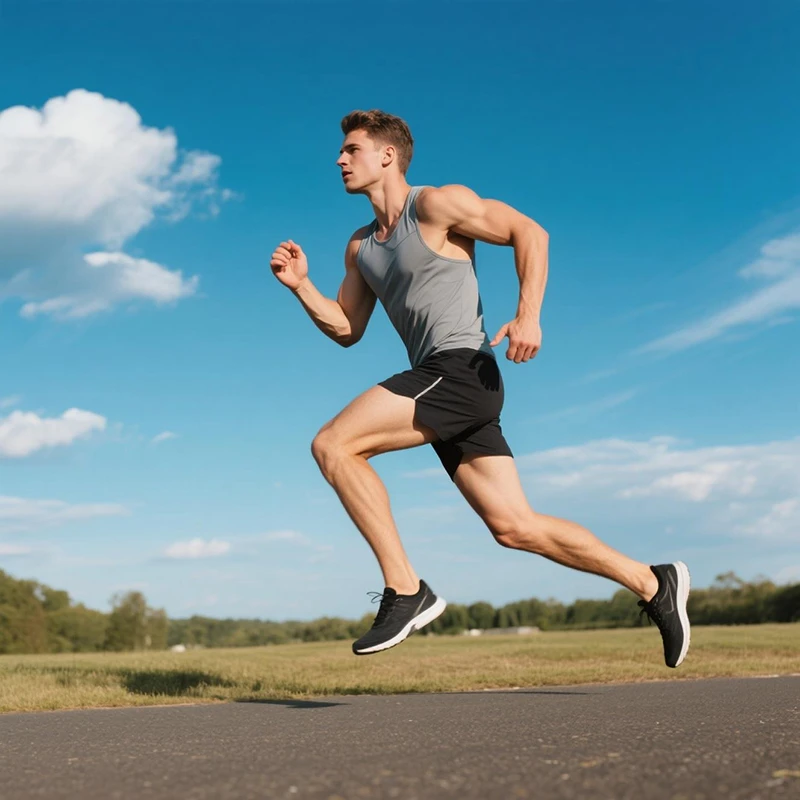
Weight and Airflow by Sport
Weight and airflow are linked, and both are best specified by number rather than by adjective. State the weight in g/m² with its measurement method, and state the airflow or breathability expectation using a recognised test where the programme depends on it. Two fabrics of the same weight can behave differently because of their structure, so a weight specification without a structure description is incomplete.
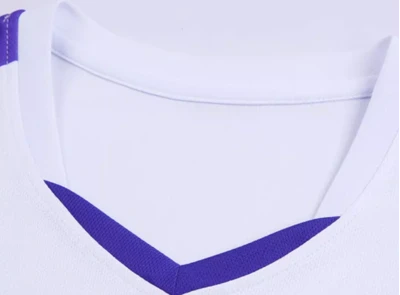
Then check the construction around the fabric. A garment’s drying behaviour is affected by its heavier components, so a dense collar, a lined panel or a large embroidered mark will hold moisture longer than the body cloth and extend the drying time of the whole garment. Ventilation features, mesh panels and open side seams improve airflow, but they also change the opacity and the abrasion resistance of the garment, so they belong in the specification rather than in the sample room’s discretion. Moisture-related test methods are published by AATCC, which gives a programme a defensible way to state performance.
Cost, MOQ and Lead-Time Consequences
Performance fabrics cost more per kilogram than standard knits, and the difference is larger when the fabric carries a branded fibre technology or a specific capillary structure. Construction adds further cost: flat seams on a performance tee take longer than standard seams, mesh panels add operations, and any moisture-related finish adds a process stage and its own testing requirement.
Lead time is driven by fabric production and by the test work. Performance knits are usually produced against the order, and where the programme claims a performance property, the supporting test result has to be available before shipment. Two decisions keep the schedule workable: keep the knit consistent across the colourways in a range so the fabric can be produced in one run, and start the fabric testing at the sampling stage rather than after approval. Programmes can start from small quantities, and ready-to-ship stock is available from 1 piece, so a wearer trial is a practical way to validate a fabric in the intended conditions. Weight and structure selection across the wider range is set out on the sport-specific uniform design guide.
Quality Checks That Catch Wicking Failures
Test the fabric and then test the garment. Fabric testing confirms the cloth behaves as specified before the order is cut, while garment testing confirms that the assembled piece performs, including the seams, panels and decoration that affect drying. Then repeat the check after laundering, because finishes and fibre surfaces change with repeated washing, and a performance claim that holds on a fresh swatch can fade by the twentieth cycle.
The inspection list should include:
- Fibre content and knit structure confirmed against the approved specification on the finished garment.
- Weight verified to the stated method rather than taken from the mill ticket.
- Moisture and drying behaviour confirmed through the agreed AATCC method, including a result after repeated laundering.
- Airflow or breathability checked where the programme specifies it, and recorded with the test conditions.
- Seams, panels and decoration reviewed for their effect on drying, since heavy assemblies hold moisture.
- Appearance and dimensional stability confirmed after the stated wash cycle.
Independent laboratories such as Hohenstein test textiles and garments for moisture and comfort properties where a programme needs documented results, and material compliance for the fabric and trims can be documented through the OEKO-TEX Standard 100 framework.
Repeat-Order Consistency
Wicking performance is easy to lose between orders, because it depends on the knit structure and the finish as well as the fibre. A different yarn lot, a change of knitting machine or a substituted finish can shift drying behaviour without changing appearance, and because the customer notices performance rather than appearance, the change surfaces as a complaint rather than a defect report.
Record the fabric reference, the fibre and yarn specification, the knit structure, the finish and the test results for the approved order, and keep a reference swatch for each colourway. Re-approve the fabric on the first repeat rather than after bulk, and re-test the moisture and drying behaviour when the fibre source or the finish changes. Where the programme claims a performance property on the product page, the test report supporting that claim should be refreshed with each significant material change rather than carried forward indefinitely.
What to Put in the Tech Pack
The performance block should state the fibre and blend, the yarn type, the knit structure, the weight with its measurement method, and the moisture and drying requirement with the test method that will demonstrate it. Where airflow, opacity or stretch are specified, record the requirement as a testable property rather than as a description, and record the wash regime used for testing.
Add the construction that supports the requirement: seam types, panel layout, any mesh or ventilation feature, and the decoration specification with its effect on drying considered. Then keep the reference material: the approved fabric swatch with its test results, the washed reference garment, and the colour reference for each colourway. With those in place, a wicking specification becomes something that can be quoted, produced and verified rather than asserted, and the knowledge hub carries the supporting guides on fabric, construction and testing.
FAQ
Is polyester always better than cotton for moisture wicking?
For performance in sweat, polyester has the advantage because it does not hold water within the fibre the way cotton does, so it dries faster and stays lighter when wet. Cotton remains useful where appearance and hand feel matter more than drying speed, and blends balance the two. The deciding factors are the activity, the climate and how long the garment is worn, so the fabric should be chosen for the use case rather than for a general rule.
How do we verify a moisture-wicking claim?
State the behaviour and the test method rather than the fabric name, then have the finished garment tested through that method and re-tested after repeated laundering, because finishes and fibre surfaces change with washing. Record the test conditions, the result and the wash regime used, and keep the report with the order file. Where the claim appears on a product page, the supporting result should be refreshed when the fibre source or finish changes.
Does a heavier performance fabric wick less effectively?
Not automatically, because wicking depends on structure and fibre rather than on mass alone. A heavier knit with an engineered capillary structure can transport moisture effectively, while a light knit with a closed structure may not. Weight matters more for drying speed and thermal comfort: a heavier garment holds more water overall and takes longer to dry, which is the practical limit for high-sweat activities and for cold conditions where a wet garment chills the wearer.
Should the whole garment be made from the same performance fabric?
Not necessarily. Panels are often specified with different structures so that ventilation, support and abrasion resistance are placed where they are needed, and collar or cuff components may use a different cloth for comfort. The constraint is drying: a heavy or absorbent component extends the drying time of the whole garment, so each material added to the specification should be justified by the function it performs rather than chosen for convenience.
Selecting fabrics for a performance programme?
Send the sport, the intensity, the climate, the garment types and the volume, and LSLONG will confirm the knit structure, weight and fibre blend, set out the test evidence available and sample the fabric against the construction it will be used in. Fabric sourcing, decoration and quality control are handled in-house in Shenzhen.