

Learn how clothing OEM minimum order quantity (MOQ) works, what affects MOQ, and why flexible manufacturers like LSLONG support orders from just 1 piece to help brands reduce risk and validate products.
What Is the Minimum Order Quantity (MOQ) in Clothing OEM Manufacturing?
Minimum Order Quantity (MOQ) is one of the first questions every clothing brand, startup, retailer, and sourcing manager asks before launching a new apparel collection.
Whether you are developing custom polo shirts, T-shirts, workwear, uniforms, hoodies, sportswear, or fashion apparel, understanding how OEM clothing MOQ works can help you reduce investment risk, optimize inventory, and accelerate product validation.
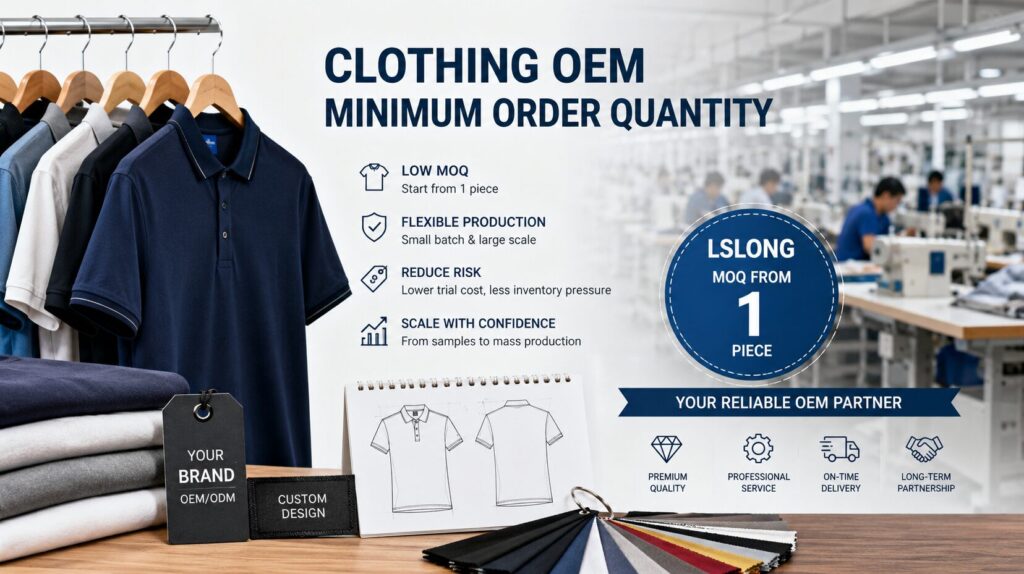
In this guide, we’ll explain how apparel OEM minimum order quantities are determined, why they vary among manufacturers, and how flexible OEM partners such as LSLONG help businesses start with as little as one piece, making custom garment production more accessible than ever.
What Does MOQ Mean in Clothing OEM?
MOQ (Minimum Order Quantity) refers to the smallest number of garments a manufacturer is willing to produce for a single customized order.
Unlike ready-made wholesale products, OEM manufacturing involves customization throughout the production process, including:
- Fabric sourcing
- Color matching
- Pattern making
- Size grading
- Logo printing or embroidery
- Custom labels
- Hang tags
- Packaging
- Quality inspection
Each of these processes requires labor, equipment setup, and production planning, which explains why most factories establish minimum order requirements.
Why Do Clothing Manufacturers Set MOQs?
MOQ is not simply a sales policy—it reflects the economics of garment manufacturing.
Several production costs remain nearly identical regardless of whether a factory produces 10 garments or 10,000 garments, including:
- Pattern development
- Sample creation
- Machine setup
- Fabric preparation
- Printing screen preparation
- Embroidery digitizing
- Quality control procedures
- Production scheduling
Because these fixed costs are distributed across all units produced, higher production volumes significantly reduce the cost per garment.
This is why larger orders generally receive much more competitive pricing.
What Factors Influence Apparel MOQ?
The minimum order quantity depends on multiple production variables rather than a single standard.
1. Fabric Type
Special fabrics often require supplier minimum purchasing quantities.
Examples include:
- Organic cotton
- Bamboo fabric
- Merino wool
- Performance polyester
- Recycled materials
If a fabric supplier requires 300 meters, the garment factory usually needs to align its MOQ accordingly.
2. Color Variations
Every color change requires additional production preparation.
For example:
- Black
- Navy
- White
- Red
Producing four colors usually requires more setup than producing one color, increasing the practical MOQ.
3. Size Distribution
Manufacturing multiple sizes requires additional planning, grading, cutting, and inventory management.
Orders containing XS through 5XL generally require larger production runs than single-size orders.
4. Printing and Embroidery
Custom decorations often introduce separate MOQs.
These include:
- Screen printing
- Puff printing
- Heat transfer
- Embroidery
- Reflective logos
- Silicone labels
Printing suppliers frequently charge setup fees regardless of order quantity.
5. Packaging Requirements
Customized packaging such as:
- Private labels
- Woven neck labels
- Hang tags
- Poly bags
- Gift boxes
can also affect minimum order requirements.
Typical MOQ in the Clothing OEM Industry
Although every factory is different, the following ranges are common:
| Production Type | Typical MOQ |
|---|---|
| Standard OEM Apparel | 100–500 pieces per style |
| Premium Custom Garments | 300–1,000 pieces |
| Sportswear OEM | 100–300 pieces |
| Uniform Manufacturing | 50–200 pieces |
| Fully Customized Fashion Collections | 300+ pieces |
| Sample Development | 1–5 pieces |
These figures are only general industry references. Actual MOQs depend on product complexity, materials, and customization requirements.
Is Lower MOQ Always Better?
Not necessarily.
A lower MOQ offers greater flexibility, but it also increases the manufacturing cost per unit because fixed production expenses are shared across fewer garments.
For example:
- A 500-piece order spreads tooling and setup costs efficiently.
- A 10-piece order carries nearly the same setup cost but distributes it over far fewer units.
As a result, the unit price for low-volume production is naturally higher.
This is a normal characteristic of manufacturing economics rather than a pricing strategy.
Why Low MOQ Can Save More Money Overall
Although the unit cost is higher, a lower MOQ often reduces the total business risk, especially for new brands.
Launching large inventory before validating market demand may result in:
- Unsold inventory
- Excess warehouse costs
- Cash flow pressure
- Product revisions after customer feedback
- Slow inventory turnover
Starting with a small production run allows brands to:
- Test customer demand
- Validate sizing
- Evaluate fabric quality
- Collect user feedback
- Improve designs before scaling production
- Protect working capital
In many cases, reducing the cost of making the wrong product is more valuable than minimizing the manufacturing cost of each garment.
How Sample Orders Support Better Product Decisions
Professional OEM manufacturers usually provide sample development before mass production.
A sample allows customers to verify:
- Fabric quality
- Color accuracy
- Logo positioning
- Stitching workmanship
- Garment fit
- Measurement consistency
- Packaging appearance
Receiving a physical sample before placing a larger order helps reduce misunderstandings and increases confidence throughout the production process.
LSLONG Supports Flexible Clothing OEM Starting from Just One Piece
Unlike many apparel manufacturers that require large minimum order quantities, LSLONG offers exceptionally flexible OEM production solutions.
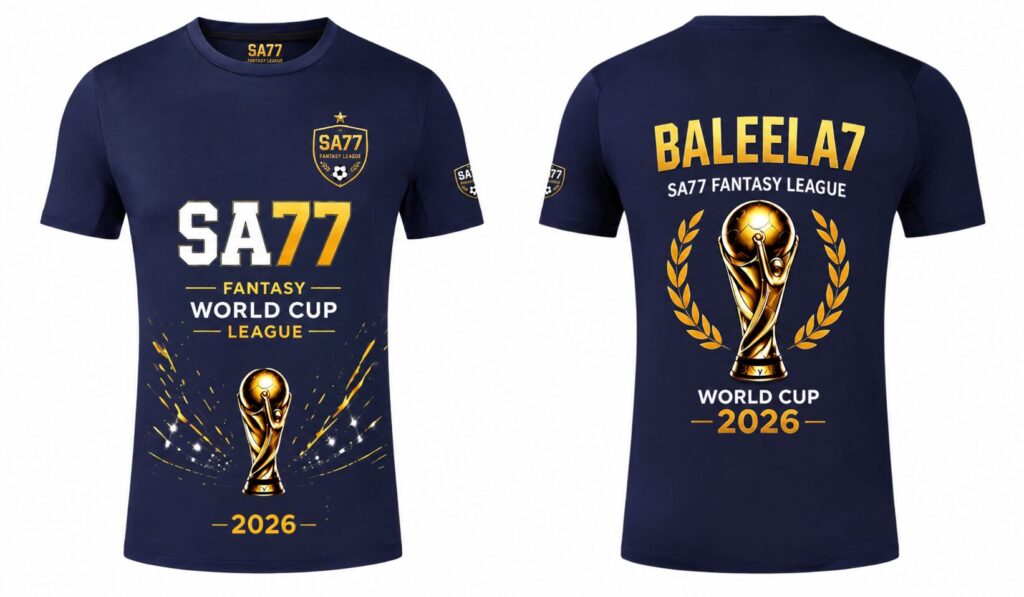
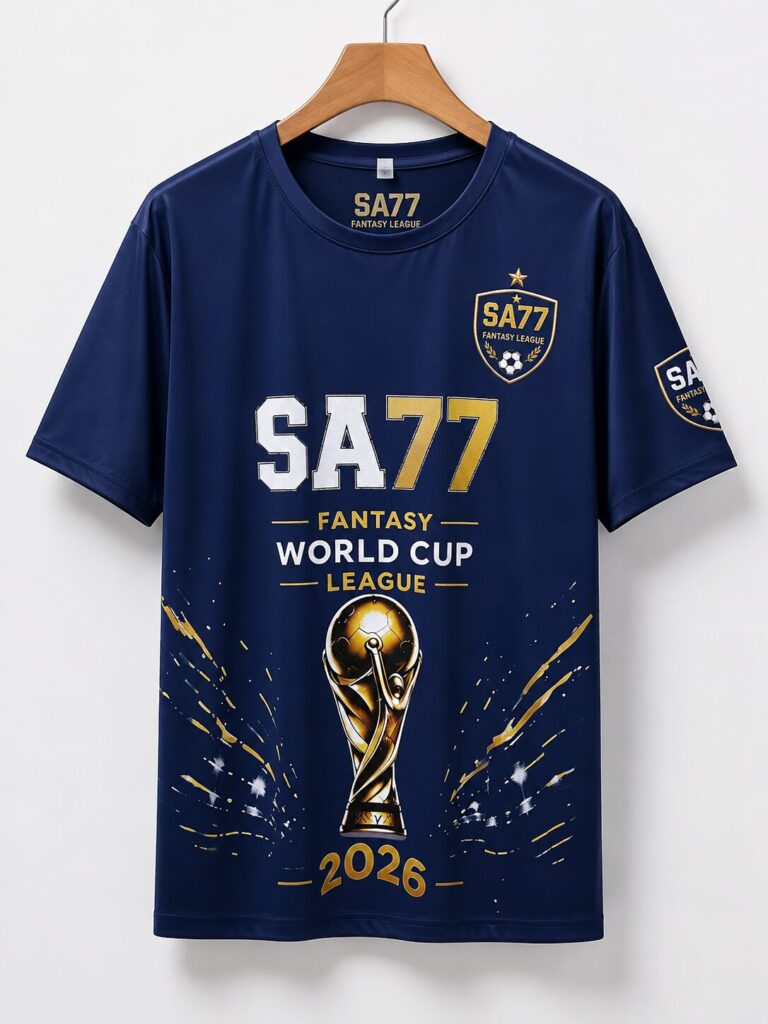
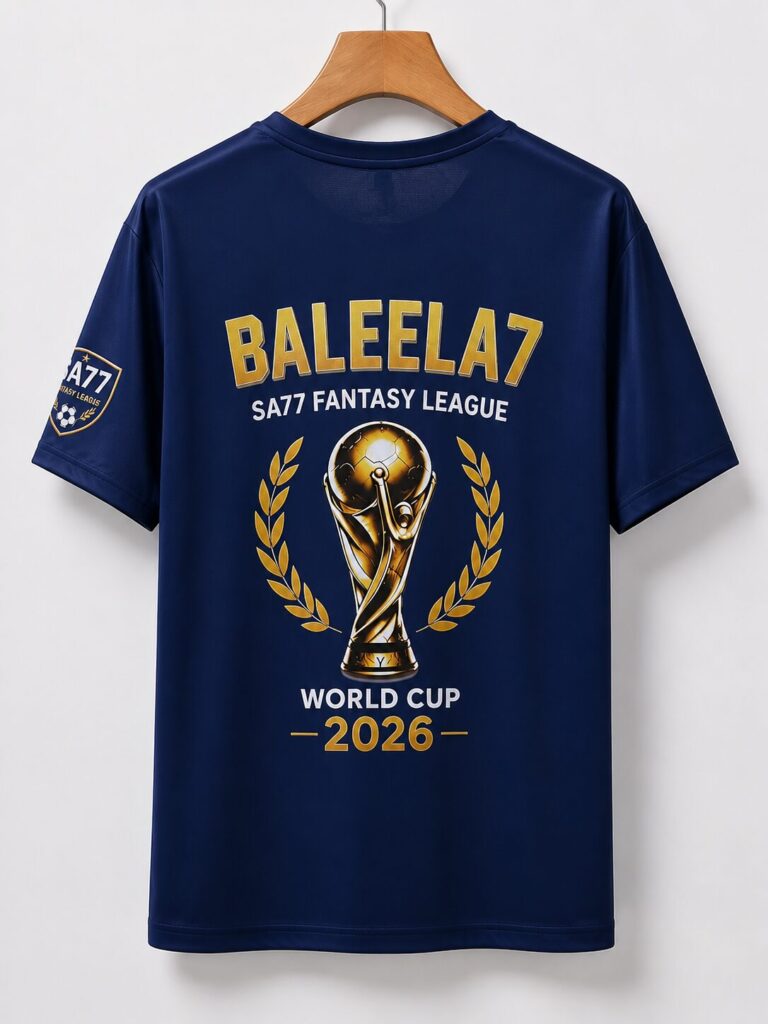
Depending on the project, LSLONG can support:
- Sample orders from 1 piece
- Small-batch production
- Pilot product launches
- Startup clothing brands
- Corporate uniform testing
- Promotional apparel
- Market validation before mass production
This flexibility gives customers the opportunity to evaluate product quality, collect real customer feedback, and refine product details before committing to larger production runs.
As demand grows, production can be scaled efficiently to achieve lower unit costs and stronger manufacturing efficiency.
Who Benefits Most from Low MOQ Clothing Manufacturing?
Flexible OEM production is especially valuable for:
- Startup clothing brands
- E-commerce businesses
- Amazon sellers
- Shopify stores
- Boutique fashion labels
- Corporate uniform buyers
- Sports clubs
- Event organizers
- Schools
- Promotional merchandise companies
- Influencer brands
- Designers launching new collections
These businesses often prioritize market validation and inventory control over immediate economies of scale.
How to Choose the Right OEM Clothing Manufacturer
When selecting a manufacturing partner, MOQ should be evaluated alongside other critical factors.
Consider whether the supplier offers:
- Stable production capacity
- Consistent quality control
- Professional pattern development
- Fabric sourcing expertise
- International shipping experience
- Transparent communication
- Flexible sampling services
- Scalable manufacturing capability
- Reliable delivery schedules
- Long-term partnership support
A manufacturer with flexible production capabilities can adapt as your business grows.
Frequently Asked Questions
Can I manufacture custom clothing with only one piece?
Yes. Some OEM manufacturers, including LSLONG, support sample production from a single customized garment, allowing brands to validate designs before mass production.
Why is the unit price higher for low MOQ orders?
Because production setup, pattern making, and machine preparation generate fixed costs regardless of production volume. These costs are spread across fewer garments in small orders.
Is low MOQ suitable for established brands?
Yes. Even mature brands often use low-volume production when launching seasonal collections, testing new designs, or evaluating new markets before scaling.
Does a higher MOQ always mean better value?
Not always. While larger orders reduce unit cost, they also increase inventory investment and business risk. The optimal MOQ depends on your product strategy, cash flow, and expected demand.
Final Thoughts
Understanding clothing OEM minimum order quantity (MOQ) is essential for making informed sourcing decisions.
Rather than focusing solely on the lowest unit price, successful brands consider the overall balance between manufacturing efficiency, inventory risk, product validation, and long-term scalability.
By supporting sample production from just one piece, LSLONG enables startups, growing brands, and established businesses to test ideas with confidence, reduce costly trial-and-error, and scale production when market demand is proven.
Whether you’re creating custom polo shirts, workwear, uniforms, sportswear, or fashion apparel, partnering with a flexible OEM manufacturer can significantly shorten your product development cycle while protecting your investment.