

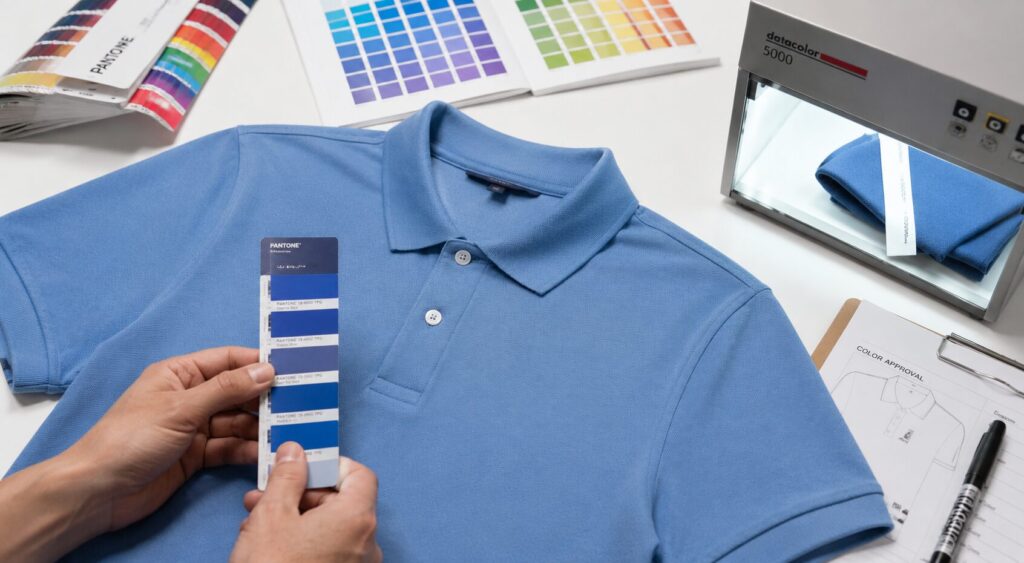
Pantone color matching is the process of reproducing a specific color using the standardized Pantone Matching System (PMS), which assigns a unique identification number to each color — and it is critical in apparel OEM manufacturing because it keeps brand colors consistent across fabrics, batches, and production runs. Color is one of the first things consumers notice about a garment.
(Last modified date: August 31, 2026)
Key Takeaways
- PMS assigns a unique code to every color, removing guesswork from production.
- Lab dips and bulk approval are essential before mass production.
- The same Pantone color can look different on different fabrics — composition and texture matter.
- Pantone, not RGB or HEX, is the standard for physical garment production.
How Pantone Color Matching Works in Apparel OEM
- Specify Pantone colors: the buyer names the PMS codes in the tech pack.
- Fabric selection: base fabric affects how dye is absorbed.
- Laboratory dye formulation: the lab formulates a recipe for the target shade.
- Color evaluation: lab dips are measured under standard lighting.
- Customer approval: the buyer approves the lab dip or requests adjustments.
- Production color control: shade bands and inline checks keep bulk consistent.
Why Is Pantone Important in Apparel Manufacturing?
Pantone color matching protects brand identity, ensures uniform appearance across a collection, and supports multi-country manufacturing by giving every factory the same color language. Whether producing 500 polo shirts or 500,000 garments, accurate color reproduction keeps every piece visually consistent.
Common Challenges in Pantone Color Matching
| Factor | Impact on Color |
|---|---|
| Fabric composition | Cotton, polyester, and blends absorb dye differently |
| Fabric texture | Pique, jersey, and fleece reflect light differently |
| Dye chemistry | Reactive, disperse, and pigment dyes behave differently |
| Finishing processes | Softening and treatments can shift the shade |
Pantone and Digital Color Are Not the Same
RGB and HEX describe color for screens; Pantone describes physical color for fabric and ink. Always specify PMS codes for production and use digital values only for design reference.
Best Practices for Buyers
- Include PMS codes in every tech pack.
- Approve lab dips on the actual production fabric.
- Require shade-band control across batches.
- Inspect color under standard D65 lighting.
LSLONG: Precision Color Matching for Professional Apparel OEM
LSLONG uses laboratory dye formulation, digital measurement, and bulk shade-band control to deliver Pantone-accurate apparel at 500,000+ units monthly. See LSLONG T-shirt categories.
Frequently Asked Questions
What is Pantone color matching?
It is reproducing a specific color using the standardized Pantone Matching System, which assigns a unique number to each color for consistent production.
Why is Pantone important for apparel OEM?
It protects brand identity and keeps colors uniform across fabrics, batches, and factories.
Can the same Pantone color look different on different fabrics?
Yes — composition, texture, dye chemistry, and finishing all affect how a color appears.
Is Pantone better than RGB or HEX for clothing production?
Yes — RGB and HEX are screen colors; PMS is the physical standard for fabric and ink.
Related Articles
Official Resources
References
- Pantone Matching System standards for textiles.
- LSLONG color management documentation, 2026.