

A compression fabric stretch recovery test measures how far a fabric extends under defined conditions and how closely it returns to its original dimensions after release and relaxation — and buyers should specify direction, conditioning, specimen geometry, load or extension, hold time, relaxation interval, cycle count, calculation, and acceptance criteria before comparing results or approving material.
(Last modified date: September 2, 2026)
Key Takeaways
- Elongation, recovery, growth, and permanent deformation are different metrics — never treat them as interchangeable.
- Report stretch direction separately: knits differ by course and wale; woven fabrics differ by width and length.
- Test conditions (load, speed, hold time, relaxation, cycles) change results; a changed setup is a different test basis.
- Elastane percentage alone cannot predict recovery — verify with controlled data and garment samples.
- Approve fabric and garment as a system, not a passing strip test.
What Does a Stretch-and-Recovery Test Actually Measure?
The test can measure fabric elongation, recovery, growth, and permanent deformation — and these terms are not interchangeable. Elongation describes extension during loading; recovery describes the return after release; growth is the residual increase after a stated relaxation period; and permanent deformation is the dimensional change that remains under the agreed final measurement condition.
| Metric | Buyer-Side Meaning | Reporting Requirement |
|---|---|---|
| Stretch or elongation | Increase from original gauge length under a stated force or extension | Record percentage, direction, load or extension, and calculation basis |
| Elastic recovery | Portion of imposed extension recovered after release | State the formula and when recovery was measured |
| Fabric growth | Residual length increase after release and a defined relaxation time | Report as a percentage of the original dimension with the time stated |
| Permanent deformation | Residual dimensional change at the agreed final observation point | Define conditioning, relaxation, and any pretreatment |
A fabric may show high elongation yet recover poorly, producing bagging or fit loss; another may stretch less but return more consistently. Maximum stretch should not be the only approval metric, and recovery percentage needs a stated formula — reports can differ when the denominator or measurement time is not identified.
How Should a Compression Fabric Test Be Specified?
A compression fabric specification should identify an agreed test method and every option that can change the result. Define specimen dimensions, gauge length, clamp arrangement, test direction, conditioning, applied force or target extension, extension rate, holding time, relaxation time, cycles, pretreatment, calculations, replicates, and result format before production. The specification should also distinguish force-controlled from extension-controlled testing:
- Force-controlled: the fabric extends under a defined load and the resulting elongation is measured.
- Extension-controlled: the specimen is taken to a defined elongation and the required force, growth, or recovery is evaluated.
Record specimen dimensions, gauge length between clamps, width, cutting orientation, and edge preparation. Clamp slippage or an inconsistent gauge length can distort results. Identify fabric lot, color, construction, weight, declared composition, dates, method reference, individual readings, average, and deviations — one percentage without context is not a transferable approval record.
Why Must Stretch Direction Be Reported Separately?
Textile structures are usually anisotropic: their mechanical response changes with direction. For knitted compression fabric, test course and wale directions when relevant; for other constructions, use clearly defined width and length directions. A single “four-way-stretch” claim cannot replace directional elongation, force, recovery, and growth results. In many knits, the course direction runs across the rows of loops and the wale direction follows the columns, and these directions may differ substantially in available extension and resistance. Because suppliers may define crosswise, lengthwise, warp, weft, machine, or transverse direction differently, the report should define its terminology. Cutting orientation connects laboratory results to the garment: rotating a leggings panel can change fit resistance and recovery, and gussets, waistbands, and power-mesh inserts need their own orientation controls. Uniaxial results may not describe simultaneous two-axis deformation — decide whether biaxial or garment-level evaluation is needed.
LSLONG Expert View: “Direction is part of the material specification, not just a note on the test report. A fabric can meet a target across the course direction yet behave differently along the wale direction. If pattern pieces are rotated, or a panel relies on recovery in both axes, one passing value may conceal a fit risk. Link each directional result to the grain line and function of the actual garment panel before approval.”
How Do Test Conditions Change Stretch and Recovery Results?
Conditioning, specimen size, load, extension, test speed, holding time, relaxation time, and repeated cycles can all change reported behavior, so results are comparable only when these conditions and calculations match. Treat a changed setup as a different test basis even when the fabric name, composition, and laboratory are unchanged. Fabric may retain tension from knitting, finishing, rolling, or handling — state the preparation and agreed conditioning atmosphere rather than merely saying the fabric was relaxed. Recovery develops over time: immediate and delayed measurements answer different questions and are not directly comparable unless the relaxation interval matches. For results after laundering, heat, or another pretreatment, agree on the procedure and cycles in advance, and keep original-state and pretreated results in separate columns.
What Does Cyclic Stretch Testing Add to a Fabric Review?
Cyclic stretch testing repeatedly loads and unloads the specimen to show how response changes with use-like deformation. It can reveal force decay, increasing growth, hysteresis, or stabilization that a single extension does not show. Define cycle limits, speed, rest intervals, measurement points, and final relaxation time for meaningful comparison. Hysteresis — the difference between loading and unloading response — is best reviewed from the curve or cycle data rather than a final pass/fail line, because the first cycle may differ as loops and yarns rearrange. The acceptance rule must state whether evaluation uses the first cycle, a later cycle, the change between cycles, or a result after rest. Cyclic testing is a comparison tool, not a direct prediction of garment life, because construction, body dimensions, seams, care, and panel geometry add variables. Discuss fabric direction, panel use, and fit objectives with LSLONG through its sportswear manufacturing categories.
How Do Fabric Results Affect Fit, Patterns, and Seams?
Stretch-and-recovery results inform pattern reduction, grain direction, panel placement, seam selection, and size approval — but they do not set those decisions automatically. Pattern fit also depends on fabric power, garment geometry, target ease, construction, and wearer dimensions, so approve the material and garment system together. High elongation with low resistance may provide less controlled fit; high resistance may create firmer fit but increase donning difficulty or seam loading — neither is a universal quality ranking. Residual growth can affect knees, elbows, and waistbands; directional imbalance may twist panels; and seams, elastic application, bonded areas, and decoration can restrict stretch or concentrate stress. Use the results for the first pattern, then verify the selected fabric in fit and size-set samples, checking measurements after the agreed relaxation and comparing seam extension with the panel. Base-size approval may not expose stress in other sizes.
Which Evidence Should Buyers Require Before Bulk Approval?
Before bulk approval, require a traceable test report, an identified fabric swatch, lot and color references, directional results, individual readings, calculations, conditioning and test parameters, approval status, and any deviations. The approved material should also be represented in a garment sample so laboratory behavior can be checked against fit, construction, and size requirements. Use a staged approval record:
- Development: define garment function, panel orientation, test method, variables, and provisional criteria.
- Material submission: receive the supplier specification, identifiable swatch, and directional test data.
- Sample evaluation: compare results with pattern fit, seam behavior, and garment measurements.
- Size approval: confirm grading and panel strain remain appropriate across the selected sizes.
- Production release: lock the approved fabric reference, method, criteria, report version, and change process.
Define how lots, rolls, and colors are sampled. A change in source, yarn, construction, finish, weight, or color process may require retesting — matching fiber content does not prove matching behavior. When results conflict, check method alignment, conditioning, direction, clamp slippage, calculations, and sample identity; never average incompatible methods.
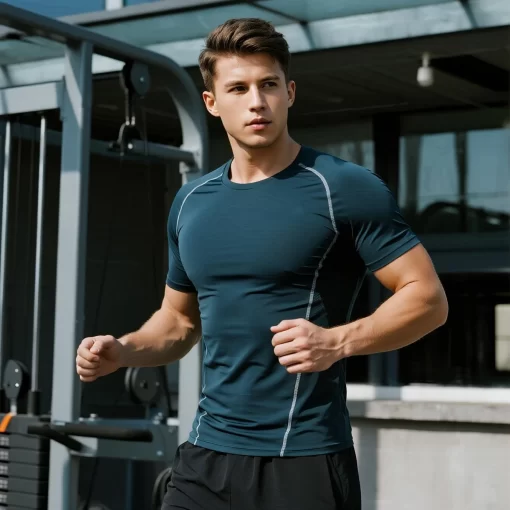
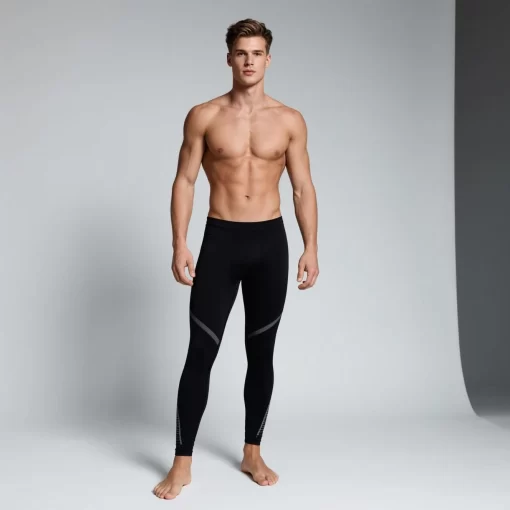
Compression styles to evaluate with this specification: leggings panels and compression tops are exactly where directional stretch and recovery data matter most — validate the fabric on the real garment system before approval.
How Should Buyers Finalize a Compression Fabric Specification?
Finalize the specification by connecting the intended garment fit with measurable, repeatable material criteria. Control test direction, method options, conditioning, extension or load, hold and relaxation times, cycles, formulas, sampling, and approval evidence. The main risks are ambiguous terminology, incomparable test setups, one-direction reporting, uncontrolled fabric substitutions, and approving fabric without garment validation. Include in an RFQ or sample request: product type and close-fit characteristics; fabric construction, weight, composition, finish, and color; pattern-panel orientation and required stretch directions; the agreed method and selected parameters; separate elongation, force, recovery, and growth criteria; original-state or pretreated condition; sample size range, seam construction, and decoration; estimated quantity, target market, packaging, and timing; and report, swatch, sample, version, and approval requirements. Do not copy a threshold from another compression garment without confirming that construction, pattern reduction, use, and test method match — agree on acceptance criteria before production and preserve the approved method for repeat orders. See how to build a garment BOM for the material-tracking side.
Frequently Asked Questions
Can elastane or spandex percentage predict recovery by itself?
No. Fiber content does not fully describe yarn form, knit construction, elastomer quality, finishing, fabric density, or directional behavior — compare controlled test data and garment samples rather than approving recovery from composition alone.
Should every color of the same fabric be tested?
The testing plan should reflect sourcing and finishing risk; different color processes or lots may justify separate verification, so define sampling by color and lot before approval.
Is hand stretching acceptable for supplier selection?
Hand assessment can screen swatches for obvious differences, but it cannot control force, gauge length, direction, time, or calculation — use a documented method for approval.
When should compression fabric be retested?
After a change in supplier, yarn, construction, finish, color process, fabric weight, or agreed pretreatment; the specification should define change-notification and reapproval triggers before bulk production.
Related Articles
- Sportswear Categories
- How to Build a Garment BOM
- How Are Shirts Made in Professional Factories?
- OEM & ODM Services
Official Resources
References
- Textile stretch-and-recovery test method guidance for elastic fabrics (e.g., elongation, growth, and recovery reporting conventions).
- LSLONG compression sportswear material review documentation, 2026.