

Hems are the least glamorous part of a T-shirt and the first place cheap construction shows: a hem that rolls up, puckers at the side seam or waves across the chest turns a good print into a bad product. The hem does more than finish an edge — it sets the balance of the tee, controls how the fabric falls, and absorbs most of the wash-and-wear stress at the sleeves and bottom. This article breaks down straight and curved hems, sleeve finishes, stitch types and roll-up prevention, and gives you the spec lines a buyer needs to get a consistent result from the first sample to the last bulk lot.
Hems shape how a tee sits on the body
A straight hem cuts horizontally and hangs parallel to the floor, which is why classic and workwear tees use it: it reads as stable and utilitarian. A curved hem rises at the side seams, creating the modern "high-low" layering silhouette that streetwear and fashion basics use. The choice changes construction, not just looks: a curved hem must be eased around the curve, so seam tension and stitch type matter more, and the fabric's drape decides whether the curve sits flat or waves. Sleeve hems follow the same logic at smaller scale — a short-sleeve hem and a long-sleeve cuff finish the armhole differently and wear differently over time. The hem decision should be made alongside the fabric selection, because weight and stretch determine what a given silhouette can tolerate.
Straight hems: classic and reliable
The straight hem is the most forgiving construction in a tee: the fabric runs in a straight line, the coverstitch or twin needle follows the grain, and there is no easing to go wrong. It suits mid- and heavyweight knits, uniforms and promotional tees where consistency across thousands of pieces matters more than silhouette. The practical limit is styling — a straight hem on a lightweight drapey tee can look boxy, and it does not layer as cleanly as a curved hem under jackets. For brands standardizing a basic line, the straight hem is the lowest-risk default, and it is the easiest to specify, measure and inspect at the factory: the hem width is uniform, the measurement point is obvious, and the sewing operator has the least room to drift from the approved sample.
Curved hems: modern layering
Curved hems are the signature of modern basics: the sides rise so the front and back dip slightly, which makes the tee hang better over jeans, leggings or shorts and creates the layered look buyers call "curved hem" or "high-low". Construction is where the difficulty lives. The coverstitch must ease the fabric around the curve without puckering, the hem allowance must be consistent along the arc, and lightweight jersey needs a binding or a wider fold to stop the curve from stretching out. A curved hem on a stable mid-weight knit is achievable at scale; on 140 GSM jersey it demands careful machine settings and a factory with the experience to hold the shape across a whole production run. The rise measurement — how many centimeters the side seam rises above the front and back — is the number that turns the design into a reproducible spec.
Sleeve hems: short and long options
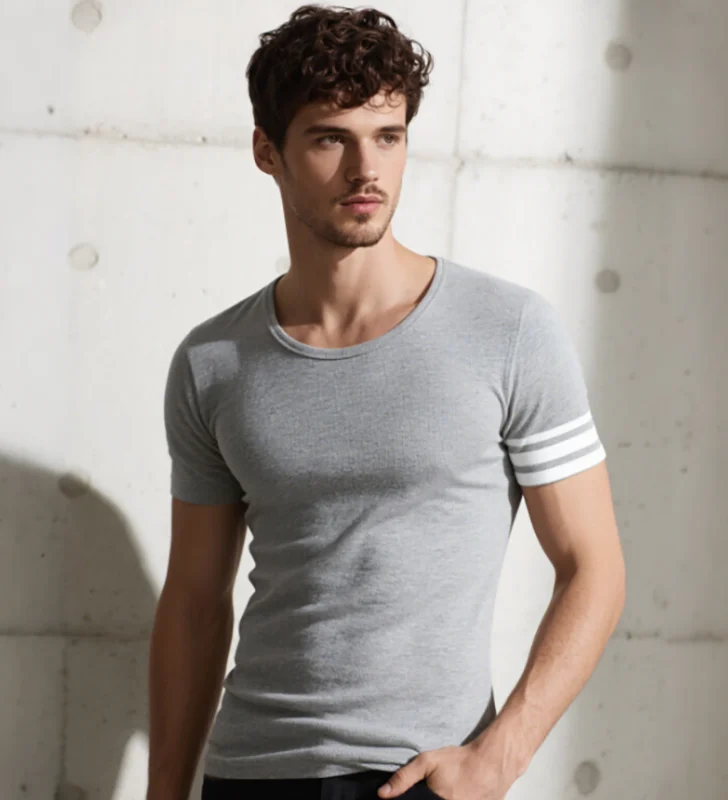
Sleeve finishing comes in two families. Short sleeves usually get a plain folded hem with coverstitch or twin needle — the same logic as the bottom hem but tighter, because the armhole seam and sleeve opening sit close together. Long sleeves add the cuff question: a plain hem keeps the look clean, while a ribbed cuff (like a hoodie cuff at smaller scale) adds stretch and holds the sleeve in place. Ribbed cuffs change the sleeve's fit and recovery and introduce a second fabric to manage, so they belong in the spec explicitly. For both options, the key measurements are hem width and sleeve length from the shoulder seam, and the key risk is a hem that twists because the fabric's knit direction was not followed when the sleeve was cut. A twisted sleeve hem is a manufacturing error, not a fabric fault, and it is caught at the cutting table, not at inspection.
Hem stitching: coverstitch and twin needle
Stitch type is the technical core of a hem. The coverstitch (two-needle or three-needle) is the industry standard for knit hems: it covers the raw edge on the inside while the stretchy stitch moves with the fabric, which is why it is used on premium basics. The twin needle produces a similar double-stitch look from a simpler machine but with less coverage and stretch, making it a cost trade-off that shows up in durability. Stitch tension is the hidden variable: too tight and the hem rolls or the fabric puckers; too loose and the stitch skips or the hem opens. A spec should name the stitch type, stitch density and thread, and the sample review should check the inside of the hem, not just the outside. Operators adjust tension for every fabric change, so the approved sample's tension settings should be recorded with the tech pack.
Hem roll-up and how to prevent it
Hem roll-up is the classic lightweight-tee failure: the fabric edge curls toward the inside because jersey knits have a natural tendency to roll, and a narrow hem or tight stitch tension makes it worse. Prevention starts at the fabric — heavier or more stable knits roll less — and continues at construction: a wider hem allowance, lower stitch tension, and, for very light fabrics, a binding or tape at the hem edge. Testing matters: after washing, the hem should lie flat with no visible roll. The dimensional-change method AATCC TM135 and the washing procedures in ISO 6330 are the standard ways to expose roll-up, puckering and seam distortion in a controlled way before bulk production. If a sample passes flat but rolls after washing, the issue is fabric relaxation interacting with the stitch, and the fix belongs in construction settings.
Fabric weight and hem behavior
Weight drives how a hem behaves more than any stitch choice. Lightweight jersey (140–160 GSM) rolls, waves and stretches at the hem; it needs narrower hems, careful tension and stable knits or blends. Mid-weight (160–200 GSM) accepts most constructions with standard settings. Heavyweight (200 GSM+) sits flat and forgiving but can make a hem bulky if the allowance is not reduced. Fiber matters too: cotton and cotton-elastane behave differently from polyester blends, which hold a crease and roll less. The Cotton Incorporated Fabricast fabric information system documents how construction and yarn choice change fabric behavior — the same variables a hem spec must account for. When the fabric changes between seasons, re-test the hem on the new fabric before assuming the old settings still hold.
Specifying hems in tech packs
A hem spec needs six lines: hem type (straight or curved), location (bottom, sleeve, cuff), finished hem width, stitch type and density, hem allowance, and any binding or tape. Add a measurement note — hem width measured flat at the side seam — and a wash target: no roll-up, no puckering, no seam twist after three washes. Without these lines, "curved hem" means different things to different factories: one produces a subtle 2 cm rise, another a dramatic 8 cm high-low. For ribbed cuffs, add the cuff width, length and rib composition, because the cuff behaves as a separate component. LSLONG's knowledge hub covers tech-pack structure, and its t-shirt category pages show the straight, curved and long-sleeve options in production.
Testing hem performance
Test hems the way customers abuse them. First, wash three to five cycles and check for roll-up, puckering and twist — the ISO 5077 method measures dimensional change in washing and drying, which is where hem distortion appears. Second, stretch the hem by hand and confirm it returns without a permanent wave. Third, inspect the seam coverage: the inside edge should be fully enclosed with no raw knit edge exposed. For restricted substances in threads, tapes or bindings, OEKO-TEX STANDARD 100 applies. Record results per batch, because a change in fabric lot or thread tension can shift hem behavior even when the spec is unchanged — the test record is what lets a quality team trace a hem defect back to its cause.
Choosing hems for your line
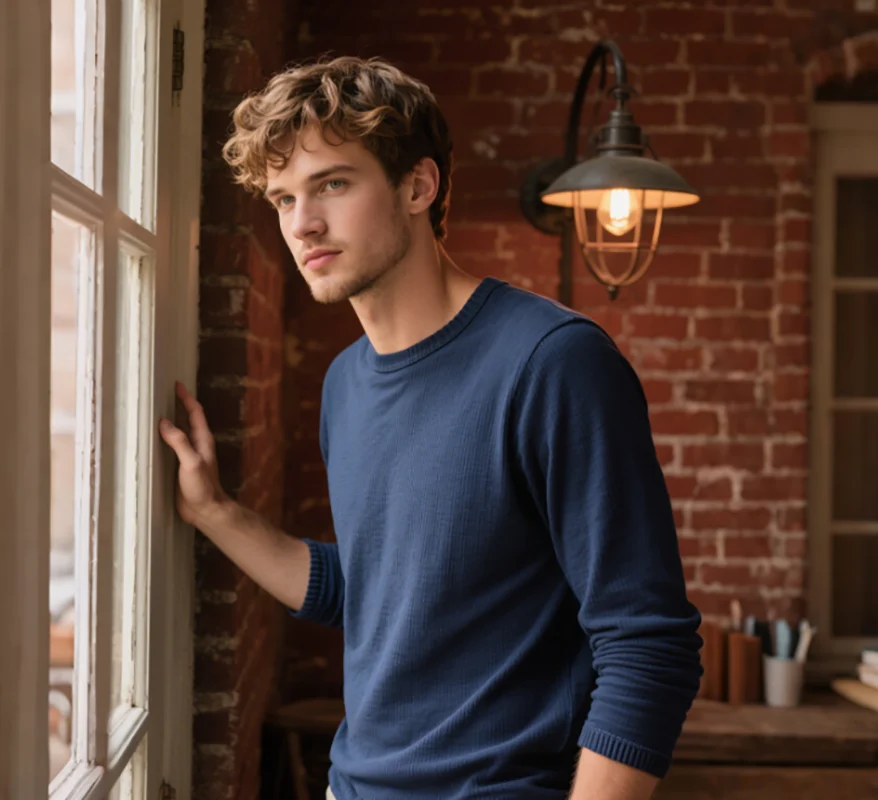
Match the hem to the silhouette and the fabric weight. Classic and uniform lines take straight hems with coverstitch; fashion and layering lines take curved hems on stable mid-weights; long-sleeve pieces need the cuff decision made deliberately, not by default. If the line spans multiple weights, standardize the stitch type and vary the hem width — one stitch setup across the line simplifies factory quality control and keeps reorder behavior consistent. Heavyweight tees can carry a wide straight hem confidently; lightweight tees need the narrow-hem-and-binding treatment or they will roll on the first wash. Before committing to a silhouette, order a curved-hem and a straight-hem sample in the actual fabric: the difference between them on paper is small, and on the body it decides the look of the whole line.
A hem design guide
The complete hem decision fits on one page: silhouette (straight or curved), fabric weight, hem width, stitch type, allowance, cuff treatment for long sleeves, and wash targets. For each option, note the failure mode it prevents — roll-up for lightweight jersey, puckering on curves, twist on off-grain fabric — and the test that catches it. Hand this page to the factory with the sample, and the hem stops being a negotiation. A well-specified hem is invisible to the customer, which is exactly the point: the best hems are the ones nobody notices. Review the page with the factory before bulk, because a hem that was approved on a sample in one season will be interpreted differently by a new production team without the written page.
FAQ
Curved vs straight hem: which is better? Neither is better overall. Straight hems are more reliable and easier to produce at scale, while curved hems create the modern high-low silhouette for layering but need stable fabric and careful easing. Choose by silhouette and fabric weight, not by fashion alone, and sample both in your actual fabric before deciding — a curved hem on the wrong weight will wave in production no matter how good the sample looks.
Why does my T-shirt hem roll up after washing? Roll-up comes from the knit's natural edge curl, usually worsened by a narrow hem or tight stitch tension on lightweight jersey. Fixes include a wider hem allowance, lower tension, heavier or more stable fabric, and binding or tape on very light knits. Confirm the fix with a wash test rather than a hand feel, and check the bottom hem and sleeve hems separately, because they roll at different rates.
What is the difference between a coverstitch and a twin needle hem? A coverstitch uses a covering thread on the inside, giving a stretchy, fully covered hem that moves with the fabric — the premium standard. A twin needle creates a similar double-stitch look with a simpler machine but less stretch and edge coverage, making it a durability trade-off that shows up after several washes. For premium lines, specify coverstitch in the tech pack; for budget lines, twin needle is acceptable if the tension is right.
How do I spec a curved hem so the factory makes it consistently? Specify the rise measurement (side seam rise in cm), finished hem width, stitch type and allowance, and add a photo or diagram of the intended curve. Without a number, "curved hem" is interpreted differently by every factory, and the sample and bulk may not match. Put the rise and width on the measurement chart so inspection checks the same points every lot.
Hem construction is a small spec with a large effect on perceived quality. LSLONG can produce straight, curved and long-sleeve hem samples on your chosen fabric weight and run wash tests before bulk — send your tech pack to the LSLONG team or email lisilongtshirt@gmail.com for a sample and quote.