

A neckband that stretches out after three washes ruins an otherwise good tee, yet most buyers specify it with a single line — "ribbed collar" — and leave the details to the factory. The neckband is a structural part of the garment, not a decorative trim: its fabric, width and taping decide whether the collar stays flat, keeps its shape and survives repeated laundering. This article compares the three main neckband types — ribbed, folded and self-fabric — and explains what to put in a tech pack so the collar you approve on a sample is the collar you get in bulk, order after order.
The neckband is the first thing customers see
The neckline is the frame around the garment: a stretched, wavy or twisted collar reads as low quality within seconds, even when the print and fabric are excellent. Functionally, the neckband pulls the neckline inward and holds the shirt's shape at the most stressed point of the garment — the point where heads pass through and where most wear occurs. A well-engineered neckband combines three elements: a stretch fabric that recovers, a width that suits the body fabric, and a seam finish that lies flat against the skin. Each of the three common types solves these jobs differently, and the right choice depends on fabric weight, fit and wash expectations. When a collar rolls at the back neck or gaps at the front, the cause is almost always one of those three elements specified wrong.
Ribbed neckbands: stretch and recovery
Ribbed neckbands are the industry default for good reason: rib knit (typically 1×1 rib with spandex or elastane) stretches to pass over the head and recovers to hug the neckline. The rib is cut shorter than the neckline circumference — commonly 10–20% shorter, depending on stretch — so it exerts continuous tension that keeps the collar flat. Rib also resists the distortion that lightweight jersey develops at the neck after washing, and the elastane content (commonly 2–5%) is what gives the band its memory. The trade-offs are cost and a visible texture that reads as "athletic" or "classic" rather than minimal. For heavyweight or oversized fits, a wider rib (roughly 2 cm and up) anchors the neck better; for lightweight tees, a narrower rib reduces bulk at the seam.
Folded neckbands: clean and simple
A folded neckband uses the same single jersey as the body, folded double and stitched into the neckline — no separate rib fabric. The result is a clean, seamless look that matches the body exactly, which is why folded bands appear on minimal and fashion-forward designs. The limitation is recovery: single jersey has less elasticity than rib, so the neckline relies on the fold and seam construction rather than fabric stretch. To keep shape, folded bands need a slightly wider fold, careful stitch tension, and often a neck tape at the back to stabilize the seam. Folded construction also behaves differently across weights — on mid-weight knits it holds well, while on very light jersey it can stretch and ripple unless the tension is adjusted for the fabric.
Self-fabric neckbands: seamless look
Self-fabric neckbands are cut from the same knit as the body, either on the bias or with the fabric's natural stretch, and bound into the neckline. They offer the most seamless appearance — the collar disappears into the garment — and are common on premium basics and bamboo or modal tees where a smooth neckline is part of the selling point. The engineering cost is real: because the fabric has limited recovery, the cut direction and seam tension do most of the work, and any error shows up as a rippled neckline. Cutting on the bias gives the band a little more give, but it also changes the fabric's drape and adds fabric waste. Self-fabric suits medium-weight knits with stable construction; on very lightweight jersey it can stretch out quickly unless reinforced with tape.
Neckband width and taping
Width and taping are the two specification points buyers most often overlook. Typical finished neckband widths run from roughly 1.5 cm to 2.5 cm: narrower bands suit light tees and modern fits, wider bands add structure to heavy or oversized garments. Taping is a separate reinforcement — a herringbone or stay tape across the shoulder seam (shoulder-to-shoulder tape) and a neck tape over the back neck seam stop the seam from stretching and cover raw edges. Shoulder tapes commonly run 1.5–2 cm wide and are cut from a non-stretch or low-stretch material so they hold the seam in place. In a tech pack, width, fabric composition (for example, 95% cotton / 5% spandex rib), tape type and seam finish should each have a line, because changing one changes how the collar behaves after washing.
How neckbands survive washing
Washing is where neckband decisions show up. Cotton rib shrinks and relaxes differently from the body fabric, so a neckband can pucker or gap if its shrinkage is not matched to the jersey. Test methods matter here: AATCC TM135 measures dimensional change after home laundering, and ISO 6330 defines the washing and drying procedures used for textile testing. On samples, check the neckline after three to five wash cycles: the band should recover its width, lie flat at the seam, and not twist. A neckband that looks perfect on a fresh sample but gaps after washing indicates a stretch or shrinkage mismatch that will repeat in production. The same wash test also exposes neck tape that shrinks at a different rate and pulls the seam into a curve.
Matching neckband to fabric weight
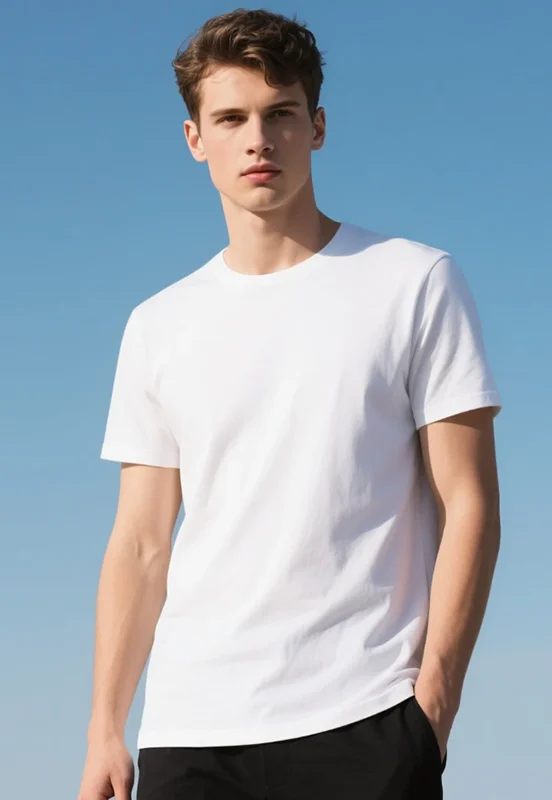
Fabric weight drives the neckband choice more than style does. Lightweight tees (roughly 140–160 GSM) need a narrow rib with good recovery, because the body fabric offers little structural support. Mid-weight tees (160–200 GSM) accept all three band types, and the decision shifts to aesthetics — ribbed for a classic look, folded or self-fabric for minimal styling. Heavyweight tees (200 GSM and up) benefit from wider rib or folded bands with tape, because the neckline carries more fabric weight and a thin band will distort under it. The same logic applies to fiber: combed ring-spun cotton with elastane gives the best recovery-to-hand-feel balance, while 100% cotton rib relies on construction quality. LSLONG's t-shirt fabric library includes combed cotton, ring-spun and performance blends precisely so the band fabric can be matched to the body rather than chosen by habit.
Neckband construction in tech packs
A complete neckband spec has five lines: band type (ribbed, folded or self-fabric), fabric composition and width, cut ratio relative to neckline, tape requirements, and seam finish (coverstitch, twin needle or bound). Add a measurement point — "neckband width measured flat at center back" — so the factory and the buyer measure the same thing. Ambiguity here is expensive: one brand's "ribbed collar" produced a 1.5 cm band, while the next order specified 2.2 cm, and both were approved against different samples. Also state the rib stretch target if the band has elastane, because stretch percentage is a specification, not a guess. Put the numbers in the tech pack and the sample review becomes a check, not a negotiation.
Testing neckband shape retention
Shape retention testing is a three-part check. First, measure the neckline width before washing and after three cycles, and confirm the band returns to within the agreed tolerance. Second, inspect the seam: no rippling, no exposed raw edges, no tape showing through. Third, check recovery after stretching — pull the neckline to its limit and confirm it springs back without a permanent crease. For abrasion, the ASTM D4966 Martindale method is a useful proxy for the collar rubbing against skin and collars, and OEKO-TEX STANDARD 100 covers restricted substances in the band fabric. Document the results per batch so a change in rib supplier or fabric lot cannot silently alter collar behavior between orders.
Choosing neckbands for your line
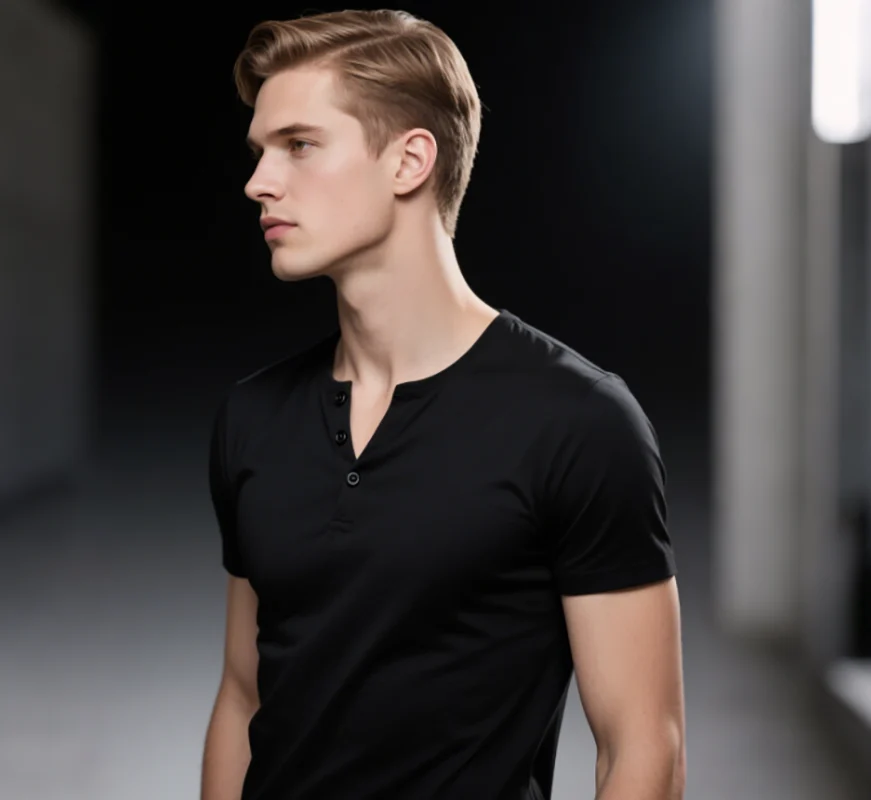
Choose by function, not habit. A performance or gym line wants ribbed bands with elastane for recovery under sweat and movement. A premium minimal basics line can use folded or self-fabric bands for the seamless look, accepting that construction quality must be higher. An oversized or heavyweight streetwear line wants wider rib or taped folded bands to carry the fabric weight. If the line spans multiple weights, standardize the band type and vary the width — one band fabric across three weights is easier to source and test than three different constructions. Sample the band fabric on the body fabric before approving, because the two knits shrink and stretch at different rates and the interaction is only visible in a finished sample. The cotton construction guidance in Cotton Incorporated's Fabricast documents how yarn and knit structure affect fabric behavior, which is the same logic that applies to neckband fabric selection.
A neckband specification guide
Use this checklist when writing or reviewing a neckband spec: band type, fabric composition (including elastane percentage), finished width, cut ratio, tape requirements, seam finish, measurement point, and wash-behavior target. Add the testing method (AATCC TM135 or ISO 6330) and the pass/fail criteria: no visible distortion after three washes, recovery within tolerance, no seam rippling. For brands ordering from a factory, request the band fabric swatch alongside the body swatch — they are separate materials with separate shrinkage and stretch profiles. Keep a retained sample from the approved order so later lots can be compared against the physical standard, not just the written spec. A neckband spec that passes this checklist is one less quality issue to chase in bulk production.
FAQ
Ribbed vs self-fabric neckband: which is better? Ribbed is better for recovery and wash durability, because rib knit with elastane stretches and springs back, holding the neckline flat through repeated washing. Self-fabric gives a seamless look but relies on cut direction and seam tension, so it needs higher construction quality and works best on stable, medium-weight knits. If your line prioritizes wash durability, choose ribbed and specify the elastane content in the spec.
How wide should a T-shirt neckband be? Typical finished widths run from 1.5 cm to 2.5 cm. Lighter tees take narrower bands, heavier and oversized tees take wider bands, and the width should be specified in the tech pack with a measurement point — for example, "measured flat at center back" — so the factory and buyer measure the same way. Check the approved sample's measured width before bulk, because the width changes with rib stretch.
Why does my neckband stretch out after washing? The band fabric's recovery is mismatched with the body fabric — usually a rib without enough elastane, a band cut too long relative to the neckline, or missing neck tape. Testing the neckline width after three wash cycles with AATCC TM135 or ISO 6330 will confirm which cause it is. Compare the band's recovery before and after wash, and test the tape as well, because tape shrinkage pulls the seam into a curve.
Does the neckband fabric need to match the T-shirt fabric? No, and it usually should not. A ribbed band is a different knit from the body on purpose, to provide stretch and recovery. What must match is the shrinkage profile, so the band and body relax at similar rates instead of puckering or gapping at the seam. Ask for both fabrics' shrinkage data before approving the combination, and keep the band swatch with the order records.
Specifying neckbands correctly is a small change that removes a common quality complaint. LSLONG's team can review your tech pack, match band fabric to your tee's weight, and produce samples for wash testing — contact the LSLONG sourcing team or email lisilongtshirt@gmail.com with your current neckband spec.