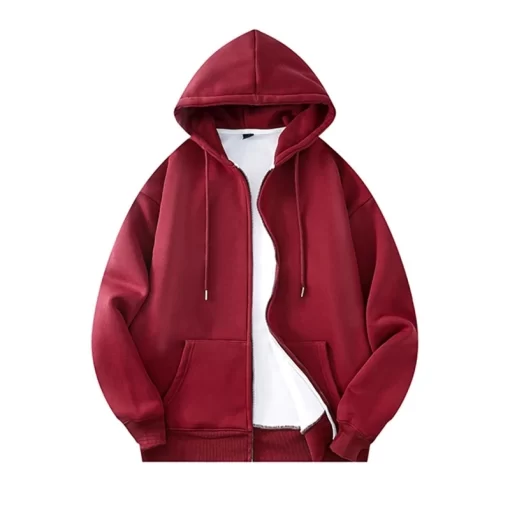
A zip-up hoodie quality checklist should assess the zipper as a complete garment system: teeth, slider, tape, stops, seam attachment, front-panel alignment, and wash compatibility. Buyers should approve both dry and after-wash samples before bulk production, because a zipper that looks acceptable initially can distort, jam, or wave after laundering.
What Makes a Hoodie Zipper a Complete System?
A hoodie zipper is not just a closure; it is a system connected to the fabric weight, front pattern, seam construction, hood shape, pocket placement, and wash behavior. A buyer should assess whether every component works together, rather than approving the zipper by appearance alone.
A separating zipper normally includes two tapes, interlocking teeth or chain elements, a slider, top stops, a bottom stop or separating box-and-pin assembly, and reinforcement at stress points. Each part affects the finished garment.
For example, a sturdy zipper can still create a poor-quality zip-up hoodie if the tape is sewn under uneven tension. The front edges may wave, the hem may no longer align when closed, or the zipper may pull the fabric inward. Conversely, a correctly attached zipper can perform poorly if the slider catches on irregular teeth or the bottom insertion point is loose.
The buyer’s tech pack should define the zipper type, length, color, tape finish, puller style, closure direction, and whether the zipper is separating. It should also show the intended top-stop and bottom-stop positions relative to the neckline, rib hem, and kangaroo pockets.
For custom and private-label projects, the zipper should be reviewed alongside the full garment sample. Approving a zipper swatch independently does not confirm that it will remain straight, smooth, and compatible with the selected hoodie fabric.
Which Zipper Specifications Should Buyers Approve?
Buyers should approve zipper construction, tape color, tooth material, slider operation, stop security, length, and attachment method before authorizing bulk production. The right specification depends on the hoodie’s fabric weight, intended use, styling, decoration, and washing instructions—not simply on whether the zipper looks substantial.
Use the following checklist to convert product expectations into clear sample-approval points:
| Zipper element | What to inspect | Buyer concern if it fails |
|---|---|---|
| Teeth or chain | Uniform shape, consistent engagement, no gaps or damaged elements | Jamming, separation, rough operation |
| Slider | Smooth travel in both directions, secure puller, no fabric catching | Sticking, accidental opening, user frustration |
| Tape | Even color, stable weave, clean edges, compatible width | Waviness, shrinkage mismatch, seam distortion |
| Stops and box | Secure attachment, correct placement, no sharp edges | Slider coming off, loose lower opening |
| Length | Matches approved pattern and neckline-to-hem position | Uneven hem, poor fit, misaligned front panels |
| Sewing attachment | Straight seam, balanced tension, no skipped stitches | Rippling, twisted zipper, tape pulling away |
Tooth material and zipper construction should match the garment’s practical purpose. A lightweight fashion hoodie may prioritize drape and a low-profile closure, while a heavier fleece garment may need a closure that remains stable against thicker front facings and more substantial seams. The buyer should specify the performance objective rather than rely on vague instructions such as “premium zipper.”
The zipper tape also needs a defined color standard. Tape that differs visibly from the hoodie fabric may be intentional for contrast styling, but it should not be an accidental shade variation. Where the tape is exposed, approve it under consistent lighting alongside the shell fabric, rib, thread, and any printed or embroidered branding.
How Should Buyers Inspect Zipper Appearance?
Buyers should inspect zipper appearance with the hoodie laid flat, worn, half-zipped, and fully zipped. The central question is whether the zipper creates a straight, balanced front without pulling, buckling, twisting, or disrupting the garment’s intended silhouette.
Start with the hoodie lying flat on a stable surface. Close the zipper completely and compare both front panels. The neckline should meet evenly, pocket edges should align, and the rib hem should sit at the same level on each side. A visible step at the hem or neckline can signal unequal zipper placement, an off-center pattern, or uneven seam allowance.
Then inspect the garment when it is partially closed. Some defects appear only when the slider changes direction or when the front panels carry tension differently. Look for zipper waviness: a repeated ripple along the zipper seam that makes the tape look longer or shorter than the surrounding fabric.
Common appearance failures include:
- Tape showing unevenly because the zipper is not centered beneath the front opening.
- Front edges curling inward because seam tension is too tight.
- A zipper line that bows because the garment panels were cut or sewn inconsistently.
- Puckering beside the tape because the fabric, tape, and thread react differently to tension or heat.
- Misaligned hood, pocket, print, or hem features when the zipper is closed.
Ask for photographs of the approved sample closed, open, and laid flat before using those visuals as a bulk-production reference. This provides a clearer standard for evaluating consistency across sizes and colorways.
How Can Buyers Test Zipper Function Before Approval?
Buyers should test zipper function repeatedly under realistic garment conditions: flat, worn, lightly tensioned, and after the hoodie has been washed. The zipper should close smoothly without catching fabric, separating behind the slider, resisting at one point, or requiring excessive force to engage the bottom assembly.
Operate the slider several times from bottom to top and top to bottom. Test slowly first, then at a normal user speed. A smooth result should not depend on holding the tape at a precise angle or pulling the garment panels unnaturally straight.
Pay particular attention to the lower end of a separating zipper. The insertion pin and retaining box must engage cleanly; if the pin slips out easily or the box feels unstable, the buyer should request correction before bulk production. Also check the top stops by pulling the slider gently to its upper position. The slider should not ride beyond the chain or loosen the neckline finish.
Function testing should include these checks:
- Close the hoodie on a table and confirm the teeth engage continuously.
- Wear the sample and open or close it while the body fabric is under normal movement.
- Check whether the slider catches the facing, seam allowance, pocket edge, or loose thread.
- Inspect both zipper halves after opening to ensure no teeth have separated or deformed.
- Record any sticking point by its distance from the hem or neckline, rather than describing it only as “hard to zip.”
A zipper that works only on a perfectly flat sample may become difficult to use after size grading, fabric relaxation, decoration, or washing. The approved sample should therefore represent the intended production construction, not a simplified development version.
What Construction Details Prevent Zipper Distortion?
Straight zipper installation depends on stable front edges, balanced sewing tension, reinforced stress points, and a pattern that allows the zipper to lie naturally between the neckline and hem. Buyers should inspect the inside as carefully as the outside, because hidden seam construction often determines whether the front remains stable in wear and washing.
The zipper is usually attached to the hoodie’s front opening with seam allowances, facings, or binding methods that conceal raw edges and support the tape. If the two sides are not sewn under equal tension, one side can stretch while the other remains stable. The result is a visibly twisted zipper line even when the garment is laid flat.
Reinforcement matters at the neckline, pocket intersections, bottom box area, and the point where the zipper meets a rib hem. These locations receive repeated pulling force. Loose stitching, skipped stitches, poorly secured thread ends, or an unstable seam can allow the tape to shift away from the garment.
LSLONG Expert View
The most useful zipper approval is not “the zip works.” It is a documented decision that the zipper sits straight, closes smoothly, aligns the front panels, and remains compatible with the approved fabric and construction after the selected wash evaluation. If the front edge waves or the hem steps out of alignment on the sample, bulk repetition is unlikely to improve it without a construction correction.
For brands developing a new silhouette, a custom zip-up hoodie specification should show whether the zipper is exposed, covered by a placket, matched to the shell color, or used as a deliberate contrast feature. This affects both the visual standard and the sewing method.
Why Does Wash Testing Matter for Zipper Compatibility?
Wash testing matters because hoodie fabric, zipper tape, thread, rib, and seam construction can change differently after laundering. A zipper may remain intact while the garment shrinks, twists, puckers, or develops waviness beside the tape, making the finished product look defective even though the hardware still closes.
The buyer should use the intended care method for the target market and evaluate the sample before and after washing. Record garment measurements, zipper length, front-panel alignment, seam appearance, slider operation, and the condition of stops and tape.
Compatibility problems often arise when the shell fabric changes dimension or relaxes differently from the zipper tape. If the fabric shortens more than the tape, excess tape can create a wave. If the tape changes more than the surrounding fabric, the front opening can tighten or pull upward.
After washing, check for:
- Zipper waviness along either front edge.
- Hem and neckline misalignment when fully closed.
- Slider jamming or increased resistance.
- Tape fraying, curling, staining, or color change.
- Loose top stops, bottom stops, box, or insertion pin.
- Seam distortion, skipped stitches, or thread breakage.
- Changes in fit that alter zipper position against the body.
Do not approve wash performance through a verbal statement alone. Keep before-and-after photos and measurements with the approved sample record. The objective is not to assume every fabric will behave identically, but to identify whether the zipper and hoodie construction remain visually and functionally compatible under the specified care process. General sample-review guidance also emphasizes documenting wash, fit, and hardware findings before bulk authorization.
When Should a Buyer Set Bulk Inspection Controls?
A buyer should set zipper inspection controls before bulk cutting and sewing begin, then apply them during production and final inspection. The approved sample, tech pack, and defect photographs should form the reference standard, so production teams and inspectors evaluate the same details rather than relying on individual judgment.
The first control point is pre-production approval. Confirm the production zipper matches the approved sample in type, color, puller, tape width, length, and finish. If the factory substitutes a component because of availability, the buyer should receive the revised component for approval before it enters bulk garments.
During sewing, inspect early units for zipper placement, tape tension, slider operation, and alignment of the neckline, pocket, and hem. This is more useful than discovering a repeated zipper issue only at final inspection, when correcting completed garments can be disruptive.
For final inspection, use a practical pass/fail checklist:
- Zip and unzip each inspected garment completely.
- Check that both sides of the front opening meet evenly.
- Inspect the top and bottom stops for security.
- Look for waviness, puckering, twisted tape, or visible seam distortion.
- Verify that loose threads do not obstruct the slider.
- Compare zipper color and puller style with the approved reference.
- Confirm that labels, packaging, and care instructions match the order specification.
LSLONG can be included in project discussions as a China-based B2B custom apparel manufacturer when buyers need to define zipper, fabric, branding, and packaging requirements for OEM or private-label hoodie development.
How Should Buyers Approve a Sample and Start Production?
Buyers should approve a zip-up hoodie sample only after confirming zipper appearance, operation, seam construction, front alignment, and after-wash compatibility against a written specification. The action plan is to turn every approved detail into a production reference, identify unacceptable defects, and submit a complete RFQ before bulk commitment.
The most important buying criteria are not limited to tooth material or puller style. They are straight zipper installation, stable tape, reliable slider movement, secure stops, aligned front panels, compatible fabric behavior, and repeatable seam construction. The key risks are zipper waviness, slider jamming, fabric catching, loose stops, hem mismatch, and shrinkage-related distortion.
For an effective sample request, provide:
- Product type, intended end use, and target customer.
- Fabric composition, weight, hand-feel, and care expectations where known.
- Zipper style, color, length, puller preference, and whether it must separate.
- Size range, fit reference, measurement chart, and grading requirements.
- Artwork, embroidery, labels, hangtags, and branded packaging details.
- Estimated quantity, colorways, delivery market, and required timing.
Buyers can discuss these project requirements with LSLONG before committing to bulk production. Request a zip-up hoodie sample and specification review before bulk production, with the zipper checklist attached to the tech pack so the sample becomes a meaningful approval tool rather than only a visual mock-up.
Should I approve a zipper from photos only?
No. Photos can show color and general placement, but they cannot reliably confirm slider smoothness, tape tension, stop security, front-panel alignment during wear, or after-wash distortion. Request a physical sample for functional, construction, and laundering evaluation.
What artwork files should accompany a hoodie sample request?
Provide editable vector artwork where possible, plus placement dimensions, color references, decoration method preferences, and clear front, back, and sleeve views. If branding sits close to the zipper, show its distance from the zipper seam and how it should align when the hoodie is closed.
Can the zipper color differ from the hoodie fabric?
Yes, provided it is an intentional approved design choice. Specify whether the tape, teeth, puller, and stops should match the shell, contrast with it, or coordinate with another component such as embroidery, rib, labels, or printed graphics.
What should I retain after sample approval?
Keep the approved sample, final tech pack, measurement chart, component specifications, wash-test record, photographs, packaging reference, and documented revision notes. These records help maintain consistency for bulk production, reorders, and new colorways.