

A chest surgery shirt has a different design problem from a shoulder garment, even though both are recovery products. When access is needed to the chest or thorax, the opening has to allow the garment to be opened and laid back without lifting the arms overhead, and it has to accommodate dressings, drains and monitoring lines that may sit on or near the front of the body. The design decisions therefore concentrate on the front of the garment: where the opening runs, how far it opens, and how it behaves when only one side is unfastened.
What Does a Chest Surgery Shirt Have to Solve?
Front access without lifting the arms or twisting the torso.
The garment has to open in front, allow dressing and drain access during wear, and stay comfortable against skin that may be sensitive, taped or covered.
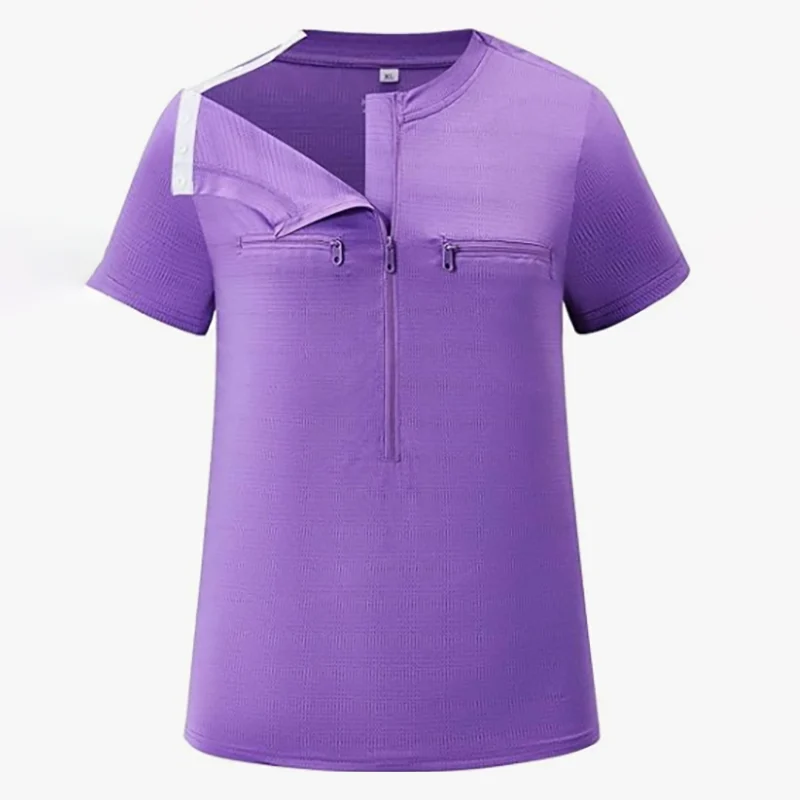
Access is the primary requirement. Chest and thoracic incisions are usually managed from the front, so the garment has to be openable along a line that the patient or a carer can reach while seated or lying down, without raising the arms or rotating the shoulders. That usually means a full-front opening, sometimes combined with a side or shoulder opening for comfort when dressing, rather than a conventional placket that only opens the neckline.
The second requirement is management during wear. Drains and lines may need to pass under or through the garment, dressings may need to be visible or checked without undressing the patient, and a sling or a support garment may be worn over the top. Each of those changes where the opening sits, whether it opens partially or fully, and how the garment is secured so that it does not pull on the front panel. The third requirement is skin comfort, which depends on fabric finish, seam placement and the position of any closure hardware relative to the incision area.
Design and Closure Placement for Thoracic Access
Run the opening along the line the carer will use, then place the closures within reach. A front opening that runs the full length of the garment allows the front panels to be laid back for dressing changes, while a front opening combined with a side opening lets the garment be put on with less shoulder movement. Both are common, and the choice often depends on whether the patient can dress themselves or relies on a carer.
Closure placement then follows two rules. First, closures should be positioned so that the garment can be partially opened without the whole front falling away, which matters when only one dressing is being checked. Second, hardware should not sit directly over the incision line or under a drain site, because pressure in either place is uncomfortable and can interfere with the dressing. Where lines or drains exit the garment, the opening depth, the overlap and the closure spacing all have to be considered together, and the family of closure options is compared in the adaptive apparel closure and access guide.
| Opening | How it works | Where it helps | What to consider |
|---|---|---|---|
| Full front opening | Garment opens along the centre or a curved front line | Dressing changes with minimal arm movement | Closure count, overlap and how the panels hold when partly open |
| Front plus side opening | Front opening with an additional side or shoulder opening | Dressing with limited shoulder movement | Number of steps to close; hardware position |
| Diagonal opening | Opening offset from the centre line | Keeping hardware away from the incision area | Pattern complexity and panel alignment |
| Two-panel front with overlap | Wraparound front with an overlapping flap | Coverage and dignity during wear | Closure placement and how the overlap sits when seated |
Fabric and Skin-Contact Requirements
Chest and thoracic garments are usually specified in a soft knit with stretch, for the same reasons as other recovery pieces: the fabric has to accommodate dressings and slight swelling without pressing, and it has to feel tolerable against skin that may be taped or healing. Weight matters in the opposite direction from ordinary apparel, because a heavy fabric pulls on the front panel and on the neckline, which is uncomfortable after thoracic surgery. A lighter, softer knit with good recovery is generally the better specification.
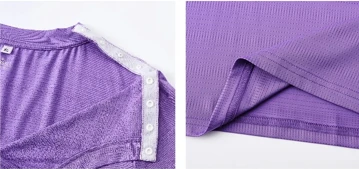
Two details are worth specifying explicitly. The first is the finish, because softeners and surface treatments should be tested for skin contact and for durability through the laundering regime the garment will meet. The second is the seam and hardware placement on the skin-facing side, since a seam or a closure element that sits on the incision area defeats the purpose of the design. Restricted substance testing for the fabric and trims is commonly documented through the OEKO-TEX Standard 100 framework for garments worn against sensitive skin.
Sizing, Fit and Drain and Dressing Clearance
Sizing for a thoracic recovery garment has to allow for dressings, swelling and the possibility of a drain site, so the chest measurement is not the only dimension that matters. The pattern should include enough ease across the front panel for a dressing and enough length to avoid the front hem pulling when the patient reclines, which is the position most recovery wearers spend time in. A garment that looks correct standing up can pull uncomfortably when the patient lies back.
The practical test is a fit session with the intended dressing in place, or with a comparable padding, followed by a dressing sequence that starts with the patient seated and reclined. LSLONG programmes are graded across XS–5XL with a tolerance of ±0.5 cm on the measurement chart, and for recovery garments the graded chart is extended with an ease specification for the front panel. Where drains are managed during wear, the opening depth and the position of the lowest closure should both be checked in a seated position, because that is where the garment gapes or presses.
Regulatory and Documentation Pathway
Whether a thoracic recovery garment is treated as a medical device depends on its intended purpose, the claims made for it and the market where it is sold, and that assessment sits with the brand and its regulatory adviser. A manufacturer’s contribution is documentation: material specifications and test reports, construction details, and manufacturing records that support traceability of the batch.
Two references are commonly used when a garment is marketed with a medical purpose. In the United States, the FDA publishes classification and regulatory information for devices according to intended use, and its guidance on classifying a medical device explains how that judgement is made. In the European Union, the medical device framework is set out in Regulation (EU) 2017/745. Where the garment is sold as adaptive clothing without a medical claim, the documentation route is lighter, but material testing and claim discipline still apply. Where a garment is intended for use in a clinical environment, the applicable standard for the protective garment type is also worth checking, and ASTM F3352 is an example of the standards landscape for medical gowns.
Sampling, Fitting and Clinical Feedback
Sample the closure layout and the fabric together, because a closure that works on a firm cloth can slip or bunch on a softer knit. Where the programme is choosing between two opening layouts, produce both and evaluate them by dressing a person with the relevant restriction, rather than by inspecting them on a table. The dressing sequence should include the reclined position, since that is where the front panel behaves differently.
Clinical or carer feedback is worth collecting in a structured way. Ask how long dressing takes, whether the opening can be managed seated and reclined, whether the closures clear the dressing and any drain site, whether the garment can be partially opened for a single dressing check, and whether anything presses when the patient lies back. Those questions produce a revision list that is specific enough to act on and a record that supports the final specification.
Production and QC for Medical Lines
Quality control for a thoracic recovery line adds closure function and skin-contact safety to the normal garment checks. Closure function is checked on every garment, because a closure that fails in use becomes a clinical problem rather than a rework item, and skin-contact safety is verified through material documentation rather than inspection alone.
The inspection list should include:
- Closure function tested on every garment, including partial opening and re-closing.
- Closure positions measured against the specification, with the lowest closure checked for clearance over the dressing area.
- Seams and hardware inspected on the skin-facing side, with no ridge or hard edge on the front panel.
- Measurements checked at the smallest, middle and largest sizes, including front panel ease and length.
- Appearance and dimensional change after the stated wash cycle, assessed through AATCC test methods.
- Material documentation and labelling checked against the destination market requirements.
Care labelling should follow a recognised symbol system such as GINETEX, because a recovery garment is laundered more often than ordinary clothing and the instruction has to match the tested regime. For programmes moving from prototype to a stocked line, the practical sequence and the documentation that buyers ask for are covered in the guide to scaling a branded recovery line.
Procurement and Ordering Routes
Recovery garments reach the market through brands, clinics and distributors, and each route has different expectations. Brands order against a specification and expect retail documentation and packaging. Clinics and hospitals order against an internal standard, expect consistent sizing and often specify a laundering requirement. Distributors carry mixed ranges and depend on specifications staying stable across the products they stock.
Programmes can start from small quantities, and ready-to-ship stock is available from 1 piece, so a trial with a small patient or carer group is practical before a larger commitment. Keep the trial garments, the closure feedback and the material documentation together as the reference pack, because a second order needs to reproduce the closure position as well as the fabric. One point of scope applies to any programme of this kind: this article describes garment design, materials and production practice rather than clinical advice, and the regulatory treatment of a specific product depends on its intended purpose, its claims and the market in which it is placed.
FAQ
Should a chest surgery shirt open at the front or the side?
Front access is usually the priority, because chest and thoracic dressings are managed from the front and the opening has to be reachable while the patient is seated or reclined. A side or shoulder opening is often added so the garment can be put on with limited shoulder movement. Where a programme is unsure, produce both layouts and evaluate them by dressing a person with the relevant restriction rather than judging them flat.
How should closures be positioned around a dressing or drain?
Keep hardware clear of the incision line and of any drain exit site, and place closures so the garment can be partially opened without the whole front falling away. The lowest closure matters most, because it sits closest to the dressing area when the patient is reclined. Check the position in a seated and reclined posture, since the garment behaves differently in each and the difference is where pressure or gaping appears.
Does a thoracic recovery garment need to be a medical device?
It depends on intended purpose, the claims made and the market. A product marketed for a medical purpose may fall under device regulation, while a garment sold as adaptive clothing without medical claims follows a lighter route. The determination belongs with the brand and its regulatory adviser; the manufacturer’s role is to supply material, construction and traceability documentation that supports whichever pathway applies.
What is the most useful way to trial a recovery design?
Run a small trial with the intended users or their carers and structure the questions: dressing time, whether the opening can be managed seated and reclined, clearance around dressings and drains, partial opening for a single check, and whether anything presses when lying back. Programmes can start from small quantities, and ready-to-ship stock is available from 1 piece, so a trial of this kind is feasible before a production commitment and produces evidence for the final specification.
Developing a chest or thoracic recovery garment?
Send the intended patient group, the closure concept, the fabric direction, the size range and the market, and LSLONG will confirm the opening layout, closure placement and material options, then produce trial garments for clinical or carer feedback. Sampling, decoration and quality control are handled in-house in Shenzhen.