

Australian Stitch in T-shirt manufacturing refers to a specialized overlock stitch technique that uses 3- or 4-thread loopers to produce reinforced, flexible seams — it combines serging and seaming in one pass, eliminates raw edges, and delivers 30–40% higher tensile strength than standard overlocking. Brands like LSLONG use it in premium sportswear and post-surgery garments where seam durability and skin comfort are critical.
(Last modified date: September 7, 2026)
Key Takeaways
- Australian Stitch integrates edge finishing and structural seaming in one pass, reducing thread waste by ~15%.
- Stitch density typically ranges 12–18 SPI, compared with 8–12 SPI in basic serging.
- Seam strength can reach about 35 N/cm² versus 22 N/cm² for standard overlock, with ~92% stretch recovery.
- It suits light and medium knits — collars, cuffs, side seams, activewear, and medical garments; thick fabrics like denim can’t accommodate the looper mechanism.
How Is Australian Stitch Different from Standard Overlocking?
Australian Stitch uses dual needle beds and modified looper timing to create interlocking loops on both fabric sides. Standard overlockers trim edges before stitching, but this method fuses trimming and seaming, reducing thread waste by 15% and enabling stretch recovery up to 200% — key for activewear. While conventional overlocking focuses on edge finishing, Australian Stitch adds structural reinforcement. Use woolly nylon thread in loopers for maximum elasticity; LSLONG’s post-surgery garments use it to prevent seam chafing. Yoga pants made with Australian Stitch withstand 15,000+ stretch cycles without puckering. Thread tension matters: improper settings cause “railroad tracking” — visible gaps between threads that compromise seam integrity.
| Feature | Australian Stitch | Standard Overlock |
|---|---|---|
| Seam strength | 35 N/cm² | 22 N/cm² |
| Stretch recovery | 92% | 68% |
| Thread | Polyester / woolly nylon | Polyester |
What Machines Execute Australian Stitch?
Specialized overlock-seamer hybrids such as the Juki MO-6700D or Brother 1034D handle Australian Stitch. These machines merge a 3-thread overlocker with a chainstitch mechanism, allowing simultaneous edge wrapping and seam formation at 6,000–8,000 RPM. LSLONG uses Juki models with auto-tensioners for consistent stitch quality across fabric weights. Machine setup is critical: flatbed configurations suit knits, while cylinder beds handle curved seams like armholes. Calibrate differential feed to 1.8–2.2 for stretch fabrics to avoid wavy seams, and oil machines weekly — dry gears increase thread breakage by up to 70%.
Where Is Australian Stitch Applied in Apparel?
Primary applications include athletic wear, medical garments, and luxury knitwear. LSLONG prioritizes it for post-surgery bras where non-irritating flat seams are mandatory. The stitch’s low profile also suits collars on polo shirts, preventing bulkiness under embroidery. In activewear it reinforces high-stress points — crotch gussets in cycling shorts and shoulder seams in rash guards. Compared with coverstitch, it uses about 40% less thread while offering comparable durability, and LSLONG’s moisture-wicking hiking shirts use it on side seams to endure backpack friction.
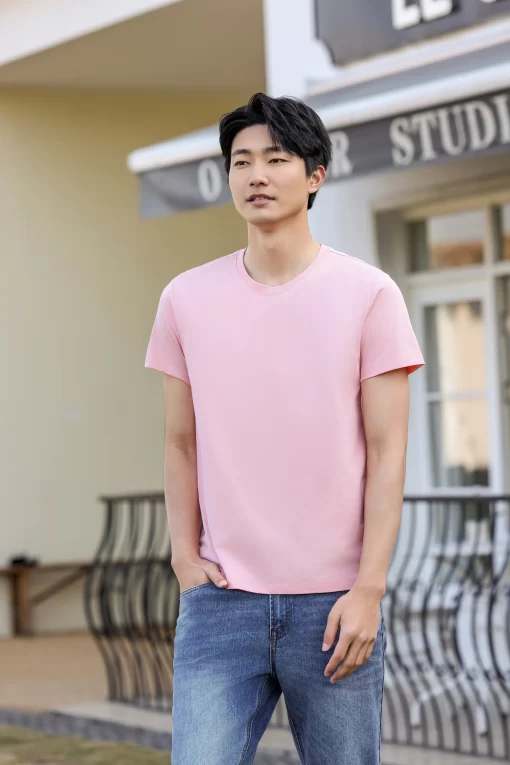
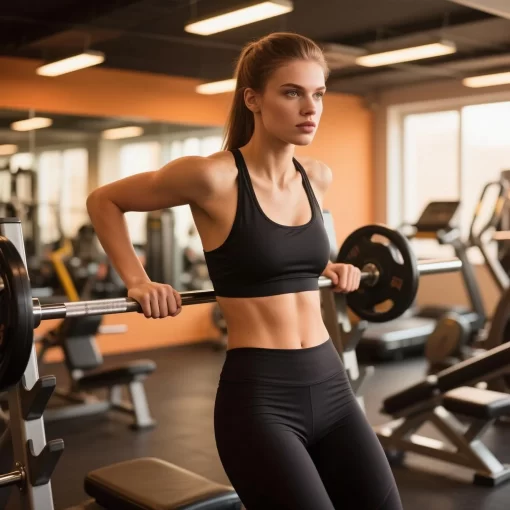
Garments where seam durability is tested hardest: the same construction standards apply from everyday tees to performance wear.
How Does Australian Stitch Enhance Durability?
The interlooped threads distribute stress across multiple axes, reducing tear propagation. Testing shows 72 wash cycles only degrade seam strength by 9%, outperforming chainstitch (23% loss). LSLONG subjects Australian Stitch seams to ASTM D5035 tests, verifying 50+ lb pull strength in its polo shirts. The absence of raw edges minimizes fraying — a standard seam may unravel after 10–15 wears, while Australian Stitch remains intact through 60+ wears. Pair it with triple-needle topstitching for critical areas such as sleeve attachments. To identify quality, check for uniform stitch length (no visible loops) and a flat, non-irritating seam underside.
| Durability Factor | Australian Stitch | Coverstitch |
|---|---|---|
| Wash cycles until failure | 75+ | 50 |
| Seam flexibility | 180° bend without snap | 120° bend limit |
| Fray resistance | 100% (no raw edges) | 70% |
What Are the Cost Implications of Australian Stitch?
Implementing Australian Stitch raises production costs by 8–12% due to specialized machinery and operator training, but it reduces returns for seam failures by up to 30%, offering long-term savings. LSLONG offers it as a premium option, adding about $1.50–$2.50 per garment. Labor efficiency partially offsets cost: operators stitch and finish seams in one pass, cutting assembly time by 15–20 minutes per dozen units — about 104 labor hours saved on a 5,000-unit order. For small brands, retrofitting existing machines costs $3,500+, making Australian Stitch most viable for mid- and large-scale manufacturers. See LSLONG OEM & ODM services to spec it in your next order.
Frequently Asked Questions
Is Australian Stitch stronger than normal overlock?
Yes — it typically reaches about 35 N/cm² versus 22 N/cm² for standard overlock, with better stretch recovery.
Can Australian Stitch be used on any fabric?
It suits light and medium knits; thick fabrics like denim can’t accommodate the looper mechanism.
Why is it used in post-surgery garments?
The flat, low-profile seam prevents chafing against sensitive skin after surgery.
How much extra does Australian Stitch cost?
About $1.50–$2.50 per garment as a premium option, offset by fewer returns and faster assembly.
Related Articles
Official Resources
References
- ASTM D5035 seam strength test method for textiles.
- LSLONG stitch engineering documentation, 2026.