

Medical grade fabric is a term buyers use confidently and suppliers interpret differently. There is no single global specification that makes a textile medical grade; instead, the term usually describes a combination of properties that a recovery garment needs: skin-safe chemistry, a construction that suits a healing body, durability through repeated laundering, and documentation that supports the claim being made. Understanding which of those properties a programme actually requires, and which one it is paying for, is the difference between a specification and a marketing phrase.
What Does Medical Grade Fabric Actually Mean?
It describes tested properties, not a single certificate.
The term usually bundles restricted substance testing, skin-contact suitability, dimensional stability through laundering and, where claimed, an antimicrobial finish with documented durability.
Start with chemistry. The measurable part of the claim is that the material has been tested against a defined list of restricted substances and passes it, which is what frameworks such as OEKO-TEX Standard 100 establish for textiles intended to be worn against the skin. That testing covers the fibre, the dyes and the finishes, and it applies to the finished material rather than to the fibre alone.
Then consider construction and behaviour. A recovery garment is laundered more often and often at higher temperatures than ordinary clothing, so dimensional stability and colourfastness matter more than they do in retail apparel, and a fabric that changes shape after washing can press on a dressing or lose its fit. Finally, antimicrobial properties are a separate claim with its own evidence: a finish that inhibits microbial growth has to be documented, and its performance after laundering has to be established rather than assumed, because many finishes fade with repeated washing.
Fibre and Construction Options for Recovery Wear
Ask which properties are actually needed before choosing a fibre, because each one carries a cost and a documentation requirement. A garment worn for a few days after a procedure may need only skin-safe chemistry and comfort, while a garment laundered weekly for months needs dimensional stability and colourfastness as well. Matching the specification to the period of use keeps the material cost proportionate and prevents a programme paying for a finish that the garment’s service life will never justify.
Recovery garments are usually built from soft knits with some stretch. Cotton and cotton-blend knits give a familiar skin feel and breathability, while synthetic and blended knits offer better dimensional stability and faster drying, which matters in a clinical setting where garments are laundered frequently. Stretch matters for two reasons: it helps the garment go on without forcing a restricted limb, and it lets the garment accommodate a dressing or a compression layer without pressing.
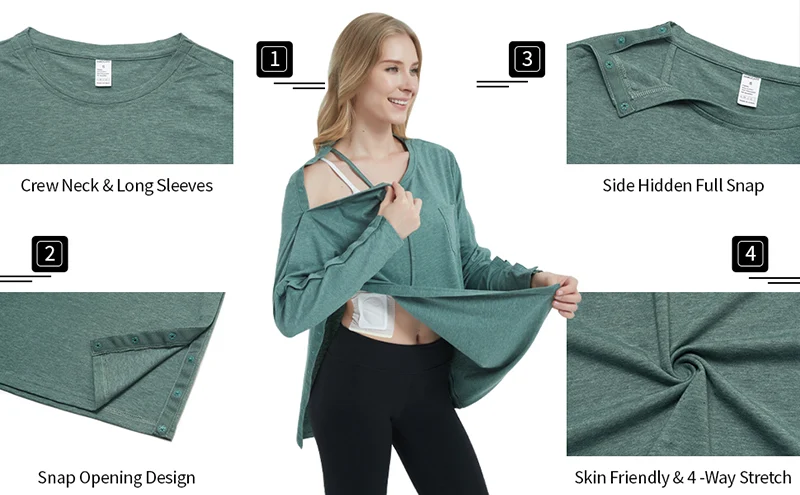
Construction follows the fibre. Flat or bound seams on the skin-facing side reduce pressure and chafing; a stable neckline and closure edge keep the opening usable; and a weight that is light enough not to pull but substantial enough not to cling is the usual target. Where a programme specifies any performance property, the fabric supplier’s own technical documentation is the starting point for verification, and independent laboratories such as Hohenstein test textiles and garments against recognised methods where a documented result is required. LSLONG’s fabric library includes antimicrobial medical fabrics alongside organic, combed cotton and performance options, with the specific fabric and its documentation confirmed for each order.
| Property | What it means in practice | How it is evidenced | What it does not cover |
|---|---|---|---|
| Skin-safe chemistry | Material tested against restricted substance limits | Test report naming the material and standard | Does not establish antimicrobial performance |
| Skin-contact suitability | Finish and surface that tolerate long contact | Test data and wear trials | Does not replace clinical judgement |
| Dimensional stability | Garment keeps its size and fit after repeated washing | Wash testing against a stated cycle | Does not cover closure or hardware performance |
| Antimicrobial finish | Finish intended to inhibit microbial growth on the textile | Supplier documentation and test results, including after laundering | Does not prevent infection or replace hygiene practice |
Skin Contact, Breathability and Moisture
Test comfort properties on the finished garment, not on the fabric alone. A collar, a facing, a closure area and a pocket all add material and change how a garment breathes, so a fabric that performs well on a swatch can produce a garment that traps heat across the chest or the back. Where the programme makes a comfort claim, the check should cover the garment in the areas the wearer notices most, and it should be repeated after the stated wash cycle, because finishes and fibre surfaces change with laundering.
Skin contact is the property a wearer notices first. The fabric should feel neutral against skin that may be sensitive, which means a soft hand, a finish that does not irritate, and a surface that does not cling when the wearer is warm. Breathability and moisture handling matter for the same reason: a garment that traps heat or damp against the body is uncomfortable within an hour, and discomfort is the most common reason a recovery garment is abandoned.
Two practical specifications follow. First, test moisture and drying behaviour on the finished garment rather than on a swatch, because linings, facings and closures change how a garment behaves. Appearance and colourfastness after laundering are assessed through AATCC test methods, and the wash cycle used for testing should match the care instruction on the label. Second, check the inside face of the garment at every hardware and seam position, because a comfortable fabric over a rough seam is still uncomfortable overall.
Antimicrobial Finishes: What They Do and Do Not Claim
Antimicrobial finishes are frequently requested and frequently misunderstood. A finish of this type is intended to inhibit microbial growth on the textile itself, which can help manage odour and material degradation. It is not a barrier against infection, it does not protect a wound, and it does not replace hygiene practice or clinical care. Keeping that boundary clear in the specification protects both the brand and the user.
The technical question is durability. A finish applied to a textile is subject to removal by laundering, abrasion and the chemistry of the wash process, so the useful specification is a result after a defined number of wash cycles rather than a statement of presence at delivery. Ask for the test method, the number of cycles and the result, and record them with the order. Where the finish forms part of a marketed claim, the wording should stay inside what the evidence supports, and the chemistry route for the finish and auxiliaries can be documented through frameworks such as OEKO-TEX ECO PASSPORT.
Regulatory and Documentation Pathway
Whether a garment made from these materials is regulated as a medical device depends on its intended purpose, the claims made for it and the market where it is sold, and that determination belongs with the brand and its regulatory adviser. The manufacturer’s role is documentation: material specifications, test reports, construction details and manufacturing records that support traceability.
Two references are commonly used where a garment is marketed with a medical purpose. In the United States, the FDA publishes classification and regulatory information according to intended use, and its guidance on classifying a medical device explains how that assessment is made. In the European Union, the framework is set out in Regulation (EU) 2017/745. Restricted substance testing for the material itself is commonly documented through the OEKO-TEX Standard 100 framework.
Sampling, Testing and Clinical Feedback
Sample the finish and the construction in the same garment, because they interact: a finish that suits one fibre can behave differently on a blend, and a soft finish can make a closure edge feel flatter than it is. Where the programme claims an antimicrobial or moisture property, test it on the fabric and confirm the construction does not undermine it, since a heavy facing or a dense closure area can change how the garment behaves in the region that matters.
Clinical or carer feedback should be collected in a structured way and should focus on what the wearer notices over hours rather than minutes: heat, dampness, friction, pressure and difficulty in managing the closure. Those observations usually indicate whether the fabric weight, the finish or the seam position needs revision, and they complement the laboratory result rather than replacing it.
Production and QC for Medical Lines
Quality control for recovery wear adds material verification and inside-face inspection to the standard garment checks. Material verification confirms that the fabric delivered matches the tested specification, with the lot recorded so that a later question can be traced. Inside-face inspection confirms that seams, facings and hardware are finished in a way that suits long skin contact, which is a different check from the outer appearance.
The inspection list should include:
- Fabric identity, weight and finish verified against the tested material specification, with the lot recorded.
- Inside-face condition inspected at every seam, facing and hardware position.
- Closure function tested on every garment, including the load the closure carries in wear.
- Measurements checked at the smallest, middle and largest sizes against the approved chart.
- Wash testing performed against the cycle printed on the care label, with the result compared to the approved reference.
- Documentation checked against the destination market requirements for the claims made.
Care labelling should follow a recognised symbol system such as GINETEX, because an incorrect laundering instruction changes both the finish and the fit of a recovery garment.
Procurement and Ordering Routes
Buyers of recovery garments range from brands developing a product line to clinics specifying a supply contract and distributors stocking a catalogue, and the documentation each expects differs. Brands usually want the material and claim evidence packaged for marketing; clinics want consistency and traceability; distributors want predictable specifications they can repeat across a range. In all three cases, the specification should state which properties are claimed, how each is evidenced, and which documents accompany the order.
Programmes can start from small quantities, and ready-to-ship stock is available from 1 piece, so a material and finish can be trialled on a small run before a season order. Keep the tested fabric, the test reports and a laundered reference garment together, because a reorder has to reproduce the material as tested rather than a similar-sounding substitute. One point of scope applies here: this article describes textile and garment specification rather than clinical advice, and the regulatory treatment of a product depends on its intended purpose, its claims and the market in which it is placed.
FAQ
Is there a single standard that makes a fabric medical grade?
No single standard covers the term. In practice it describes a set of properties that a recovery garment needs: skin-safe chemistry documented by restricted substance testing, a construction suited to long skin contact, dimensional stability through laundering and, where claimed, an antimicrobial finish with documented durability. The useful approach is to decide which properties the product actually needs, then ask for the test evidence for each rather than relying on the phrase itself.
Does an antimicrobial finish prevent infection?
No. A finish of this type is intended to inhibit microbial growth on the textile, which can help with odour and material degradation, but it is not a barrier against infection and does not replace clinical care or hygiene practice. Claim wording should stay inside that boundary. Ask for the test method and the result after a defined number of wash cycles, because many finishes lose effectiveness with repeated laundering.
How should fabric performance be verified for a recovery garment?
Verify it at the material and the garment level. Material testing confirms restricted substances and the fabric’s properties before the order is cut, which is the lowest-cost point to catch a problem. Garment testing confirms that seams, facings and closures do not undermine those properties, and washing to the labelled cycle confirms that the fabric and the finish survive the laundering the user will apply. Keep the reports with the order reference.
What documentation should accompany a recovery garment order?
Ask for the material specification with the fabric identity and weight, the restricted substance test report for that material, any performance test result the product claims with its method and wash cycles, and the wash result recorded against the care instruction. Where a chemistry scheme is claimed for the mill or dyehouse, request that documentation as well. Keep everything with the order reference so the evidence is tied to the shipment rather than to the supplier in general.
Specifying materials for a recovery garment line?
Send the garment type, the properties you need to claim, the laundering regime and the market, and LSLONG will confirm the fabric options, the test evidence available with the order and the construction that supports each property. Fabric sourcing, decoration and quality control are handled in-house in Shenzhen.