

Surgery shirt closures decide whether a recovery garment is actually usable. The patient is often managing the garment with one hand, sometimes with reduced grip strength, and always without the freedom of movement they had before surgery. A closure that requires fine motor control, a firm grip or two hands will be abandoned in favour of an open garment, regardless of how well the fabric and the pattern were designed. Comparing the available closure families on function, skin contact, laundering and failure modes is therefore the most consequential specification decision in a recovery line.
What Does a Closure System Have to Solve?
One-handed operation without pressing on the wound site.
A closure has to open and close with limited hand function, hold the garment in place during wear, tolerate repeated laundering and stay clear of dressings, drains and sensitive skin.
The first requirement is operation. Closing a garment one-handed requires the closure to align itself or to be guided into place easily, and to give some indication that it has engaged. Snap fasteners give a clear tactile and audible confirmation but need alignment and pressure; hook-and-loop engages without alignment but requires the two faces to be pressed together; magnetic closures engage with little force but depend on hardware that has to be positioned accurately in the garment.
The second requirement is behaviour during wear. A closure that holds when the patient is still may release when they turn in bed or sit up, so the holding strength has to be matched to the movement rather than the static position. The third is skin contact, because hardware and edges sit against skin that may be taped, healing or sensitive, and pressure in the wrong place is a common reason a garment is rejected by users. The available closure families and how they map to access needs are compared in the adaptive apparel closure and access guide.
Snap, Hook-and-Loop and Magnetic: How They Differ
One engages with force, one with alignment, one with proximity.
Snaps need alignment and pressure, hook-and-loop needs the faces to be pressed together, and magnetic closures engage with minimal force but rely on accurate hardware placement.
| Closure | How it operates | One-handed use | Skin contact | What to watch |
|---|---|---|---|---|
| Snap fastener | Male and female parts align and press together | Moderate; needs alignment and grip | Hardware can press if placed over a sensitive area | Grip strength, alignment tolerance and attachment security |
| Hook-and-loop | Two faces adhere when pressed together | Good; little force and no alignment needed | Soft on the body side, but edges can catch and the loop face can be abrasive | Edge finishing, noise, lint build-up and loss of grip after laundering |
| Magnetic | Magnets engage when brought close together | Good; minimal force and self-guiding | Hardware sits proud unless concealed | Hardware placement, magnetic strength retention and market restrictions |
| Zipper (access zip) | Slider travelled along a chain | Lower; requires grip and coordination | Chain and slider contact the skin if unprotected | Suited to access openings rather than full dressing |
| Ties or toggles | Cord or tape tied or threaded | Lower; two-handed and fine motor control | Soft, minimal hardware contact | Time to close, loop length and knot security |
Surgery Shirt Closures: Pairing Closure with Fabric and Access
Pair the closure with the fabric before comparing closure types on their own. A soft, stretchy knit needs a closure that holds without distorting the opening, while a firmer fabric can carry a rigid fastener without the panel bowing. Hook-and-loop on a stretch knit can pull the opening out of line if the loop face is applied under tension, and a magnetic closure on a very light knit may need an internal layer to support the hardware without stiffening the panel.
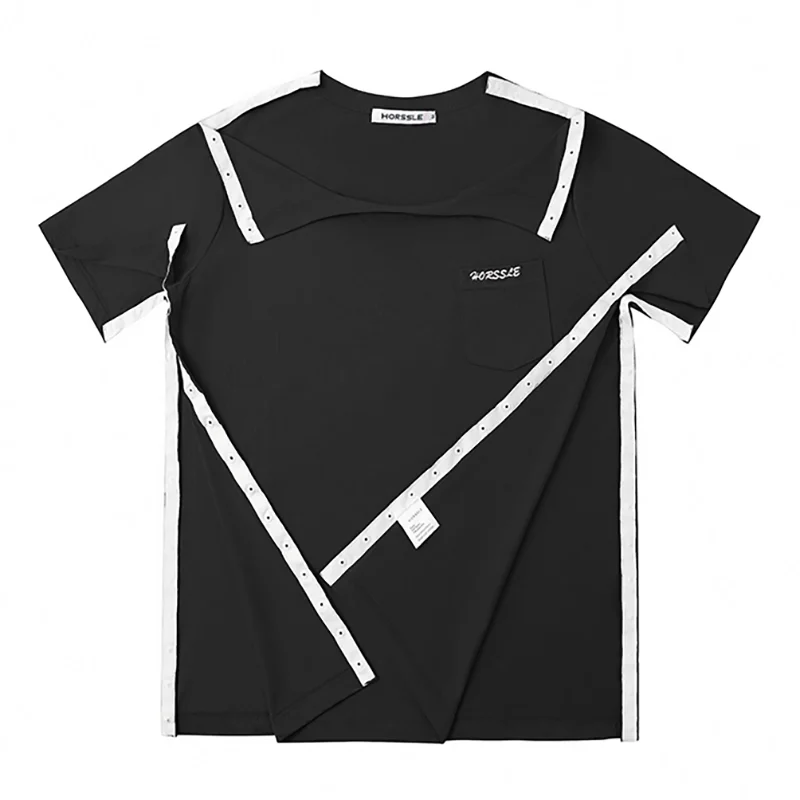
Then match the closure to the access requirement. Where the garment has to open fully for dressing, the closure runs along the full opening and the count matters: too few points and the opening gapes, too many and dressing takes longer. Where the garment only needs to open partially for a dressing check, a shorter closure run with an overlap can be enough, and the closure at the lowest point carries the most load. Mixed systems are common in practice: a magnetic or hook-and-loop run for the main opening, with a snap at the point that has to hold firmly. The full range of recovery garment types that use these systems is shown on the surgery shirt range.
Skin Contact, Noise and Comfort Considerations
Skin contact decides which closures are acceptable in which position. Snap fasteners and magnetic hardware can be uncomfortable if they sit over a dressing, a bony area or a pressure point, so placement should keep hardware off the incision site and away from the sling or support strap. Hook-and-loop is soft on the body-facing side but exposes a loop face that can catch on dressings and on other garments, and its opening noise is a practical consideration in shared wards and at night.
Comfort also depends on the layers behind the closure. A facing or an internal placket can separate the hardware from the skin without adding stiffness, and a bound or flat-finished edge prevents the opening from digging in. Where magnets are used, the internal layer also holds the hardware in position during laundering, which matters because a magnet that migrates or releases from its pocket weakens the closure. Restricted substance and skin-contact documentation for the fabric and hardware can be handled through the OEKO-TEX Standard 100 framework where the market requires it.
Regulatory and Documentation Pathway
Closure choice does not by itself determine the regulatory status of a garment, but the intended purpose and the claims made do, and that assessment belongs with the brand and its regulatory adviser. What a manufacturer supplies is documentation: material and component specifications, test reports, construction detail and manufacturing records that support traceability.
Two references are commonly used where a garment is marketed with a medical purpose. In the United States, the FDA publishes classification and regulatory information according to intended use, and its guidance on classifying a medical device explains the process. In the European Union, the framework is set out in Regulation (EU) 2017/745. Where a closure includes magnetic components, market-specific restrictions and warnings may also apply, and those should be confirmed for the destination market before the specification is locked. Where a garment is intended for a clinical environment, the standards landscape for medical garments is also relevant, and ASTM F3352 is one example of that landscape.
Sampling, Fitting and Clinical Feedback
Sample each candidate closure in the production fabric and test it the way the patient will use it. That means closing the garment with one hand, opening it partially for a dressing check, holding it closed while seated and while reclined, and laundering it repeatedly before judging the result. A closure that works on the sample table can fail once the fabric has been washed and the loop face has collected lint or the magnet has shifted.
Feedback should be structured so that it produces a decision. Ask which closure was easiest to operate, whether any hardware pressed on the dressing or the sling, whether the opening held when the wearer sat up or turned, how the closure behaved after laundering, and whether the noise or the appearance caused any objection. Comparing two or three closure types in the same garment design gives the clearest result, because it isolates the closure from the pattern.
Production and QC for Closure Systems
Build the closure check into the line rather than into final inspection alone. Every garment leaves the line with its closure opened and closed at least once, and where a programme runs several sizes, the check includes the smallest and largest, because closure spacing behaves differently on a shorter or wider panel. Record the result per garment where the programme is a medical line, since traceability of a closure check is often part of what a clinical buyer expects to see in the production file.
Closure quality control is functional rather than visual. Every garment should be opened, closed and checked for holding strength, because a closure that fails in use becomes a clinical problem and a return rather than a rework item. Where hook-and-loop is used, the attachment of the loop and hook faces to the garment is checked as well, since a face that lifts from the cloth is the most common failure in laundering.
The inspection list should include:
- Closure function tested on every garment, including partial opening and full closure.
- Holding strength checked in the seated and reclined position where the garment is used.
- Hardware placement measured against the specification, with clearance from the dressing area confirmed.
- Attachment security for hook-and-loop faces and magnet pockets checked by hand and after washing.
- Skin-facing side inspected for roughness, exposed hardware and edge finishing.
- Appearance and dimensional change after the stated wash cycle, assessed through AATCC test methods.
Care labelling should follow a recognised symbol system such as GINETEX, because laundering affects closure performance more than it affects the fabric, and the instruction should match the cycle used in testing. Supplier documentation expectations for a medical line, including the questions worth asking about components and traceability, are set out in the medical apparel supplier guide.
Procurement and Ordering Routes
Closure specification affects procurement because components have their own minimums and lead times. Snaps and magnets are purchased items with colour and finish options; hook-and-loop is supplied in rolls with a defined width, colour and grade. A programme that runs several colourways multiplies those requirements, and a component substitution after sampling can reopen the closure trial, which is the most expensive type of revision in a recovery line.
Programmes can start from small quantities, and ready-to-ship stock is available from 1 piece, so two closure options can be produced and trialled side by side before the specification is locked. Keep the approved closure sample, the component references and the laundering result together as the reference pack, because a reorder has to reproduce closure function and not only appearance. One point of scope applies here: this article describes garment design, materials and production practice rather than clinical advice, and the regulatory treatment of a product depends on its intended purpose, its claims and the market in which it is placed.
FAQ
Which closure is easiest to use one-handed?
Magnetic and hook-and-loop closures require the least force and the least alignment, which makes them easier one-handed than a snap fastener, especially where grip strength is reduced. Magnets engage when brought close together, and hook-and-loop adheres on contact without alignment. The trade-off is hardware placement and laundering behaviour, so the choice is usually confirmed by trialling two options in the same garment rather than by reasoning alone.
Do magnetic closures lose strength over time?
A magnet does not lose strength through washing, but the pocket that holds it can loosen, and a magnet that shifts or slips from position weakens the closure. That makes attachment construction the critical control: the magnet should be enclosed in a pocket or a moulded housing that is secured against movement and checked after laundering. Confirm the holding strength on a washed sample and inspect the attachment on every garment.
Is hook-and-loop noisy or abrasive against skin?
The hook face is abrasive and can catch on dressings, knitwear and skin, which is why the hook side is normally placed away from the body and the loop side towards it. Opening the closure is audible, which matters in shared wards and at night. Finishing the edges of the tape and keeping it clean of lint preserves both comfort and grip, because a loop face full of lint loses holding strength quickly.
How do we choose between closures before committing to a full order?
Produce a small trial in the production fabric with two closure options on the same garment design, then test them the way users will: one-handed closing, partial opening for a dressing check, holding strength seated and reclined, and behaviour after repeated laundering. Programmes can start from small quantities and ready-to-ship stock is available from 1 piece, so this comparison is practical before a production commitment, and the result supports the specification decision.
Choosing a closure system for a recovery garment?
Send the intended user group, the access requirement, the fabric direction and the market, and LSLONG will set out the closure options, produce trial garments in the production fabric and document the components and their laundering behaviour. Sampling, decoration and quality control are handled in-house in Shenzhen.