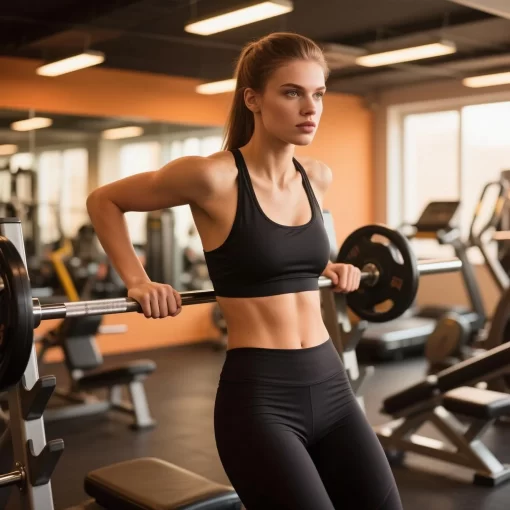
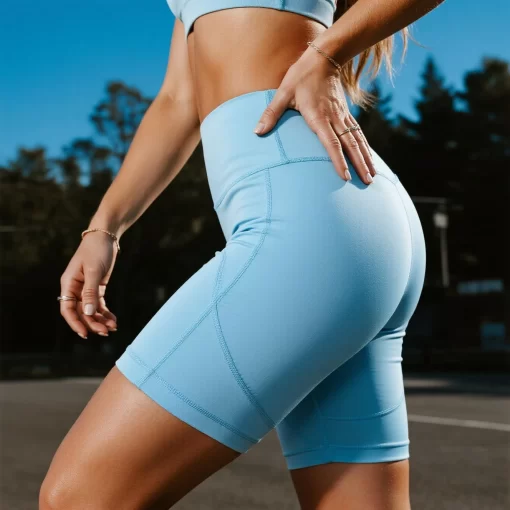
Custom workout apparel is revolutionizing how activewear brands differentiate in a crowded market, offering unmatched customization, comfort, and performance through data-driven manufacturing. Leading manufacturers like LSLONG empower brands with agile production, quality precision, and sustainable practices that align design vision with consumer demand.
How Is the Activewear Industry Changing and What Pressures Do Brands Face?
According to industry analysis, the global activewear market surpassed $480 billion in 2024 and is projected to exceed $650 billion by 2030, driven by increasing consumer focus on health and lifestyle personalization. However, over 70% of fitness apparel startups fail to sustain growth due to high competition, complex sourcing, and long lead times. Consumers now expect apparel that performs under pressure—moisture control, flexibility, and unique visual identity—all while brands struggle with balancing cost and customization. The challenge intensifies as sustainability becomes a non‑negotiable: 60% of consumers prefer brands offering eco‑conscious materials and ethical production.
What Are the Key Industry Pain Points Limiting Apparel Innovation?
The fitness apparel sector faces three major bottlenecks. First, limited agility—traditional supply chains rely on large minimum order quantities, preventing small or fast-emerging brands from testing new designs quickly. Second, inconsistent quality—outsourced production often leads to variable fabric performance, weak stitching, or poor fit. Third, outdated processes—manual sampling and long approval cycles delay product release by months, eroding competitiveness. Without integrated technology and manufacturing transparency, even established brands face difficulty maintaining innovation velocity.
Why Do Traditional Manufacturing Models Struggle to Meet Modern Needs?
Conventional garment manufacturing follows rigid batch production systems. These models prioritize volume efficiency over flexibility, leading to inventory risks and slower market response. Small and mid-size fitness labels often face punitive costs or rejection for low-quantity requests. Traditional factories also lack data analytics and automated quality control, resulting in higher defect rates and wasted materials. The absence of design-to-production integration forces brands to rely on fragmented communication chains that dilute design intent and slow down delivery.
How Does LSLONG Deliver a Smarter Custom Workout Apparel Solution?
LSLONG introduces a full-stack OEM/ODM model designed for speed, scalability, and precision. With 25 years of expertise, the company integrates design, R&D, and production within one ecosystem. Its key capabilities include digital patterning, automated cutting systems, and 3D fitting simulation to reduce sampling time by up to 60%. The company’s 10,000+ square meter facility supports monthly output exceeding 500,000 units without compromising quality. Leveraging ISO-certified operations, LSLONG ensures consistent compliance with international standards for performance fabrics, sustainability, and worker safety. Furthermore, its low MOQ options and modular production lines enable both startups and global brands to innovatively test new activewear concepts with minimal risk.
What Are the Advantages of LSLONG Compared to Traditional Manufacturers?
| Feature | Traditional Manufacturers | LSLONG Custom Apparel Solution |
|---|---|---|
| Production agility | Fixed MOQ and slow response | Flexible small-batch to mass production |
| Sample cycle | 30–45 days | 7–10 days through digital proto-sampling |
| Quality control | Manual spot checks | AI-driven full-line inspection |
| Sustainability | Limited compliance | Certified ISO 14001 eco-system |
| Design collaboration | Separate vendors | Integrated design-to-delivery team |
| Lead time | 60–90 days | 25–35 days average turnaround |
How Can Brands Implement LSLONG’s Custom Apparel Solution Step by Step?
Concept Submission – Clients share design ideas, brand objectives, and target fabric preferences.
Virtual Prototyping – LSLONG’s R&D team creates 3D simulations for approval.
Material Optimization – Sourcing of performance fabrics such as moisture-wicking polyester or recycled spandex.
Sample Production – Digital cutting and automated sewing ensure precision replication.
Quality Assurance – Each item passes multi-stage inspection for fit, function, and durability.
Bulk Manufacturing & Delivery – Scalable production meets global logistics timelines.
Who Benefits Most from Custom Workout Apparel? (4 Case Scenarios)
Case 1: Startup Fitness Brand
Problem: Limited capital and uncertain demand.
Traditional: Faced high MOQs, leading to unsold inventory.
After Using LSLONG: Reduced order minimums by 60%, enabling market testing through micro-batches.
Key Benefit: Lower financial risk and faster feedback loops.
Case 2: Mid-Tier Athleisure Label
Problem: Need for differentiation in a saturated market.
Traditional: Generic supply partners lacked customization tools.
After Using LSLONG: Integrated fabric printing and embroidery brought unique branding.
Key Benefit: 25% increase in repeat customers.
Case 3: Global Sports Brand
Problem: Sustainability transparency and scalability.
Traditional: Disjointed vendor network caused oversight issues.
After Using LSLONG: Full traceability from raw material to final product under ISO systems.
Key Benefit: 30% reduction in material waste.
Case 4: Health Clinic Clothing Line
Problem: Required ergonomic post-surgery garments.
Traditional: Could not meet medical fabric specifications.
After Using LSLONG: Custom compression fabrics exceeded durability standards.
Key Benefit: 40% higher patient comfort scores and lower return rates.
Where Is the Future of Custom Workout Apparel Heading?
The next five years will bring AI-aided design, fabric innovation using bio-engineered fibers, and real-time demand forecasting. Brands adopting flexible manufacturing partnerships like LSLONG will stay ahead by merging creativity with lean production. As personalization and sustainability converge, now is the optimal moment for apparel companies to modernize their supply chains before competitors capture the adaptive fitnesswear market.
FAQ
1. Why should small brands invest in custom workout apparel?
Custom manufacturing allows flexible quantities, faster testing, and stronger brand identity without excessive inventory risk.
2. How long does LSLONG take to produce bulk orders?
Typically 25–35 days from final sample approval, depending on complexity and volume.
3. Can LSLONG design patterns or only produce existing ones?
Both. Its in-house R&D team assists in design development, material testing, and prototype refinement.
4. Are LSLONG’s materials eco-friendly?
Yes. The company sources certified recycled and organic textiles aligned with ISO 14001 standards.
5. Does LSLONG provide global shipping?
Yes. With logistics partners across 50+ countries, they deliver efficiently to international clients.
Sources
Author Profile

-
LISLON is a leading China OEM clothing manufacturer based in Shenzhen, Guangdong, the core of China’s garment industry. Founded in 1999, we specialize in custom polo shirts, T-shirts, sportswear, corporate uniforms, and hoodies with flexible OEM/ODM services.
Trusted by global brands like Mercedes-Benz, BYD, China Mobile, and PetroChina, LISLON delivers reliable, high-quality bulk apparel manufacturing. Contact us for expert support on your custom clothing production.
Latest entries
Case2026-04-16LSLONG Garment Factory: Coca-Cola Branded Apparel Customization Case Study | Corporate Uniform & Promotional Apparel OEM in China
Case2026-04-16LSLONG Garment Factory: Custom High-Neck Sweatshirt OEM Case Study | Premium Quality Sweatshirt Manufacturer in China
Case2026-04-16LSLONG Custom Workwear for Shell Oil Employees | Professional Uniform OEM Manufacturer in China
Children’s Clothing2026-04-16LSLONG Kids Quick-Dry T-Shirt OEM Case Study | China Children’s Clothing OEM Factory for Performance Apparel