

A color that looks right in the lab but bleeds in the first wash is a defect that returns twice: the garment comes back, and the customer's other clothes are stained. Color fastness is the measure of how well a dyed or printed tee holds its color under washing, light, rubbing and perspiration — and for custom programs it is a spec you approve before bulk, not a surprise you discover after. This article explains the types of color fastness, which dyes behave well, how to test and set standards, and how to build color QA into an order, so the color you approve is the color that survives the customer's first wash.
Color quality is more than the shade
Color quality has two halves: the shade, which is the color itself, and fastness, which is how long and how well the color stays. A brand can nail the Pantone match and still fail the program if the dark navy bleeds onto white side seams or the red fades after a few sun-drenched washes. Fastness matters most on dark colors, which carry the most dye, and on printed garments, where the ink and the dye must both behave. For a custom program, the fastness spec belongs alongside the color standard in the lab-dip approval, because approving a shade without its fastness data approves an incomplete product. The same principle applies to reorders: a color that matched in season one but was never fastness-tested may fail in season two when the dye batch changes.
Types of color fastness
Fastness is not one number but four related behaviors. Wash fastness measures color loss and transfer to adjacent fabric during laundering — the most common complaint. Light fastness measures fading from sunlight and artificial light, graded on a separate 1–8 scale. Rubbing (crocking) fastness measures color transfer when the fabric rubs against itself or other surfaces, wet and dry. Perspiration fastness measures bleeding under sweat, which matters for activewear and dark colors worn against skin. Each behavior has its own test and its own acceptable grade, and a fabric can be excellent in one and poor in another — which is why a single "color fast" claim means nothing without the method and grade behind it. When a brand quotes a fastness requirement, it should name the behavior, the test and the grade, or the factory cannot measure compliance.
Dye classes and wash behavior
The dye class determines how much fastness is achievable. Reactive dyes, the standard for cotton, bond chemically with the fiber and give the best wash fastness when properly fixed and washed off. Direct dyes are cheaper but rely on physical attachment, so they bleed and fade more readily. Vat and sulfur dyes handle specific colors like deep navy and black with good fastness at the cost of more complex processing. The phrase "reactive dyed" on a spec is meaningful: it signals the dye class most likely to hold color in the wash. The dyeing process matters as much as the class — unfixed dye left in the fabric is what bleeds, which is why washing-off after dyeing is a quality step, not an option. For prints, the ink system plays the same role: water-based and discharge inks behave differently from plastisol under wash and wear.
Dark colors and bleeding risk
Dark colors concentrate the bleeding risk because they carry the most dye molecules. A deep black or navy tee that is not properly washed off after dyeing will release loose dye in the first wash, staining the collar tape, white stitching and anything washed with it. The mitigation is process and testing: sufficient washing-off, the right dye fixation, and a wash-fastness test on the finished fabric with an adjacent white swatch. Fastness grades are typically reported on a 1–5 grey scale, and commercial programs commonly require grade 3–4 or better for wash fastness, with the exact number set by the brand and the garment's use case. For activewear, add the perspiration test to the same dark colors, because sweat and color transfer are a separate failure mode that wash testing alone will miss.
Testing fastness on samples
Test fastness on the pre-production sample, not the lab dip alone, because the finished fabric's dyeing and finishing differ from the color standard's. The reference standards are the ISO 105 series for colour fastness, which covers wash, light, rubbing and perspiration methods, and the AATCC laundering method TM135 used with fastness assessment. Wash the sample with a white cotton swatch, assess color change and staining against the grey scale, and repeat across three cycles for a realistic picture. Record the grades in the approval document so the bulk standard is a number, not a sample in a drawer. Retain a piece of the tested fabric with the record, because a later dispute needs the physical reference, not just a spreadsheet row.
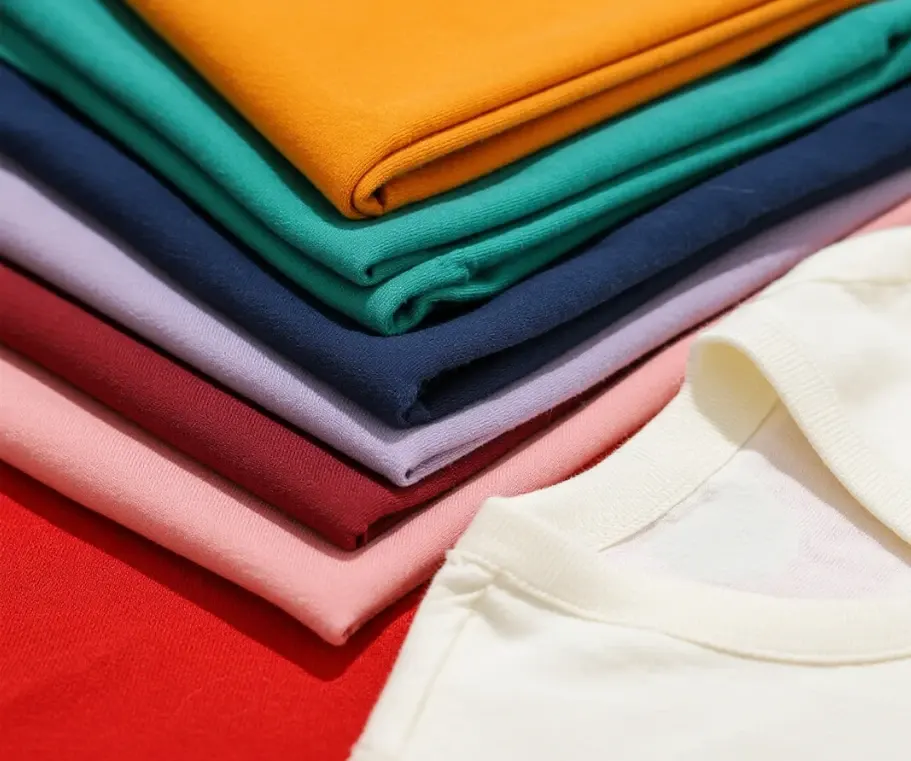
Color consistency across dye lots
Fastness tests whether the color stays; lot consistency tests whether the color matches. Cotton dye lots vary with fiber, dye batch and process conditions, so brands approve a lab dip against a standard — commonly a Pantone reference — and set a tolerance such as ΔE ≤ 1.0 for the approved color. LSLONG documents Pantone color matching with ΔE ≤ 1.0 and batch-to-batch control, which means each lot is measured against the standard rather than against the previous lot. The discipline matters because "close to last time" drifts season after season until the color is unrecognizable, while a fixed ΔE target keeps every lot tied to the original standard. Ask the factory how it measures the tolerance — a color spectrophotometer reading is reproducible; a visual check against a swatch is not.
Dye processes that hold color
Fastness is built in dyeing and finishing, not tested into a fabric afterward. The sequence that holds color includes: selecting the right dye class for the fiber and shade, controlling dye concentration and temperature, fixing the dye thoroughly, washing off unfixed dye, and finishing without additives that weaken the bond. For printed tees, the same logic applies to inks — plastisol, water-based and discharge inks have different wash and crack behavior, and the print needs its own fastness test. OEKO-TEX STANDARD 100 adds a restricted-substances layer: it screens dyes and chemicals for harmful substances, which is a separate requirement from fastness but part of the same quality conversation for consumer-safe programs. A dye house that controls its process from bath to wash-off produces colors that pass fastness tests reliably, not occasionally.
Communicating color specs
A color spec has five parts: the color standard (Pantone or physical reference), the ΔE tolerance, the fastness grades with methods, the wash-cycle conditions, and the dye class. Write it all in the approval document so the factory tests what the brand expects. The FTC Care Labeling Rule matters here too: the care label's wash instructions set the conditions customers use, and fastness testing at hotter or harsher conditions than the label protects both the color and the return rate. Without a written spec, the factory's "color fast" is whatever the factory decides to test. Send the spec with the purchase order, not just with the tech pack, so the production team and the quality team work from the same document.
Handling color complaints
Color complaints divide into two families, and each needs a different response. Bleeding and fading after wash point to a fastness failure: pull the batch's test record, re-test the retained sample, and check whether the fabric lot or dye batch changed. Shade mismatch against the approved standard points to a lot-control failure: measure the garment against the standard and the original lab dip to see where the drift started. Both families need the same foundation — a written color spec, retained samples, and per-batch records — because a complaint without a record is a negotiation, while a complaint with a record is a correction. Feed the outcome back into the spec, because a fastness grade that fails in the field was either the wrong grade for the use case or a process that was not controlled.
Building color QA into orders
Put color QA at five points in the order: lab dip approval against the standard with fastness data, pre-production sample fastness testing, bulk fabric incoming check for shade and wash fastness, final inspection with random fastness or shade measurement, and retained samples from each lot for dispute resolution. The ISO 6330 washing procedures provide the laundering conditions for the fastness tests, and the Cotton Incorporated Fabricast reference shows how fabric and dyeing choices translate into finished behavior. Each checkpoint uses the same method and tolerance, so results from different batches stay comparable and the standard never quietly moves. Name one person at the factory responsible for color QA; without an owner, the checkpoints shrink under delivery pressure.

A color fastness checklist
Before approving a color program, confirm: color standard fixed (Pantone or reference), ΔE tolerance set, fastness grades and methods written (wash, light, rubbing, perspiration), dye class specified, wash-cycle conditions matching the care label, pre-production sample tested with retained records, and bulk checkpoints scheduled. LSLONG's knowledge hub covers dyeing and finishing quality, and the t-shirt category shows the color program options available for custom orders. Keep the checklist with the order file so the next season starts from evidence, not memory — a color program with a written standard and test records is a controlled process, while one without them is a gamble with the brand's name on it. Run the checklist with the factory before the lab dip is approved, so color QA is agreed before color is committed.
FAQ
What is a good color fastness rating for a T-shirt? On the 1–5 grey scale used for wash fastness, commercial programs commonly require grade 3–4 or better for color change and staining, with the exact grade set by the brand and the garment's use. Light fastness uses a separate 1–8 scale, and activewear usually demands stronger grades for perspiration. Set the grades in the approval document so the factory tests to your number, not its own, and record results per batch for comparison.
Why do dark T-shirts bleed in the wash? Dark colors carry more dye, and any dye that is not fixed or washed off after dyeing releases in the first wash. Proper washing-off, the right dye class, and a wash-fastness test with an adjacent white swatch are the controls that prevent it, and the test should be run on the finished fabric. Also wash the garment with a white trim or collar tape to confirm no staining on the parts customers see first.
How do I test whether a T-shirt color will fade? Run the relevant ISO 105 or AATCC fastness tests on the pre-production sample — washing with a white swatch for bleed, a light-exposure test for fade, and a rubbing test for transfer — then assess the results against the grey scales and record the grades in the approval document. Test the finished garment, not just the fabric, because printing and trims can add their own color-transfer risk.
Does Pantone matching guarantee color fastness? No. Pantone matching controls the shade only. Fastness is a separate property measured by its own tests, so the approval should include both the ΔE color tolerance and the fastness grades with their methods, because a shade match says nothing about how the color will survive washing. A full color spec covers the shade standard, the ΔE tolerance and the fastness grades, and each must be measured separately.
Color fastness is decided before bulk, in the dye class, the process and the test records. LSLONG can provide lab dips with fastness data, run ISO 105 and wash tests on pre-production samples, and maintain batch color records. Contact the LSLONG team or email lisilongtshirt@gmail.com for color QA planning on your program.