

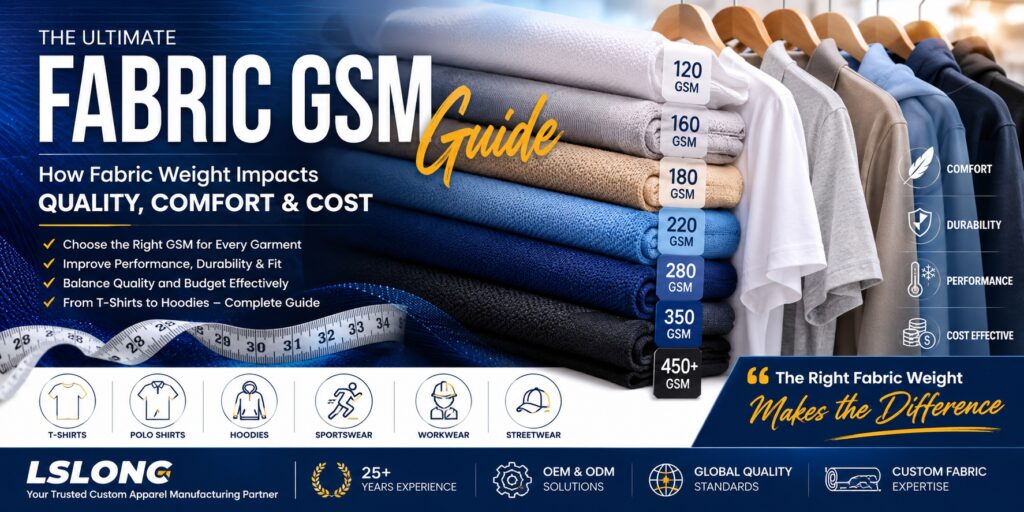
Fabric weight, measured in GSM (grams per square meter), is one of the most overlooked yet critical factors in custom apparel — it directly affects comfort, durability, appearance, cost, and brand positioning, and the right weight depends on your target market, climate, and intended use rather than “higher is better.”
(Last modified date: August 31, 2026)
Key Takeaways
- GSM = grams per square meter; higher GSM means thicker, heavier, more durable fabric.
- Optimal GSM depends on garment purpose, climate, and positioning — not just quality.
- T-shirts: 140–180 GSM; polos: 180–220 GSM; hoodies: 280–400 GSM; sportswear: 120–180 GSM.
- Higher GSM usually costs more, but quality also depends on fiber, yarn, knitting, and finishing.
What Does GSM Mean in Fabric?
GSM stands for grams per square meter — the weight of fabric per square meter. A higher GSM means the fabric is generally thicker, heavier, more durable, more structured, and less transparent. A lower GSM means the fabric is lighter, more breathable, softer, and usually lower in material cost. Higher GSM does not automatically mean better quality; the optimal GSM depends entirely on the garment’s intended purpose.
Why Fabric Weight Matters
Fabric weight directly affects comfort, appearance and drape, durability and lifespan, production cost, and brand perception. Lightweight fabrics suit hot climates and activewear; heavyweight fabrics suit premium streetwear and cold weather. Low GSM drapes softly; high GSM holds structure.
Common GSM Ranges for Different Garments
| Garment | Typical GSM | Notes |
|---|---|---|
| T-shirts | 140–180 | LSLONG recommends ~160–180 for daily wear |
| Polo shirts | 180–220 | Corporate uniform range usually 200–220 |
| Hoodies and sweatshirts | 280–400 | Current global trend favors heavyweight 300+ |
| Sportswear | 120–180 | Lightweight, moisture-wicking |
| Workwear and industrial uniforms | 220–320 | Durable for frequent washing |
How GSM Affects Production Cost
Higher GSM consumes more yarn per unit, raising material cost. Example: switching a T-shirt from 160 GSM to 200 GSM can add meaningfully to fabric cost per unit — budget accordingly and confirm consumption in your BOM.
GSM vs Fabric Quality: A Common Misconception
Quality is determined by fiber quality, yarn count, knitting quality, and finishing process — not GSM alone. A well-constructed 160 GSM fabric can outperform a poorly made 200 GSM fabric.
Recommended GSM by Market Segment
- Promotional apparel: 140–160 GSM for low cost and comfort.
- Corporate uniforms: 200–220 GSM polos for structure and durability.
- Fashion brands: 180–220 GSM for balanced drape and quality.
- Luxury streetwear: 240–320 GSM heavyweight for premium feel.
How LSLONG Helps Customers Select the Right Fabric Weight
LSLONG’s 25+ years of work with global brands, uniform programs, sportswear companies, and fashion labels means its team advises on GSM by market, climate, and use — with samples and costing before bulk. See LSLONG T-shirt categories.
Frequently Asked Questions
What GSM should a T-shirt be?
140–180 GSM is standard; ~160–180 suits daily wear and retail quality.
Is higher GSM always better?
No — higher GSM is heavier and more durable but can be too hot or stiff; match it to the use.
What GSM is best for hoodies?
280–400 GSM, with 300+ increasingly popular for premium streetwear.
Does GSM affect price?
Yes — higher GSM uses more yarn and raises material cost per unit.
Related Articles
Official Resources
References
- Textile industry GSM standards for apparel fabrics.
- LSLONG fabric selection documentation, 2026.