

For custom T-shirts, fabric GSM and yarn count are the two numbers that determine quality, comfort, and longevity — but “heavyweight” or “premium” labels mean little without knowing yarn fineness, fiber length, and finishing. The practical sweet spot for everyday custom T-shirts is 160–200 GSM; for premium retail quality, look for 30s–40s (and up to 60s) combed ring-spun cotton.
(Last modified date: September 2, 2026)
Key Takeaways
- GSM (grams per square meter) measures fabric weight — more material, not automatically better quality.
- Yarn count describes fineness: 20s is thicker and coarser; 40s–60s is finer, softer, and more refined.
- 150–200 GSM balances everyday wear; 200+ GSM adds structure for premium and streetwear styles.
- Pre-shrunk or sanforized fabric keeps post-wash shrinkage below 3%.
- Request yarn count, pre-shrunk certification, and finish test data — not GSM alone — when choosing a partner.
What GSM Actually Tells You About Custom T Shirts
GSM, or grams per square meter, measures the weight of fabric. A higher GSM simply means more material per area — it does not automatically mean higher quality. A 180 GSM cotton tee can feel soft and dense, while a 200 GSM poly-cotton blend may feel rough and stiff depending on yarn construction. The sweet spot for everyday custom T-shirts usually falls between 160 and 200 GSM, balancing durability with breathability. Lightweight fabrics under 140 GSM suit athletic wear and tropical climates; higher GSM options work for streetwear and fashion collections that favor structure.
Understanding Yarn Counts: 20s, 30s, 40s, and 60s Explained
Yarn count determines how fine or coarse the threads are. In cotton-spinning terminology, a 20s count means a thicker yarn, while 40s or 60s yarns are thinner and more refined. The higher the number, the softer and smoother the hand feel — ideal for retail-grade and luxury T-shirts. A 40s single-jersey cotton creates a smooth surface perfect for screen printing, while 60s combed cotton offers a supple, high-end finish. Finer yarns require better spinning technology and cost more, which is why pricing often correlates with yarn count.
Why Heavyweight Doesn’t Always Mean High Quality
“Heavyweight” tags are often used to imply durability, but true quality comes from fiber composition, yarn type, and finishing method. A poorly spun 220 GSM shirt can shrink, pill, or fade faster than a tightly woven 180 GSM tee made with combed cotton. Quality fabrics use long-staple fibers that resist breakage and ensure smooth dye absorption; proper dyeing, mercerization, and pre-shrunk treatments matter more than GSM alone.
The Role of Pre-Shrunk Treatments and Finishing
A key sign of quality is pre-shrunk fabric: unprocessed cotton will almost always shrink after the first wash, compromising fit and print alignment. Pre-shrunk or sanforized fabrics undergo mechanical compression that stabilizes fibers, reducing post-wash shrinkage to less than 3%. Garment washing, enzyme treatments, and peaching enhance softness without sacrificing tensile strength, while advanced dye fixation boosts colorfastness so prints and logos stay vibrant.
Organic Cotton, Pique, and GOTS Certification
Eco-conscious brands increasingly prefer GOTS-certified organic cotton, which ensures ethical sourcing, non-toxic dyes, and traceability through the supply chain. Organic single-jersey or pique fabric offers superior breathability for premium corporate uniforms and retail lines. Pique knits — commonly used in polos — have a textured surface that allows better airflow, while combed cotton removes impurities and short fibers for uniform yarns that resist pilling and tearing. Combining organic pique with recycled elastane or viscose adds stretch recovery for performance and eco-luxury markets.
Comparing Common T Shirt Fabric Constructions
| Fabric Type | Key Advantages | Typical Use Cases |
|---|---|---|
| 100% combed cotton, 180 GSM | Soft hand feel, durable, print-friendly | Premium retail tees |
| Organic pique, 200 GSM | Breathable, sustainable, structure-retaining | Luxury polos |
| Cotton-poly, 160 GSM | Anti-shrink, lightweight, fast-drying | Sportswear and uniforms |
| Heavyweight open-end cotton, 220 GSM | Rugged texture, dense | Streetwear tees |
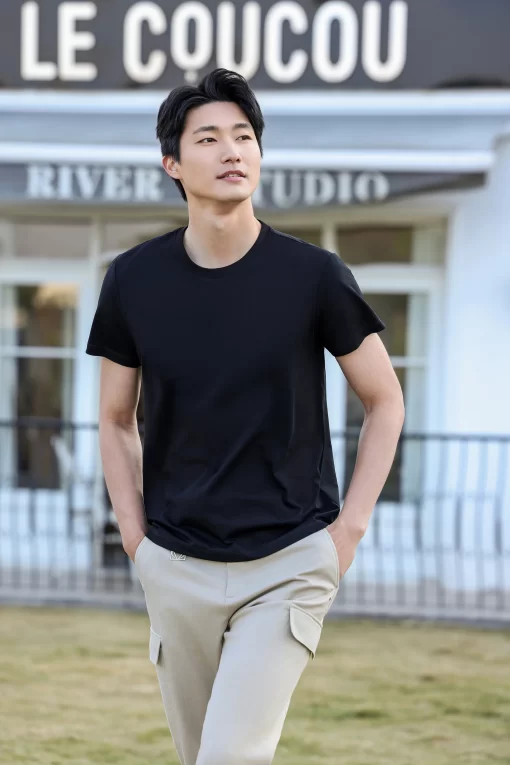
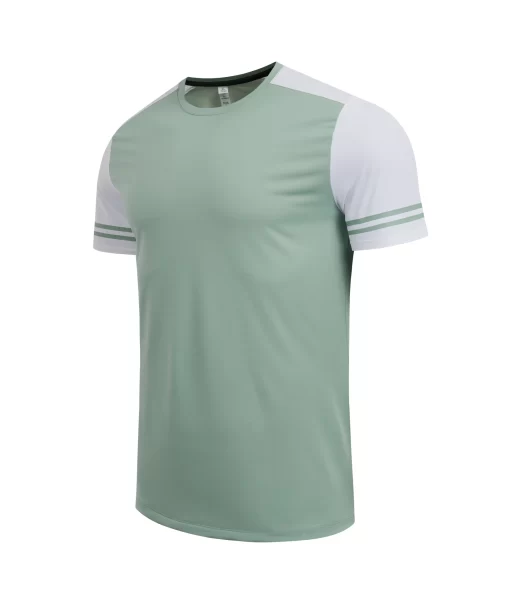
Two T-shirt styles to compare while you spec GSM and yarn count: a crew-neck everyday tee and a fitted silhouette show how the same fabric science changes with cut and construction.
Core Technology Behind Premium Custom T Shirts
Premium T-shirt manufacturing now integrates ring-spinning and compact-spinning technologies that refine fiber alignment and reduce hairiness. Compact-spun yarn, often used in 40s/60s counts, yields smoother surfaces ideal for water-based or DTG printing. Fabrics are then bio-polished with enzymes to remove microfuzz, improving brightness and softness. Reactive dyeing chemically bonds pigment to cellulose, minimizing fading even after repeated laundering.
Competitor Comparison Matrix
| Parameter | Budget Suppliers | Mid-Tier Mills | LSLONG Garments |
|---|---|---|---|
| Fiber origin | Mixed short-staple | Mixed long-staple | Certified long-staple |
| Yarn count range | 20s–30s | 30s–40s | 40s–60s |
| GSM range | 140–180 | 160–200 | 160–240 |
| Certifications | None | OEKO-TEX | ISO + GOTS |
| Shrinkage control | Manual | Limited | Full pre-shrunk |
Shenzhen LSLONG Garments Co., Ltd., founded in 1999, serves more than 200 brands in over 50 countries with 25 years of expertise in custom T-shirts, polos, and hoodies. See LSLONG T-shirt categories.
Real User Impact and ROI
Brands switching from open-end cotton to combed ring-spun fabric report a 25% longer garment lifespan and significantly fewer customer returns. A 40s combed tee costs slightly more upfront, but better print retention raises perceived value. Uniform programs in hospitality and retail have documented 30% savings in replacement cycles using pre-shrunk organic cotton, while lightweight ring-spun blends reduce bulk shipping weight for merch lines.
Future Trend Forecast in Custom T Shirt Fabrics
The future points to engineered fibers, recycled blends, and carbon-neutral production cycles. Expect GOTS and Fairtrade certifications to become standard rather than premium, biodegradable elastomers and performance yarns to grow, and AI-assisted weaving plus digital finishing to tighten GSM and yarn-count consistency.
Frequently Asked Questions
What is the best GSM for custom T-shirts?
150–200 GSM is the practical balance — lightweight yet durable for printing and daily wear; choose ~160 GSM for casual styles or ~220 GSM for structured fits.
What yarn count should I choose?
30s–40s yields soft, smooth, print-friendly fabric; 60s offers a luxury finish. Lower counts like 20s feel coarser and heavier.
What specs make a T-shirt durable?
180–220 GSM paired with 30s–32s ring-spun cotton resists fading, shrinking, and wear after multiple washes.
What GSM and yarn count are best for summer T-shirts?
140–160 GSM with a 40s yarn count keeps summer shirts light and breathable without sacrificing print vibrancy.
What specs are best for printing?
For DTG or screen printing, choose 160+ GSM with 30s+ yarn count for smooth ink adhesion and clean results.
Related Articles
Official Resources
References
- GOTS (Global Organic Textile Standard) certification requirements.
- OEKO-TEX standard documentation.
- Textile finishing benchmarks for pre-shrunk (sanforized) fabrics.